
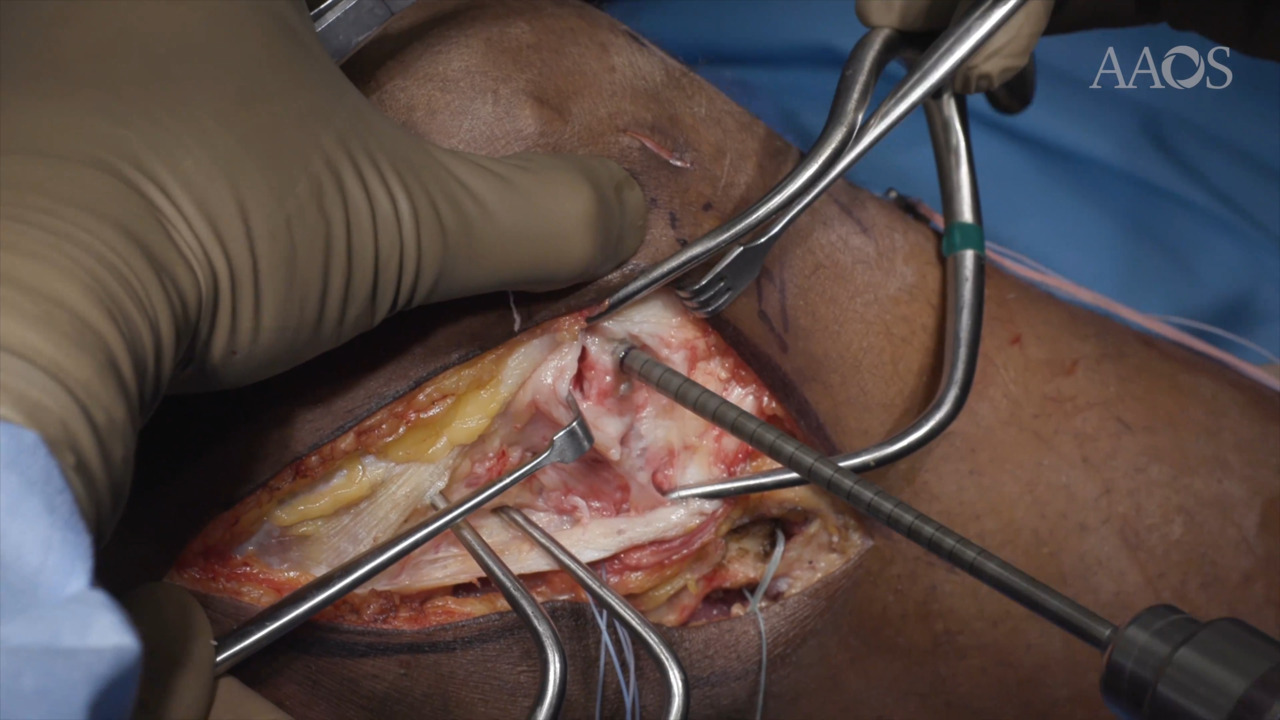
Posterior Cruciate Ligament and Posterolateral Corner Reconstruction in the Setting of Failed Posterior Cruciate Ligament Repair
Background Multiligamentous knee injuries (MLKIs) are rare but potentially devastating injuries. They account for approximately 0.02% of all orthopedic injuries. As our understanding of MLKIs has advanced, the typical treatment has become surgical intervention to optimize functional outcomes. Various techniques are described and used in the surgical treatment of MLKIs. Repair vs reconstruction, single versus staged procedure, graft material, timing of surgery, and method of fixation are among the variables discussed. Proper treatment is paramount to preventing functional impairment, instability, and development of further osteoarthritis. Purpose This video overview and case presentation demonstrates a posterior cruciate ligament (PCL) and posterolateral corner (PLC) reconstruction in the setting of failed posterior cruciate ligament repair. Methods The anatomy and examination, diagnosis, and treatment options for MLKI are reviewed. We discuss surgical indications and considerations, including conservative treatment, ligamentous repair, ligament reconstruction, early intervention, delayed surgery, single-stage intervention, and staged procedures. We present the case of a 38-year-old man with a PLC and PCL injury and instability in the setting of a prior posterior knee dislocation that was treated with PCL repair. After a thorough discussion of risks, benefits, and prognosis, the patient elected to proceed with PCL and PLC reconstruction. Results The patient underwent PCL and PLC reconstructions, and appropriate stability was obtained intraoperatively. Postoperative clinical outcome showed good motion, stability, and restoration of knee function. Conclusion Posterior cruciate ligament and PLC reconstruction offered this patient reliable restoration of function after MLKI. Multiligamentous knee reconstruction is the mainstay of treatment for patients with instability and laxity after MLKI. This complex procedure requires meticulous attention to anatomy, proper planning, and proper technique to optimize outcomes and avoid complications.