
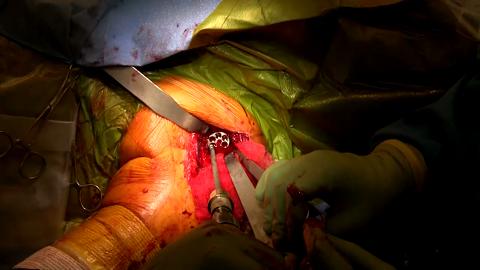
Reverse Total Shoulder Arthroplasty Technical Note and Results
Peer review has expired on this program. It is the viewer’s responsibility to determine the educational value of this historical content.Peer review has expired on this program. It is the viewer’s responsibility to determine the educational value of this historical content.The triple arthrodesis, first described by Edwin W. Ryerson in 1923, consists of surgically fusing the Reverse total shoulder arthroplasty (RTSA) is today's choice for rotator cuff tear arthropathy (CTA). In this video, we demonstrate the surgical technique used at the University of Florida for this complex pathology. The video is accompanied by >2 years follow-up results as well as our specific staged rehabilitation program. The records of patients with the diagnosis of CTA who had received a RTSA were reviewed. We identified 92 reverse shoulder arthroplasties with a minimum of 2 years' follow-up. Active shoulder elevation, external rotation, internal rotation as well as Constant and Shoulder Pain and Disability Index(SPADI) scores were obtained. Demographic data and complication rate were also examined. The mean follow-up was 2.72 years in the RTSA group. The mean age was 72.43 years. SPADI scores improved from 85 (preop) to 30 (postop). Constant score improved from 29 to 60, and active elevation was significantly better. The complication rate was 7.61%. In CTA, the RTSA has optimistic results regarding pain relief, function, and active elevation accompanied with a low rate of complications at 2-years' follow-up.