
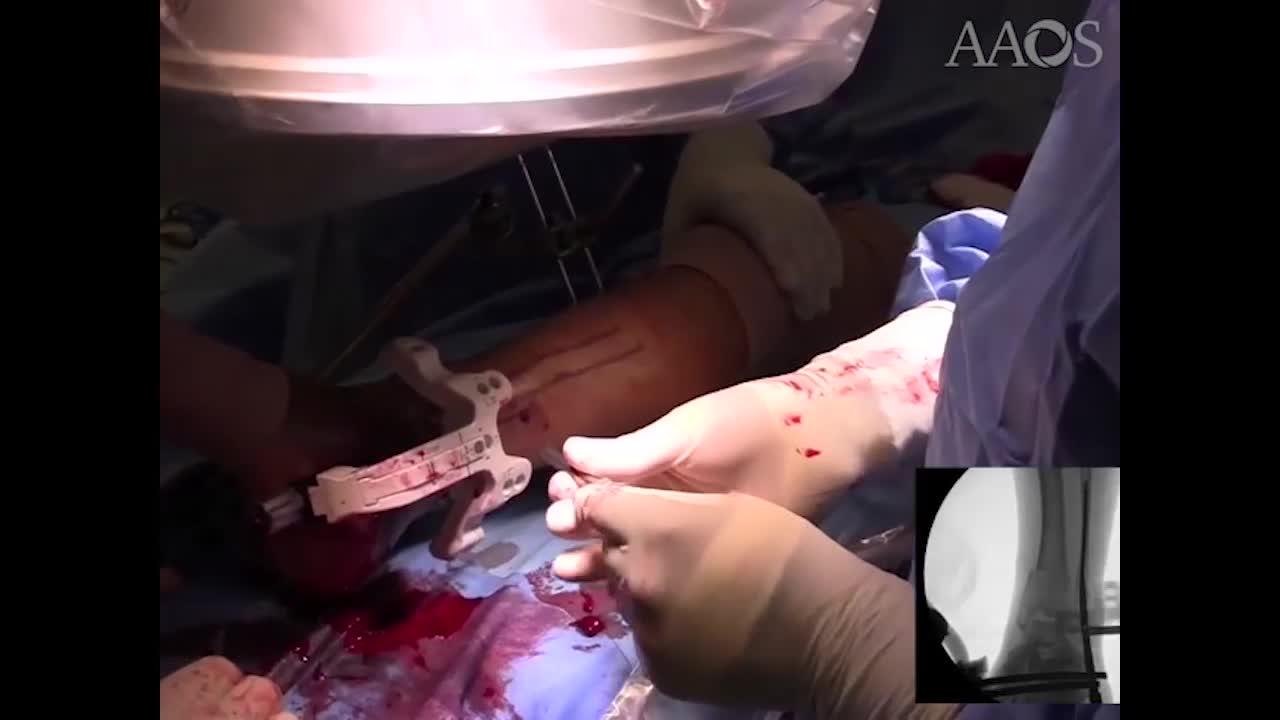
Fibula Intramedullary Nail
Introduction: Although conventional plating has been used to manage distal fibula fractures, thin skin coverage over the lateral malleolus predisposes this surgical approach to wound complications, especially in patients with diabetes mellitus. In patients with a noncomminuted fibula fracture, intramedullary nails are an alternative fixation method that only require a small incision and less soft-tissue dissection. Intramedullary nails also afford improved mechanical stability in osteoporotic bone, with union reported approximately 9 weeks postoperatively. This video reviews the steps for intramedullary nailing of the fibula.
Methods: The video begins with the case presentation of an ideal patient for intramedullary nailing of the fibula. Pertinent techniques are discussed.
Results: This video discusses the case presentation of a patient with a comminuted fibula fracture and impressive soft-tissue damage who underwent open reduction and internal fixation via a limited incision. Anatomic reduction and stable fixation were obtained.
Conclusion: Intramedullary nails can be used for the surgical fixation of a fibular fracture with substantial soft-tissue injury. Intramedullary nailing of the fibula decreases the risk of postoperative infection and allows for adequate reduction of the ankle joint in proper alignment, preventing posttraumatic arthritis.