
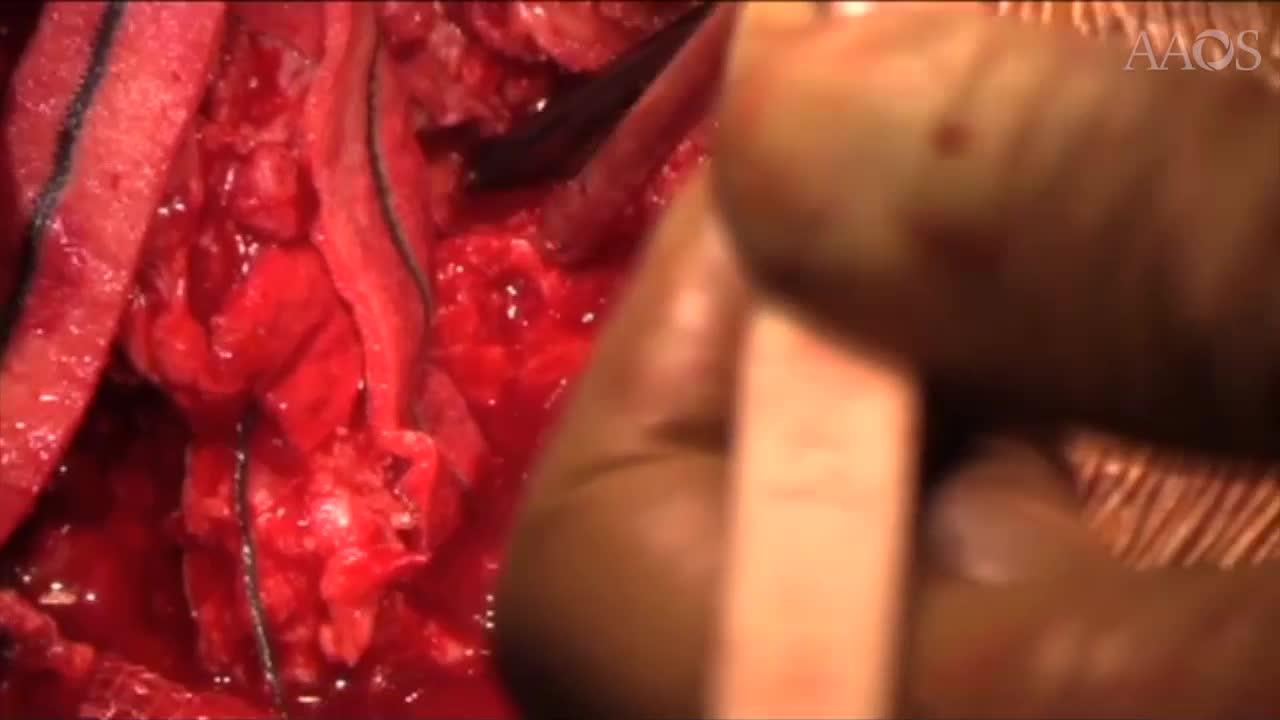
S1 Pedicle Subtraction Osteotomy for Fixed Sagittal Imbalance
Purpose: Pedicle subtraction osteotomy, generally performed in the mid lumbar spine, is indicated for the management of degenerative or iatrogenic flatback deformity in which loss of lordosis creates a fixed sagittal imbalance. The procedure involves removal of a wedge-shaped segment of vertebra, including the posterior elements and bilateral pedicles, to increase lordosis and re-center the body over the pelvis. Although lumbar pedicle subtraction osteotomy is not uncommon, sacral osteotomy for management of fixed sagittal imbalance is rare. Sacral osteotomy is indicated in patients with a sacral fracture causing considerable kyphotic deformity or in patients with fixed high-grade spondylolisthesis at L5-S1. A paucity of literature is available on the technique for or outcomes of sacral osteotomy. This video presents the technique of S1 pedicle subtraction osteotomy for the management of high-grade spondylolisthesis.
Methods: The video discusses the case presentation of a 54-year-old woman with sagittal imbalance secondary to high-grade isthmic spondylolisthesis at L5-S1, which was fused in kyphosis many years ago. The patient complained of severe back and leg pain and a fixed forward posture, resulting in considerable disability. Radiographs revealed a high pelvic tilt (30°), a high sagittal vertical axis (16 cm), and a pelvic incidence-lumbar lordosis mismatch of 40° (normal <10°). The video reviews the patient's history and physical examination, after which her radiographs are analyzed and indications for surgery are discussed. The video then demonstrates the technique for the procedure, including placement of pedicle and iliac screws and safe performance of the osteotomy.
Results: After the procedure, the video reviews the patient's postoperative radiographs, focusing on her sagittal parameters. The osteotomy resulted in approximately 35° of correction. The patient's lumbar lordosis increased from 25° to 56°, resulting in lumbar lordosis within 10° of her pelvic incidence, and her sagittal vertical axis decreased from 16 cm to 3 cm (normal <5 cm).
Conclusion: Sacral pedicle subtraction osteotomy is rarely performed, and a paucity of literature is available on the indications, technique, or outcomes of sacral pedicle subtraction osteotomy. We review a case presentation demonstrating safe performance of sacral pedicle subtraction osteotomy, which results in considerable restoration of sagittal balance.