
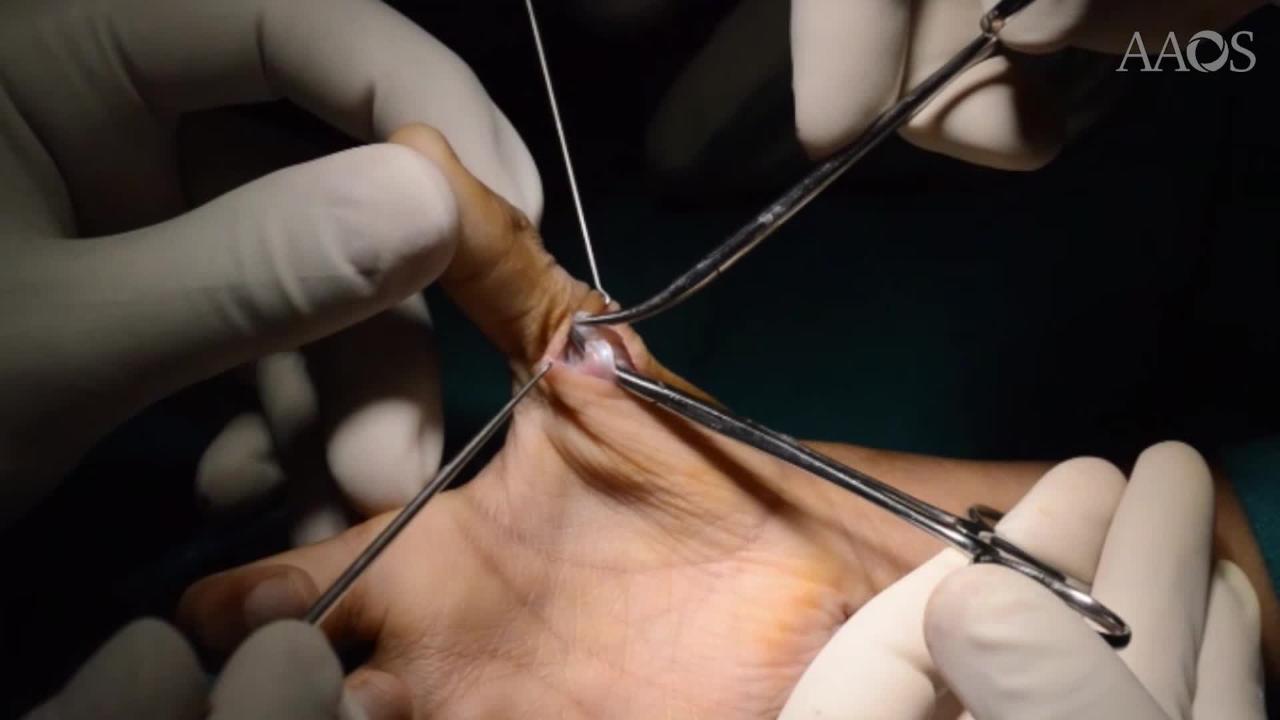
Early Opponensplasty in Median Nerve Injuries
Background: A paucity of literature exists on early tendon transfer for the surgical rehabilitation of patients with a median nerve injury. Because loss of thumb opposition is the single most important functional deficit that occurs in patients with median nerve palsy, this video discusses the functional outcome of early extensor indicis proprius opponensplasty.
Patients and Methods: Ten patients with an isolated median nerve injury underwent early tendon transfer for restoration of thumb opposition. Median nerve exploration was performed in combination with extensor indicis proprius opponensplasty. Patients underwent 4 weeks of postoperative hand immobilization followed by occupational therapy. Preoperative and postoperative evaluations for power and precision grip strength and range of thumb opposition were performed.
Results: Mean power grip strength increased 124% at a follow-up of 6 months. Mean precision grip strength for tip-to-tip pinch and palmar pinch increased 223% and 95%, respectively. Range of thumb opposition was graded. At a follow-up of 6 months, seven patients had excellent range of thumb opposition and three patients had good range of thumb opposition. The mean time off work was 2.6 months, which is an indicator of early functional restoration. Protective sensations returned in a normal amount of time.
Conclusion: Early tendon transfer has a unique role in the treatment of patients with median nerve palsy. We suggest this procedure be considered in such patients.