
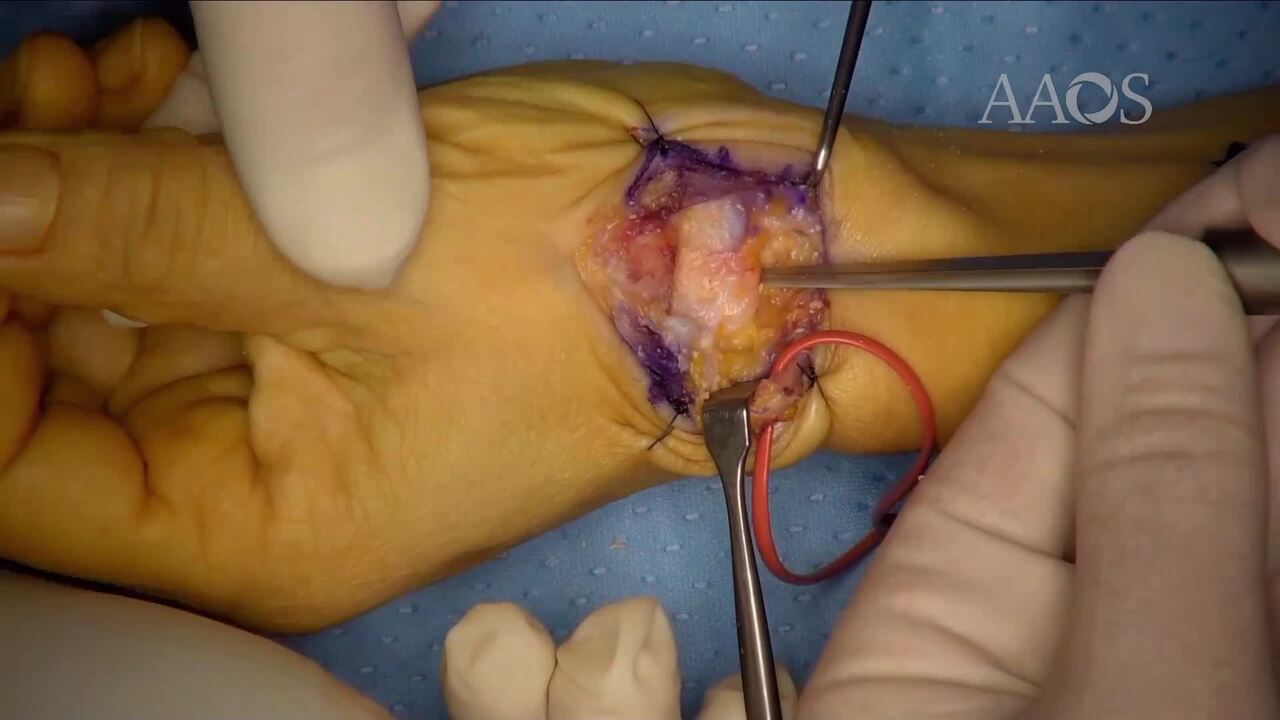
Partial Trapeziectomy and Pyrocarbon Interpositional Implant for Trapeziometacarpal Osteoarthritis: Surgical Technique
Trapeziometacarpal osteoarthritis is the second most common degenerative joint disease, with an overall incidence that can exceed 10% (occurs in one in four women older than 55 years). A wide range of symptoms is associated with trapeziometacarpal osteoarthritis, including pain at the thumb base, decreased thumb range of motion, and lack of strength. Although nonsurgical treatment can be attempted in patients with milder trapeziometacarpal osteoarthritis (grade I according to the Eaton-Littler radiographic classification), surgical treatment is the only valid treatment option for patients with more advanced stages of disease. Several surgical treatment options, including trapeziectomy, ligamentoplasty, arthrodesis, metacarpal osteotomy, and joint replacement, are available based on the stage of the disease and patient needs. The shared goal of these procedures is to preserve the trapeziometacarpal space, enabling strength and motion recovery. Recently, the use of a pyrolytic carbon-based prosthesis has revolutionized arthroplasty in the hand. The goal of this video is to present the surgical technique for and the results of partial trapeziectomy and a pyrocarbon interpositional implant in an adult woman with Eaton-Littler stage III trapeziometacarpal osteoarthritis. We believe that a pyrolytic carbon-based prosthesis is successful in adults younger than 65 years who require high forces during activities and preservation of movement at the trapeziometacarpal joint.