
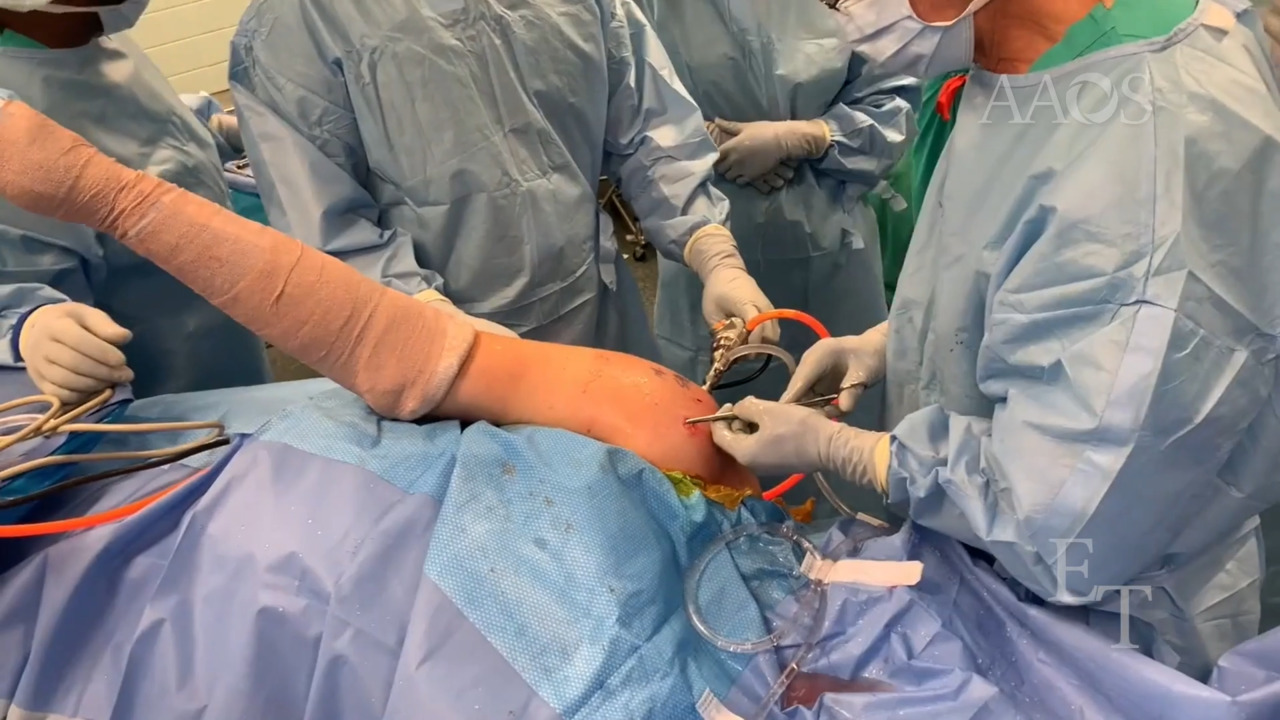
Modified Gallie Procedure for Multidirectional Instability
This video presents the modified Gallie technique for multidirectional instability of the shoulder. The results of a case series of 46 shoulders managed via this technique are reviewed.ResultsThe mean postoperative outcome scores for all patient-reported outcome measures evaluated were considerably improved compared with preoperative scores (P < 0.001). Subgroup analyses of sex, age 27 years or younger versus older than 27 years, and patients with Ehlers-Danlos syndrome versus patients without Ehlers-Danlos syndrome were largely equivalent with respect to postoperative improvements in patient-reported outcome scores. Among the 46 surgical cases, a total of 11 (23.9%) complications were reported. These complications included scapular dyskinesis (n = 3), subluxation (n = 5), continued pain (n = 2), and complex regional pain syndrome (n = 1). Five (10.9%) patients underwent a subsequent revision procedure at a mean follow-up of 5.36± 2.64 years after the index surgery.
Conclusion
The current study evaluating arthroscopic correction for multidirectional instability of the shoulder has illustrated the success of this procedure, with vast improvements in patient-reported outcome scores among all included patients. The modified Gallie technique to restore anterior stability appears to be a safe and effective method to prevent recurrence of anterior subluxation or dislocation. In addition, use of the Tulane criteria for hyperlaxity further characterizes instability in patients with hypermobility, allowing for meticulous preoperative planning, surgical execution, and appropriate counseling.