
One-Stage Revision Total Knee Arthroplasty With Flexible Cones: Management of an Intraoperative Tibial Plateau Fracture
Introduction
Metaphyseal cones are a good treatment option for moderate to severe bone loss in patients undergoing revision total knee arthroplasty (TKA). Currently, almost all available cones are rigid, and they do not perfectly fit to the shape of the bone loss unless they are custom designed. This results in an increased rate of intraoperative fractures because the mean and maximum stresses are not well dissipated by rigid cones.
Recently, flexible metaphyseal cones have been introduced to reduce potential bone trauma during implantation. A study by Innocenti et al showed that the stress during surgical impaction was considerably reduced with flexible cones compared with rigid cones. The stress with flexible cones also was better distributed and more homogenous over the cortical bone, with lower bone peaks from macro-deformation during impact because of their flexibility. However, for the investigated daily tasks, no substantial differences were reported between rigid and flexible cones in terms of bone stress, implant stability, and micromotion. Therefore, the mechanical performance of flexible cones may be considered similar to that of rigid cones.
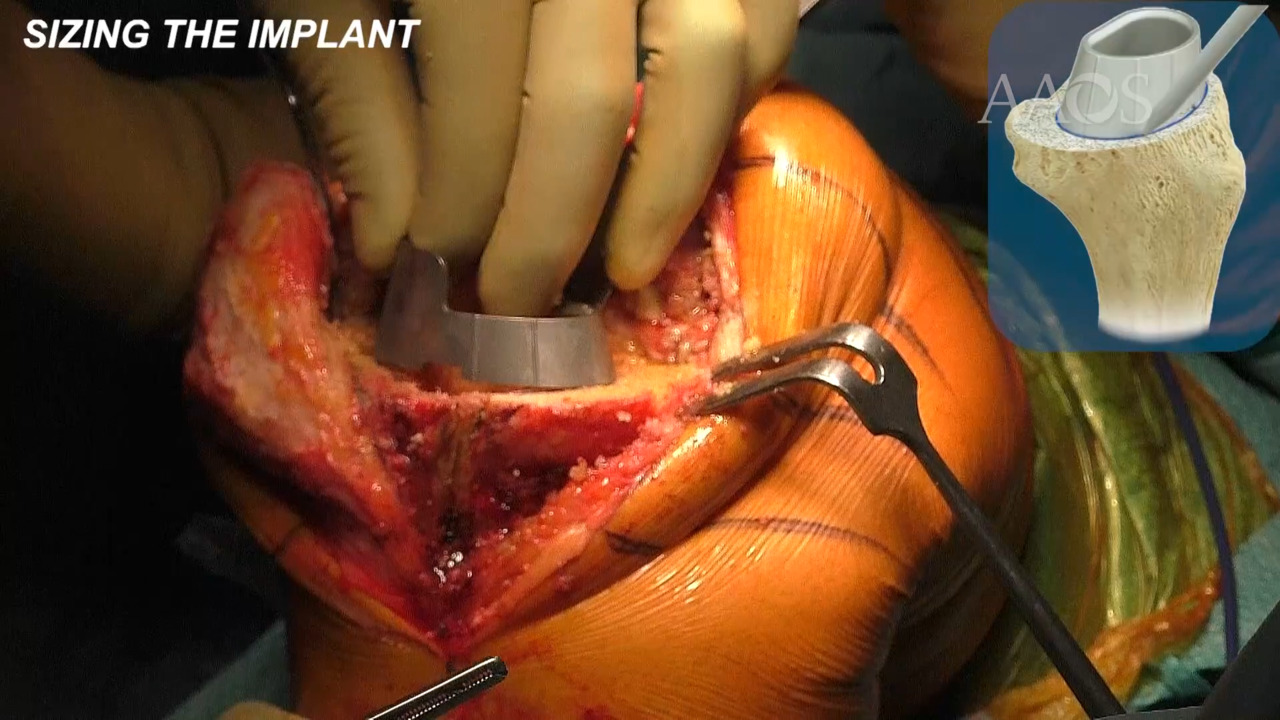
This video describes the surgical technique for single-stage revision TKA with the use of a flexible metaphyseal tibial cone in a 64-year-old man with a painful prothesis previously implanted with kinematic alignment. The video also reviews the clinical and radiographic outcomes of a sample of 11 patients with septic or aseptic TKA failure who underwent single-stage or two-stage revision TKA with the use of flexible metaphyseal cones to restore bone loss.
Materials and Methods
A total of 11 patients underwent revision TKA with the use of flexible titanium cones between June 2015 and April 2023 at the institution of the authors of this video. The mean follow-up was 27 months. Each patient's clinical scores were determined at the last outpatient follow-up. Demographic and clinical parameters, including patient age at the time of surgery, patient body mass index, and the number of previous surgical procedures were retrospectively collected from hospital records. Intraoperative and postoperative complications were recorded at the hospital and during outpatient evaluation. The authors also documented whether patients underwent revision for septic or aseptic TKA failure and whether single- or two-stage TKA was performed. The degree of metaphyseal bone loss was determined according to the Anderson Orthopaedic Research Institute classification system. Knee alignment and the position of all prosthetic components were evaluated on radiographs during outpatient follow-up.
Results
The mean patient age at the time of surgery was 71.5 years (range, 59 to 83 years). Metaphyseal bone loss was classified as Anderson Orthopaedic Research Institute type 3 in seven patients (64%) and type 2B in four patients (34%). Septic two-stage revision TKA was performed in eight patients (73%), aseptic single-stage revision TKA was performed in two patients (18%), and aseptic two-stage revision TKA was performed in one patient (9%). At final follow-up, the mean Oxford Knee Score was 30.5 points (range, 12 to 44 points), the mean clinical Knee Society Score was 66.5 points (range, 41 to 87 points), the mean functional Knee Society Score was 57.3 points (range, 20 to 80 points), and the mean Knee Injury and Osteoarthritis Outcome Score was 57.8% (range, 32% to 79%). Radiographs revealed regular positioning of cones and TKA components in nine patients (81.8%) and mild radiolucencies in bone cement interfaces (tibial plateau) in two patients (18.2%). Minor mid-term complications were detected; these included wound dehiscence in three patients (27.2%), one of whom was treated via surgical cleansing and two of whom were treated nonsurgically via advanced medications. No failures, which were considered as revision for any reason, were reported.
Conclusion
The results of the study are promising. The use of metaphyseal flexible cones allows for management of bone loss during revision TKA, ensuring good clinical and radiographic outcomes, with a low re-revision rate (no re-revision procedures were performed in this population study) and good subjective and objective outcomes. However, a wider sample and longer follow-up are necessary to confirm these results.