
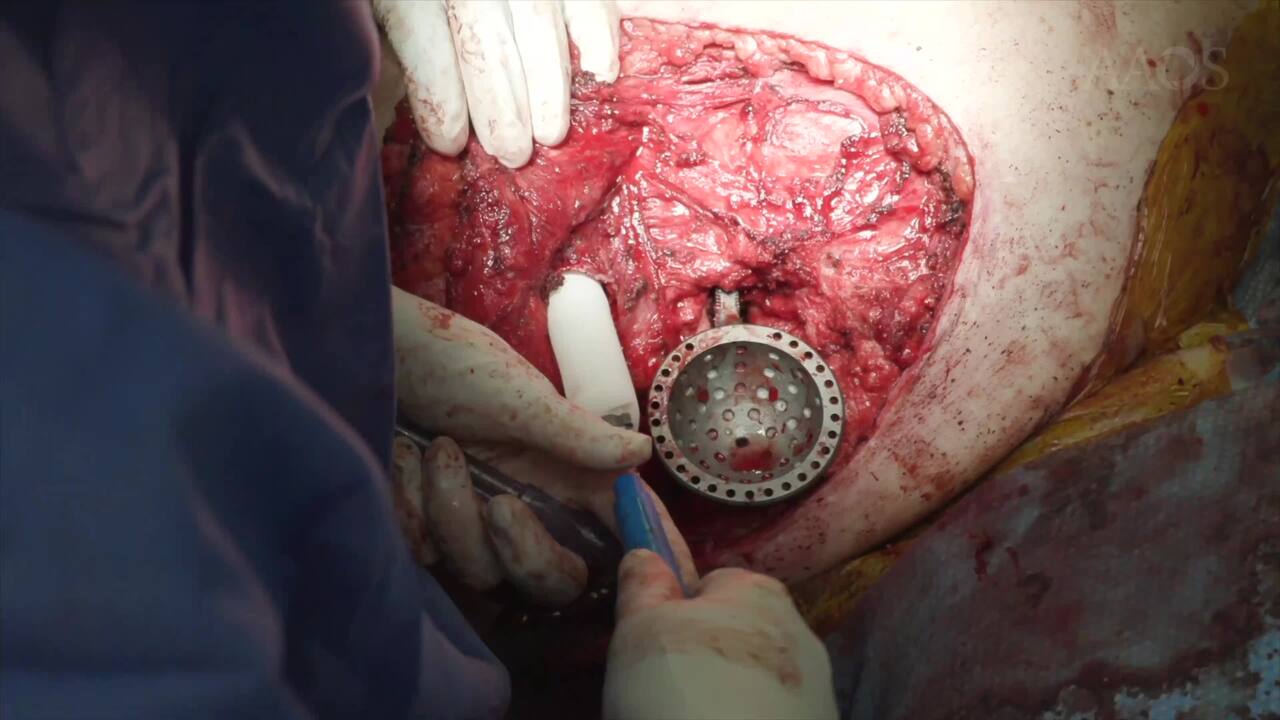
Custom-Made Scapula and Shoulder Replacement After Subtotal Scapulectomy
Background: Chondrosarcoma is the second most common primary malignant cancer of bone. Approximately 20% of chondrosarcomas occur in the shoulder girdle. Surgical management remains the mainstay of treatment as radiation and chemotherapy have been shown limited or no value in local control. Functional outcomes after wide excision remain dependent on extent of muscular sacrifice and resection involving the shoulder joint. Recent advances in surgical techniques and implants have introduced custom-made implants as a reconstruction option for patients after subtotal or total scapulectomy. This technique allows for customization of the implant to precisely fit the patient’s anatomy with the potential for better fit, superior fixation and function than standard implants.Purpose: This video overview and case presentation demonstrates the use of a custom-made scapula and shoulder replacement after a subtotal scapulectomy.Methods: The diagnosis and treatment options for radical excision of shoulder girdle tumors is reviewed. A case of a 48-year-old male with chondrosarcoma of the scapula is presented. The patient underwent extra-articular subtotal scapulectomy and reconstruction using scapular allograft and shoulder hemiarthroplasty, with shoulder instability and limited range of motion, limiting his daily activities despite intact elbow and wrist/hand function. After a thorough discussion of risks, benefits and prognosis, the patient elected to proceed with a custom-made implant and shoulder replacement to improve his functional status.Results: Postoperative clinical outcome showed good restoration of range of motion and stability. The patient had postoperative substantial improvement of shoulder stability and dexterity despite limited increase of the shoulder active range of motion.Conclusion: Custom-made implant is a viable reconstruction option for sub-total or total scapulectomy following large oncological resection. This treatment shows promising outcomes in terms of functional recovery and complication rates. However, long-term durability and complications remain unknown due to limited data. Fixation of scapular replacement to chest wall remains challenging but critical to possibly improve results.