
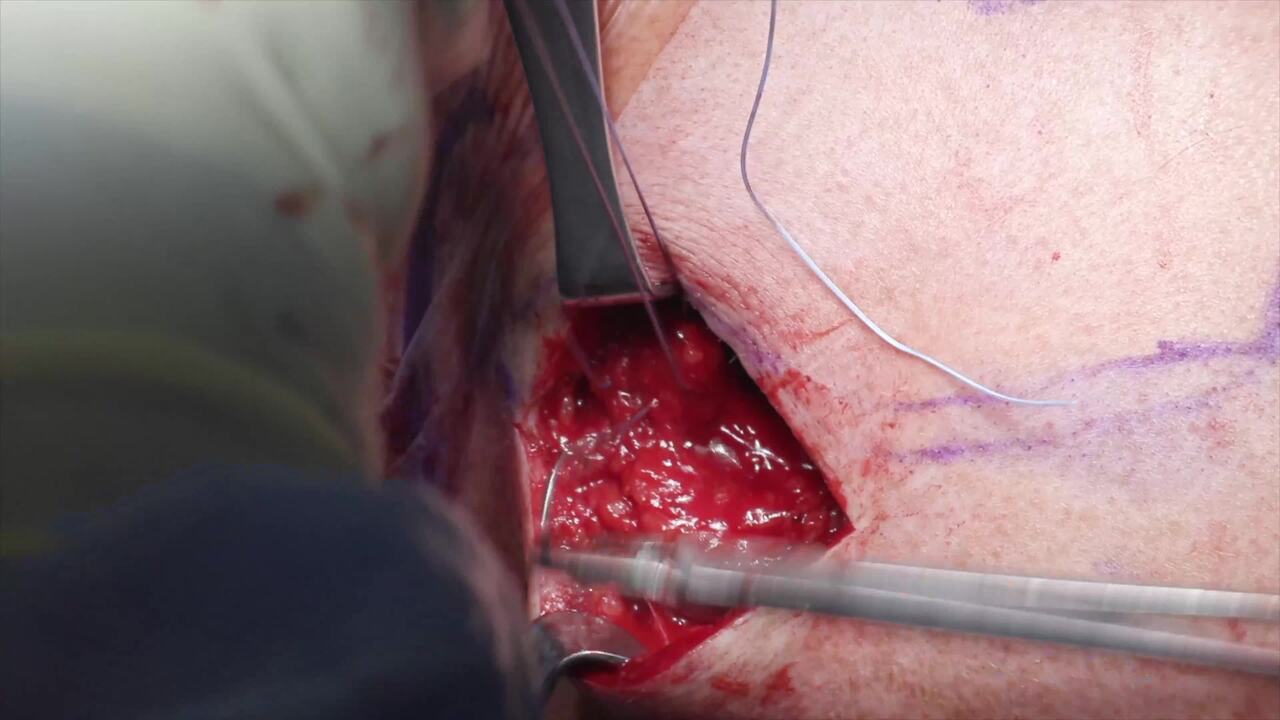
Arthroscopic Assisted Lower Trapezius Tendon Transfer for Treatment of Obstetric Erb’s Plasy in an Adult Patient
Background: Erb's palsy, an upper trunk brachial plexus injury, primarily affects the suprascapular and axillary nerves, leading to weakness in shoulder abduction and external rotation. This condition is rare and often resolves spontaneously. In cases where residual weakness persists, early childhood treatment usually involves tendon transfer to enhance shoulder weakness. Recent advances in tendon transfer surgical techniques have introduced open and arthroscopic-assisted lower trapezius tendon transfer as a viable surgical option for shoulder weakness. This technique has advantages over classic pectoralis major and teres major tendon transfers including a similar line of pull to the shoulder external rotators (infraspinatus and teres minor), leading to improved shoulder mechanics, minimal donor site morbidity, and fewer complications such as reduced pain and better cosmetic outcomes. Symptomatic Erb's palsy in adults has been poorly described in the literature. Therefore, further exploration and documentation of adult cases are necessary.Purpose: This video overview and case presentation demonstrates arthroscopically assisted lower trapezius transfer in an adult patient with symptomatic Erb’s plasy aiming to improve understanding, implications and appropriate management strategies for this rare condition.Methods: The anatomy, examination, diagnosis, and treatment options for Erb's palsy are reviewed in detail. We present a case of a 24-year-old male with symptomatic Erb's palsy, which resulted in a limited range of shoulder motion and weakness, particularly in external rotation, with positive lag signs. This condition prevented him from performing activities of daily living and pursuing a career in the police academy. After prolonged non-operative treatment failed, and following a thorough discussion of risks, benefits, and prognosis, the patient elected to proceed with an arthroscopically assisted lower trapezius tendon transfer. This procedure aimed to improve his functional status and eligibility to apply for the police academy.Results: Shoulder range of motion and external rotation strength were significantly improved following the surgery. The patient denied shoulder pain and was very satisfied with the results, demonstrating eagerness to further strengthen his shoulder and attend the police academy.Conclusion: Lower trapezius tendon transfer is a viable surgical option for adult patients with symptomatic Erb’s palsy who have not responded to non-operative treatments. This procedure can significantly improve shoulder range of motion and strength. Optimal outcomes depend on appropriate patient selection and strict adherence to post-operative rehabilitation protocols.