
Treatment of Elbow Contracture and Radioulnar Synostosis with Open Elbow Contracture Release and Heterotopic Excision
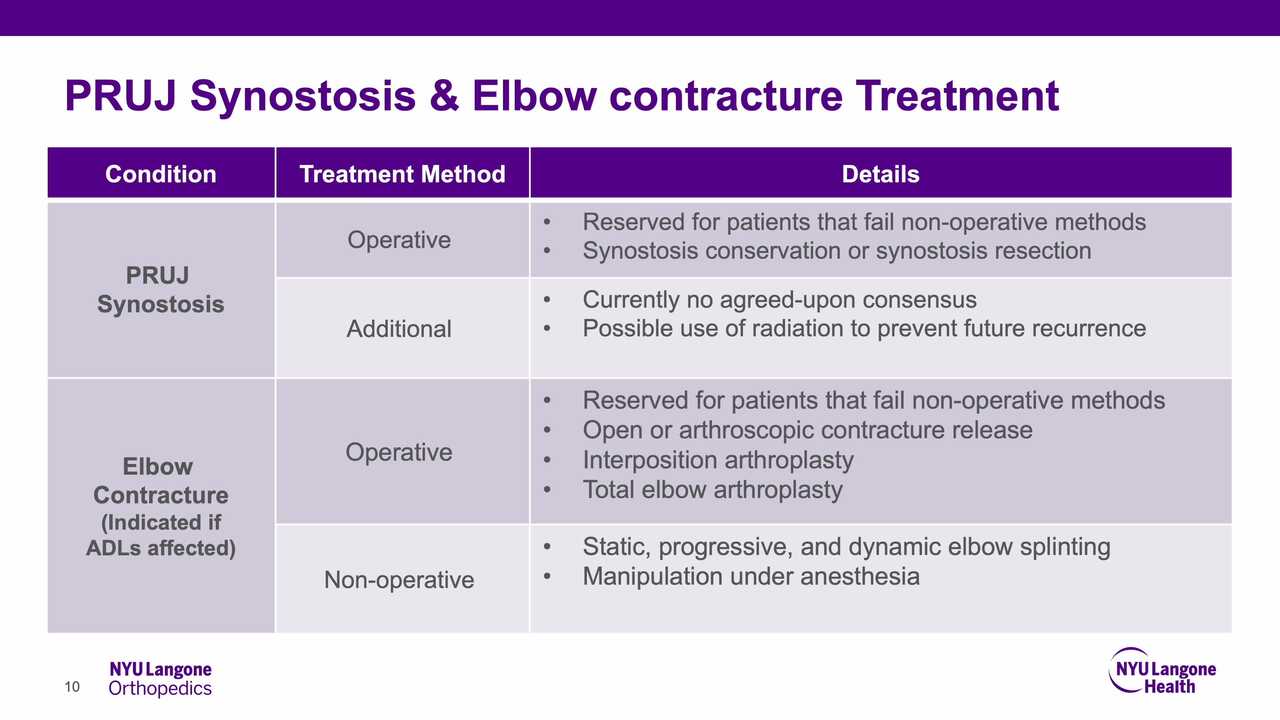
Background: Radioulnar synostosis with elbow contracture following prolonged immobilization is infrequently documented in the literature. This condition is characterized by an osseous or fibrous fusion between the radius and ulna, resulting from traumatic or non-traumatic mechanisms. Treatment options range from non-operative symptomatic care to surgical interventions, such as synostosis resection, which are typically considered when conservative methods fail or when daily activities are significantly impacted. Additional therapies, including use of radiation to prevent recurrence, are available but without consensus on use.Purpose: This video overview and case presentation demonstrate treatment of elbow contracture and radioulnar synostosis with open elbow contracture release heterotopic excision.Methods: This case introduces a 49-year-old right hand dominant female with left elbow contracture with heterotopic ossification and synostosis of the proximal radioulnar joint (PRUJ) following a 42-day medically induced coma for Legionnaires’ disease. Despite non-surgical management, the patient had persisting stiffness, pain, and significant limitation of daily activities. Following a thorough discussion of risks, benefits and prognosis, the patient elected to proceed with open elbow contracture release, excision of the PRUJ synostosis, and cubital tunnel release to improve her functional status.Results: The elbow contracture and ulnar nerve were released, and the radioulnar synostosis was excised intraoperatively. Post-operatively, the patient had significant improvement in elbow range of motion and function.Conclusion: Prolonged immobilization raises the risk of PRUJ synostosis and elbow contracture, making timely rehabilitation crucial. Excision of the synostosis restores pronation and supination. Successful treatment is marked by improved range of motion, pain management, and complication prevention, such as avoiding recurrent heterotopic ossification. Regular follow-up and adherence to post-operative rehab protocols are essential for achieving these goals.