
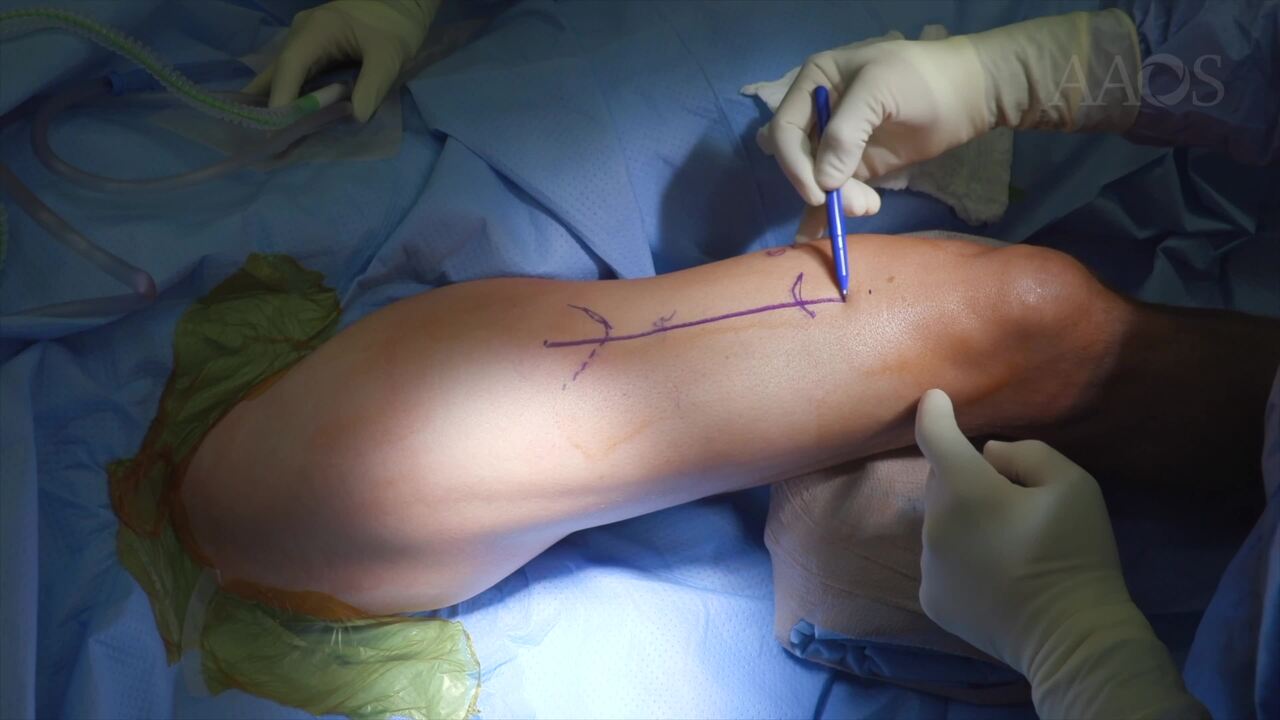
Rectus Femoris Musculotendinous Junction Reconstruction with Semitendinosus Autograft and Achilles Allograft
Background: Rectus femoris musculotendinous junction injuries are a type of musculotendinous injury that typically occur at the interface between the muscle fibers and the tendon of the rectus femoris muscle. Management of these injuries typically involves conservative treatment, including rest, ice, compression, and elevation (RICE), followed by a structured rehabilitation program. Surgical intervention is required in cases of complete tendon avulsion or chronic, non-healing injuries. Although few clinical outcomes have been reported on the surgical management of rectus femoris musculotendinous junction injury, reconstruction may be a viable salvage option for active patients with this injury. Expedient diagnosis and surgical management are critical to optimize outcomes and restore knee function.Purpose: This video overview and case presentation demonstrates a rectus femoris musculotendinous junction reconstruction with semitendionsus autograft and achilles allograft in the setting of a chronic rectus femoris musculotendinous junction tear.Methods: An overview of the pathogenesis, diagnosis, and management of rectus femoris ruptures is discussed. The case presentation of a 52-year-old man with a chronic distal rectus femoris myotendinous rupture is discussed. The patient underwent surgical reconstruction.Results: The procedure was successfully performed, and rectus femoris anatomy was restored. The patient was advanced through a standardized rehabilitation protocol. At a follow-up of 3 months, the patient’s function had substantially improved. The patient denied any recurrence or sensation of instability. The patient was progressing toward his goal of returning to full functional capacity, including sports activity.Conclusion: Surgical reconstruction is a reliable treatment option for patients with an chronic rectus femoris rupture. Early results suggest good to excellent clinical outcomes.