
Proximal Femoral Osteotomy for a Varus Femoral Neck Malunion
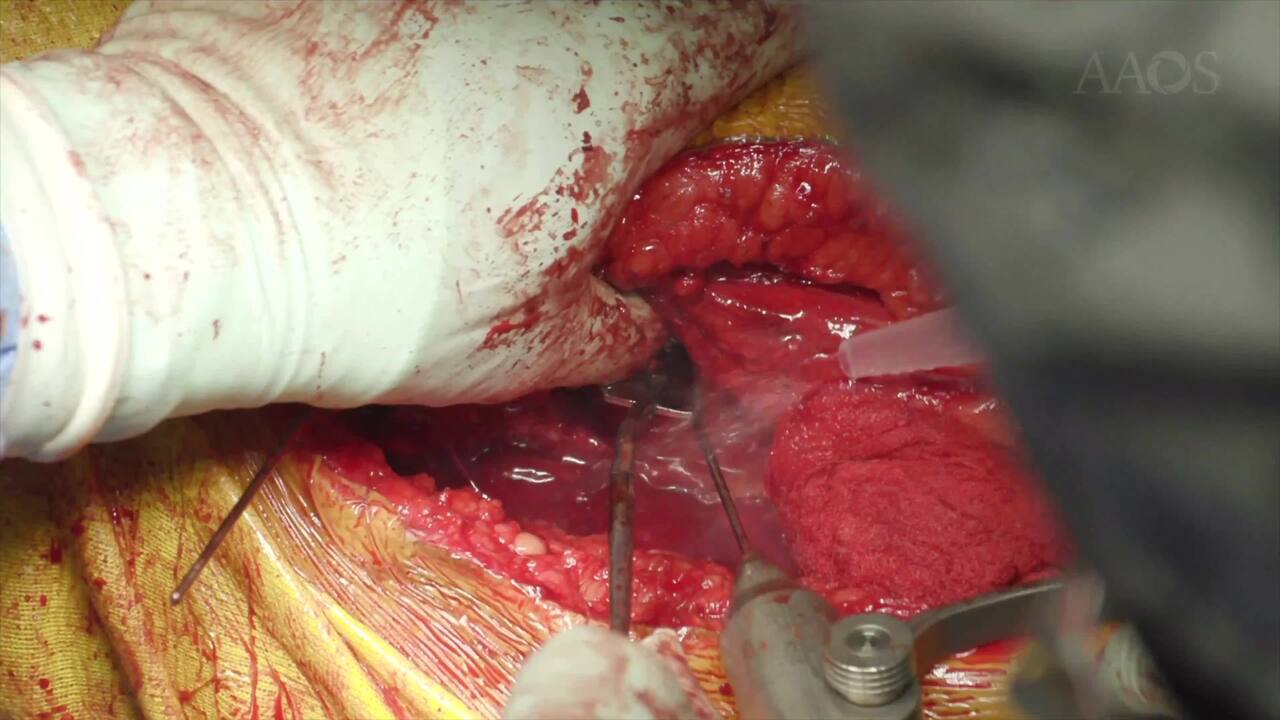
Background: Both nondisplaced and displaced femoral neck fractures can proceed to nonunion or rarely malunion, especially in the setting of high-energy vertical fracture patterns which see constant high shear forces. There are several consequences of a femoral neck varus malunion including limb shortening, gluteal muscle imbalance, abnormal gait and overloading of the knee joint and lumbar spine. The purpose of a corrective valgus intertrochanteric osteotomy is to correct the varus collapse and normalize forces across the hip joint.Purpose: This video overview and case presentation demonstrates a valgus-producing intertrochanteric osteotomy for a femoral neck malunion.Methods: A case of a 31-year-old female who presented 2 years after sustaining a femoral neck fracture and undergoing surgical repair at an outside hospital. Upon presentation, she was diagnosed with a femoral neck malunion. She had a Trendelenburg gait and limb length discrepancy which were significantly limiting her activities of daily living. After a thorough discussion of risks, benefits and prognosis, the patient elected to proceed with an intertrochanteric osteotomy to improve her functional status.Results: Pre-operative planning, which consisted of measuring the operative and contralateral femoral neck-shaft angles, determined that a 20-degree correction was necessary for this patient. The prior hardware was removed, a 20-degree apex medial osteotomy was performed below the level of the lesser trochanter, and a blade plate was placed to maintain the correction. Post-operatively the osteotomy healed without evidence of subsidence, and she was able to walk comfortably with a walker by 3 months post-operatively. Conclusion: Proximal femur osteotomies have a high rate of union when performed for femoral neck nonunion or malunion. Proper pre-operative planning is essential to perform an appropriate correction.