
Use of an Intramedullary Fibular Screw for Supination Adduction Ankle Fractures
Background: Supination adduction (SAD) ankle injuries account for 5-20% of all ankle fractures and feature characteristics of both rotational ankle and pilon fractures. These fractures are generated by axial compression on a supinated and adducted ankle, leading to a lateral tension failure of lateral ligaments (anterior talofibular, calcaneofibular) or a transverse fibular avulsion fracture, as well as compression of the talus into the medial malleolar shoulder leading to a vertical anteromedial malleolar fracture. Plafond impaction has been reported as high as 61% of cases based on CT analyses. It is therefore incumbent to understand the pathomechanism, radiographic features, and surgical fixation options of these fractures.
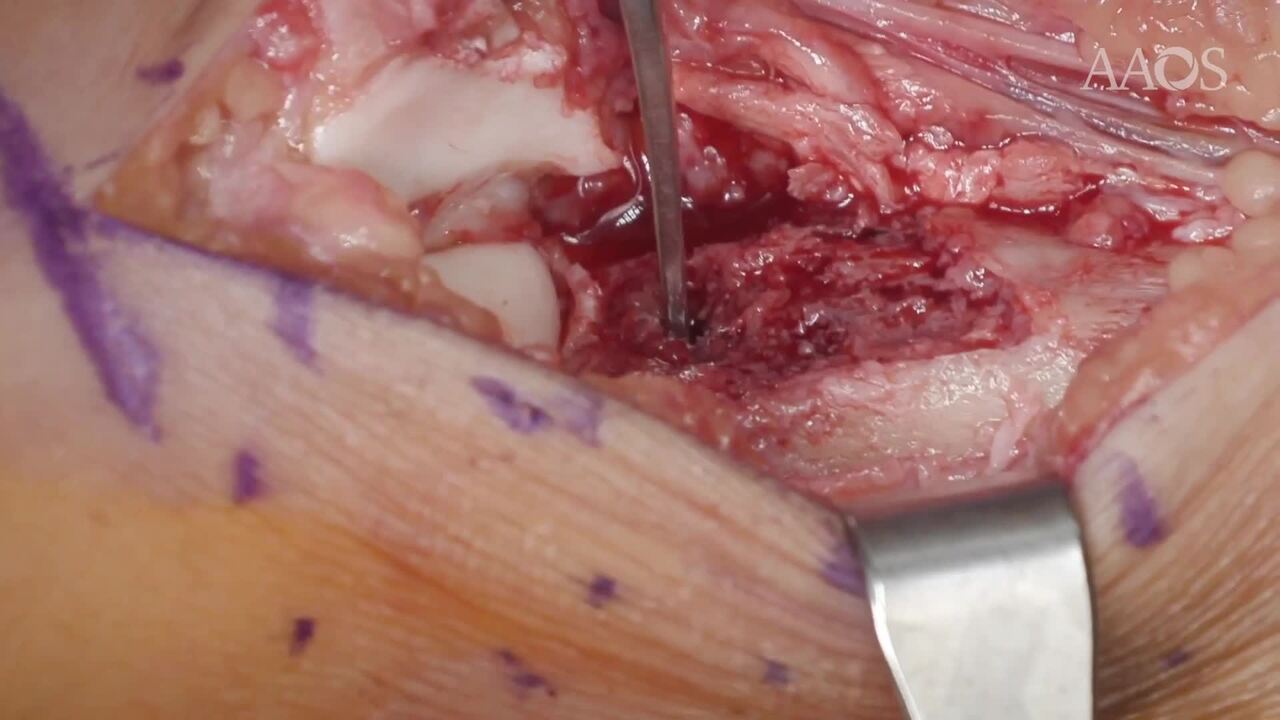
Purpose: This video is a case presentation of a SAD type 2 ankle fracture that was fixed with a medial plate in antiglide mode and a lateral fully threaded intramedullary screw.
Methods: The anatomy, examination, diagnosis, and treatment options for SAD ankle fractures are reviewed. A case of a 42-year-old female with a subacute SAD type 2 ankle fracture after a twisting mechanism is presented. After a thorough discussion of risks, benefits and prognosis of operative and nonoperative treatment options, the patient proceeded open reduction and internal fixation of her fracture.
Results: Appropriate ankle mortise, talocrural angle, fibular length and disimpaction of the tibiotalar articulation were achieved. Post-operative radiographs showed maintenance of articular disimpaction and fracture reduction during weight bearing starting at 6 weeks.
Conclusion: SAD type 2 ankle fractures are associated with higher trauma and a more tenuous soft tissue envelope compared to other torsional ankle injuries, with features similar to pilon fractures. Intramedullary screw fixation yields similar rates of acceptable reduction, fracture union, patient reported outcomes and lower rates of symptomatic hardware than fibular plating. This fibular fixation strategy is especially advantageous for SAD ankle fractures given the short distal fibular fracture fragment. Furthermore, it decreases the incision length and soft tissue dissection thus minimizing wound complications.