
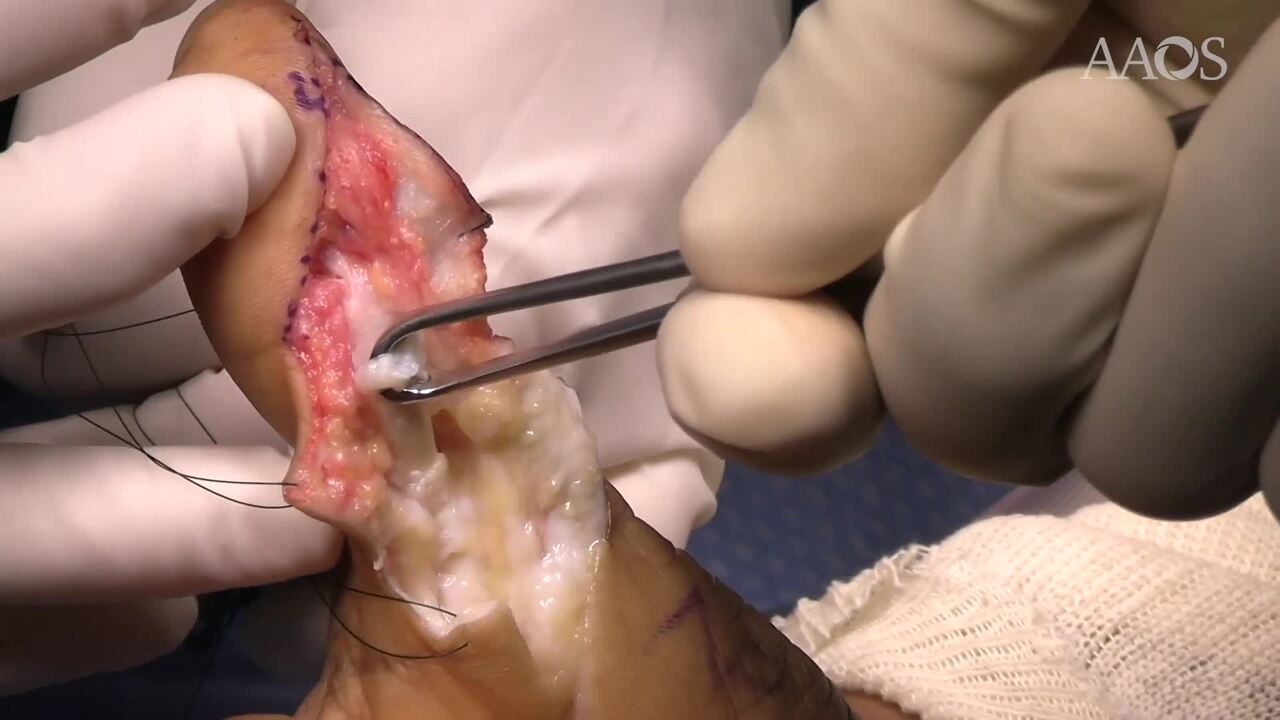
Exploration and Repair of Thumb Flexor Pollicis Longus Laceration with Tendon Advancement and Nerve Allograft
This surgical video demonstrates the evaluation, stepwise operative technique, and postoperative management of a chronic flexor pollicis longus (FPL) tendon rupture with a symptomatic radial digital nerve neuroma following a distal thumb laceration. The case features a 39-year-old male with persistent thumb dysfunction and numbness after a table saw injury. Clinical exam revealed loss of active interphalangeal (IP) joint flexion, absent tenodesis effect, and a positive Tinel’s sign over the radial digital nerve. A zigzag volar thumb incision with proximal extension provided optimal exposure while minimizing scar contracture. Intraoperative findings included a complete distal FPL transection with a 7 mm distal stump, dense adhesions requiring tenolysis, and a 15 mm neuroma necessitating excision and nerve allograft reconstruction. Direct tendon advancement was performed, preserving the A1 and oblique pulleys to maintain pulley function and prevent bowstringing. Key technical points include meticulous sheath handling, neurovascular bundle protection, and strategies to restore tendon gliding. Intraoperative footage highlights critical steps such as dense scar dissection and neuroma management. Postoperative care involved thumb spica immobilization with passive flexion and active extension to optimize tendon healing. Relevant literature on tendon repair biomechanics, rupture risk, and outcomes is reviewed. This comprehensive video aims to enhance surgical decision-making and technical skill for hand surgeons and trainees managing complex FPL injuries with concomitant neuroma.