
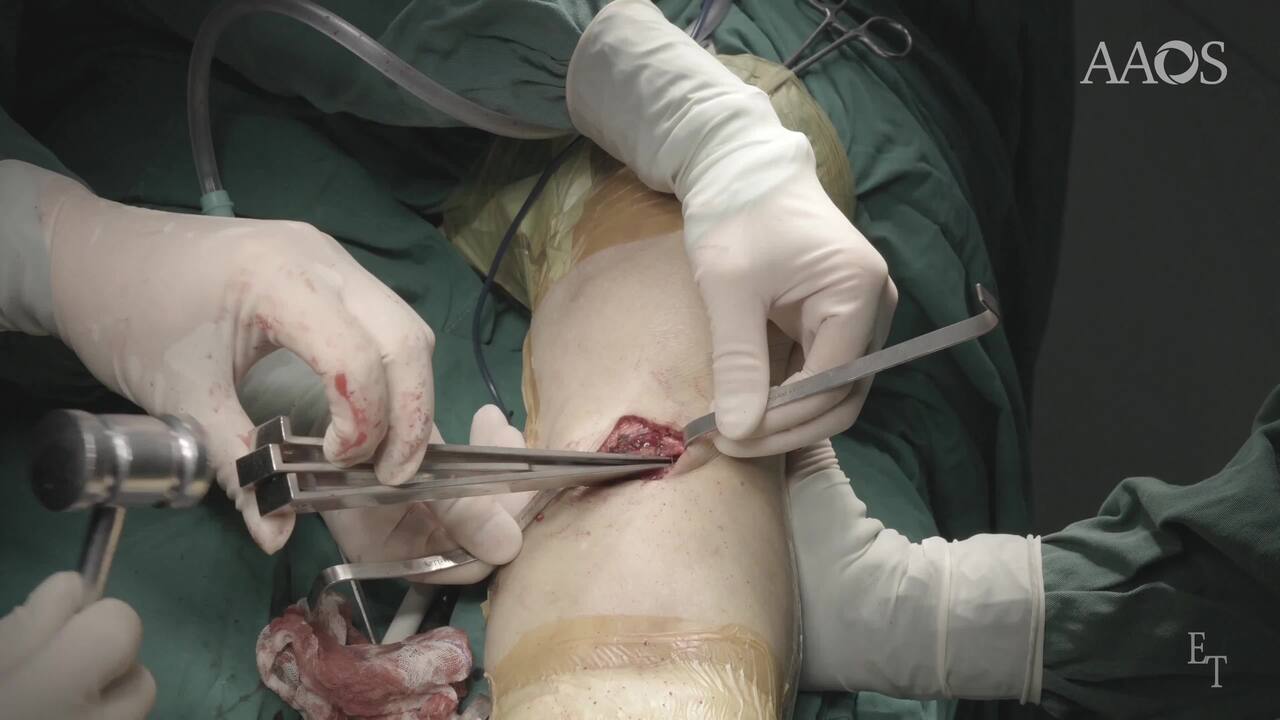
APTT-HTO: A New Surgical Technique for Joint-preserving Management of Knee Osteoarthritis
Background: High tibial osteotomy (HTO) is a well-established joint-preserving surgical technique that has been proven effective in the treatment of knee osteoarthritis by realigning the mechanical axis of the lower limb. However, conventional biplanar HTO carries several limitations, including a higher risk of hinge fracture and technical complexity. To address these issues, we introduced an innovative modification of the osteotomy plane, challenging the traditional notion that the tibial tuberosity is a contraindicated area for osteotomy.Methods: In our anatomical study, the tibial tuberosity was divided into four distinct zones—A, B, C, and D. Zones A and B were identified as functionally critical areas due to their role in patellar tendon attachment, while zones C and D were considered biomechanically non-essential. Based on these findings, we repositioned the osteotomy line inferiorly, placing it within the CD region of the tibial tuberosity. This plane is anatomically favorable, as the popliteus muscle lies posterior to the osteotomy site, providing natural protection to the neurovascular bundle. This technique—termed APTT-HTO (Anterior Popliteus Transtibial Tuberosity High Tibial Osteotomy)—has since been implemented widely in clinical practice. We have performed several hundred cases with favorable outcomes and have collected longitudinal video-based patient follow-ups to assess postoperative function and safety.
Results: When the osteotomy line is positioned within the CD zone of the tibial tuberosity, there is no compromise to the mechanical integrity of the patellar tendon. Inferior shifting of the osteotomy plane allows for safer bone cutting, as the posterior aspect is no longer directly exposed to vulnerable vascular structures. Instead, the popliteus muscle provides a natural anatomical shield. Additionally, the altered cutting trajectory increases the osteotomy slope, resulting in improved hinge compression. Even in cases of hinge disruption, the mechanical environment favors compressive forces over shear stress, thereby enhancing stability and reducing the risk of complications.
Discussion: The APTT-HTO technique represents a safe, reproducible, and standardized modification of conventional HTO. By shifting the osteotomy site to a biomechanically favorable and anatomically protected zone, this method minimizes risks traditionally associated with proximal tibial osteotomy and offers a promising alternative for the surgical management of medial compartment knee osteoarthritis.