
Physeal Sparing Over the Top ACL Reconstruction in Skeletally Immature Patients
Introduction: The incidence of Anterior Cruciate Ligament (ACL) injuries in pediatric and skeletally immature patients is rising, due to early, intensive participation in organized and high-demand sports. However, unlike adults, injuries in young patients pose serious challenges regarding their management, especially when surgery is required. In fact, if non-operative treatment is associated with a high incidence of subsequent meniscal injuries, surgical reconstruction could be responsible for iatrogenic growth abnormalities and limb deformities.
To date, despite the International Olympic Committee (IOC) developing a consensus paper on the management of pediatric ACL injuries, controversies remain regarding the indications, timing of surgery, and techniques for ACL reconstruction.
We present a structured, growth-sensitive approach to pediatric ACL injuries that considers multiple patient- and imaging-based factors to guide treatment decision-making. Our protocol integrates skeletal age assessment, growth potential estimation, and injury characteristics to identify the safest and most effective therapeutic strategy for each skeletally immature patient.
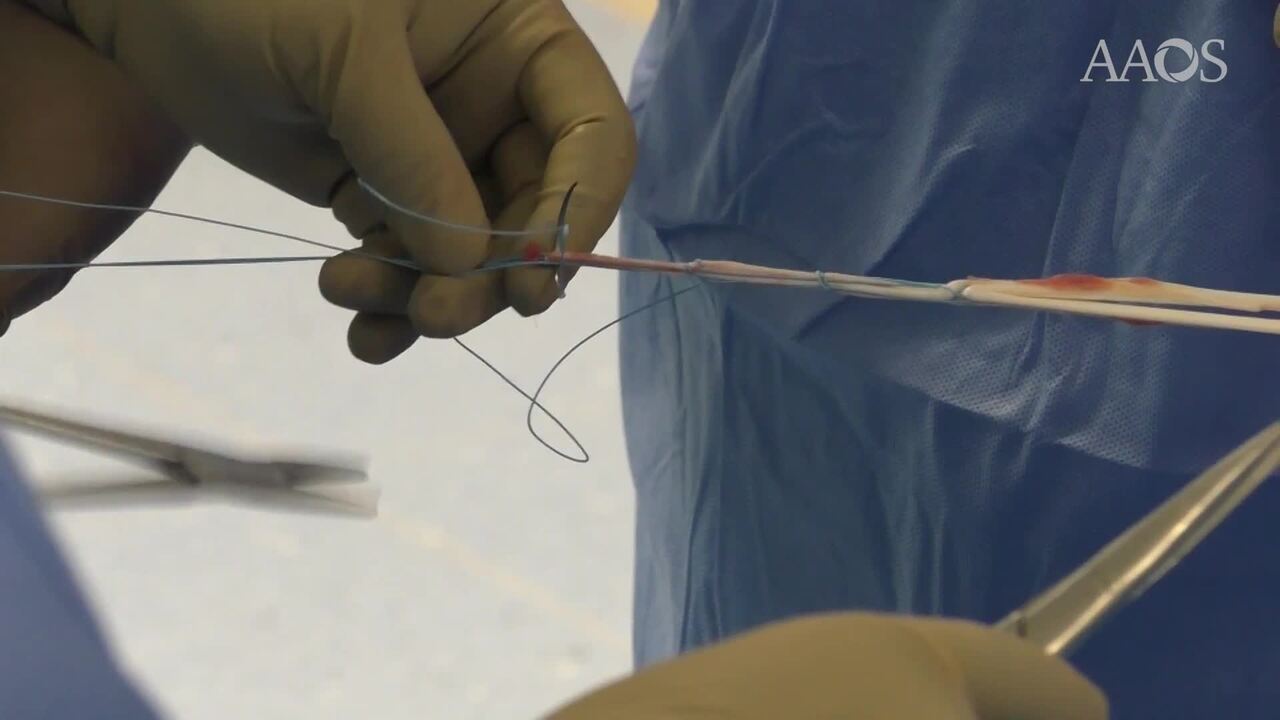
Thus, the aim of this video is to provide a framework for the assessment and management of skeletally immature patients with ACL injuries, based on the authors' experience and current evidence-based medicine. A clinical case is presented of a pediatric ACL injury surgically treated with supra-physeal sparing reconstruction using autologous gracilis and semitendinosus tendons with the over-the-top technique, following a multifactorial evaluation guided by our algorithmic approach.
The video also discusses the outcome (survival, clinical score, return to sport) of a sample of 43 patients undergoing supra-physeal over-the-top ACL reconstruction with lateral extra-articular tenodesis evaluated as part of a retrospective observational single-center study.
Materials and Methods: The database of a single institution was retrospectively searched for skeletally immature patients who underwent ACL reconstruction. Ipsilateral and/or contralateral reoperations were recorded. Knee Injury Osteoarthritis Outcome Score (KOOS), Lysholm, and Tegner Activity Level scores were collected at final follow-up. Survivorship was analyzed through Kaplan-Meier method with ipsilateral ACL revision as endpoint. Differences in demographics and PROMs were assessed through Student’s t-test.
Results: 43 patients (average age at surgery 13.3 ± 1.6 years) at mean follow-up of 11.0 ± 2.7 years were included.
9% of the sample underwent revision ACL in the ipsilateral knee at an average of 5.3 ± 2.4 years after surgery, with a failure rate of 5% at 5 years and 10% at 10 and 15 years. Four patients (9%) underwent arthroscopy for a new meniscus tear, and a further 5 patients (12%) underwent staple removals due to local discomfort. A total of 11 patients (26%) underwent at least one re-operation in the ipsilateral knee after an average of 3.0 ± 2.1 years. KOOS subscales were all above the patient acceptable symptom state. Patients with <13 years at surgery showed worse Lysholm (82.0 vs 94.6, p=0.025) and KOOS-ADL (96.7 vs 99.9, p=0.025) compared to those with =13 years. Tegner Activity Level score at final follow-up was significantly higher than before surgery and lower than pre-injury level. Residual pain was almost absent both at rest and during activity.
Conclusion: This video presents a comprehensive and evidence-based framework for the assessment and management of ACL injuries in skeletally immature patients. Based on the authors’ clinical experience and research, a practical algorithm is proposed to guide decision-making by integrating skeletal maturity, imaging findings, and patient-specific factors. This multifactorial approach aims to optimize outcomes while minimizing the risks associated with both conservative and surgical treatments.
Applied to a cohort of patients, this strategy led to favorable long-term results: physeal-sparing over-the-top ACL reconstruction with lateral extra-articular tenodesis (LET) demonstrated a high graft survivorship rate of 90% at long-term follow-up. However, reoperations were required in 26% of cases, mostly for hardware removal or meniscal procedures, particularly in patients under 13 years old, who also showed slightly lower patient-reported outcome scores. These findings support the effectiveness and safety of the proposed treatment algorithm and the surgical technique while highlighting age-specific considerations in pediatric ACL surgery.