
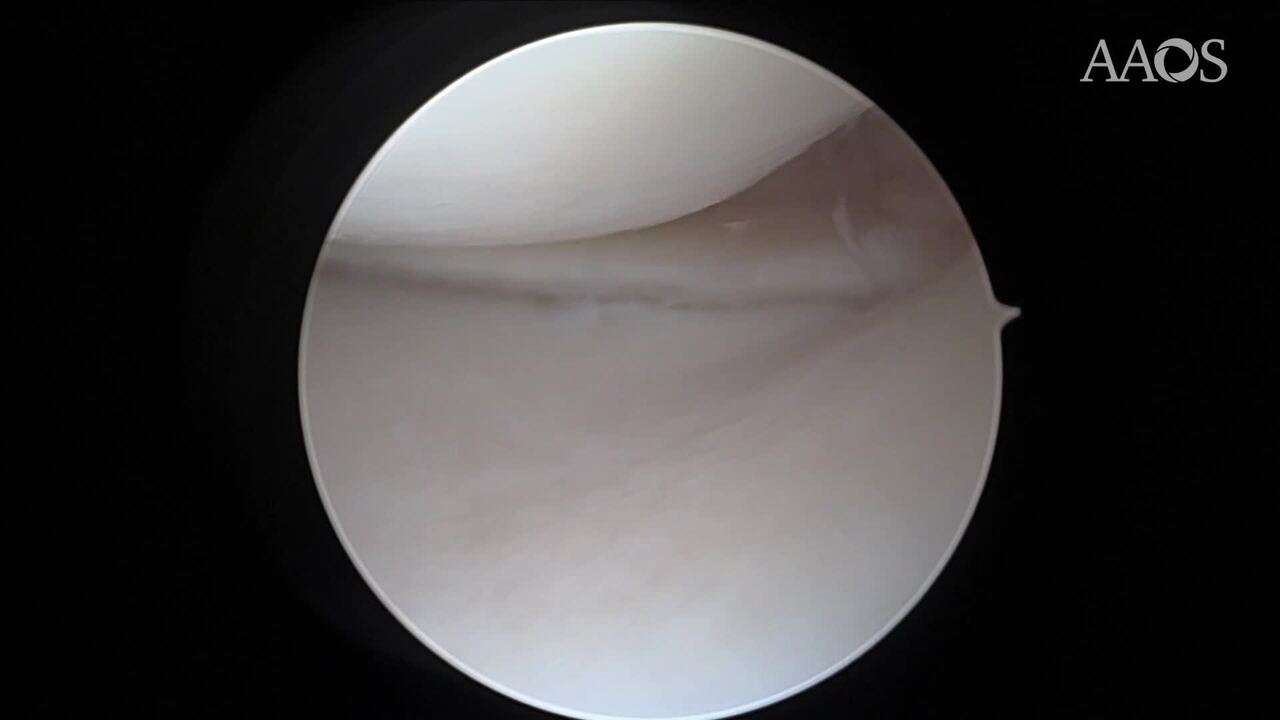
Anterior Closing Wedge Osteotomy with Contralateral BTB Autograft and Modified Lemaire Tenodesis for Revision ACL Reconstruction Using Patient-specific Instrumentation
Background: Anterior cruciate ligament (ACL) ruptures are among the most common injuries in young athletes and active adults. Failure of the graft following primary anterior cruciate ligament reconstruction (ACLR) has been reported to be as high as 9.6%. Though multifactorial, malalignments in the coronal and sagittal plane are considered risk factors for ACL injury and re-tear of the graft following ACLR. Increased posterior tibial slope (PTS) in particular is a significant risk factor for recurrent ACL failure.
Purpose: This video overview and case presentation demonstrates anterior closing wedge proximal tibia osteotomy and modified Lemaire Tenodesis for revision ACL reconstruction in a young athlete.
Methods: The anatomy, pathogenesis, diagnosis, and treatment options for revision ACL surgery and anterior closing wedge proximal tibia osteotomy are discussed. A case of a 20-year-old female with a history of an ACL reconstruction and retear in settng of elevated PTS is presented. This injury was non contact and prevented her from participating at the collegiate level. After a thorough discussion of risks, benefits and prognosis, the patient elected to proceed with an anterior closing wedge osteotomy with contralateral bone patellar bone autograft and modified lemaire tenodesis for revision ACL reconstruction.
Results: The anterior tibial slope was successfully corrected using an anterior closing wedge osteotomy with patient-specific instrumentation and the contralateral BTB autograft and modified Lemaire tenodesis provided a robust reconstruction of the ACL. Postoperative imaging confirmed accurate slope correction and tunnel placement, with maintenance of alignment and graft integrity at follow-up. She ultimately demonstrated progressive functional gains consistent with expectations following revision ACL reconstruction and has returned to sport specific training at latest follow up.
Conclusion: In patients with recurrent ACL graft failures, anterior closing wedge osteotomy provides a safe and reliable technique to correct an elevated PTS and return patients back to full activities with reduced risk of ACL graft re-tear. This treatment is simplified with use of patient specific instrumentation and can offer good functional results with a decreased risk of future re-tear. Understanding the often multifactorial causes of ACL failure is crucial for optimal outcomes in these patients.