
The SuperPATH Hip Replacement
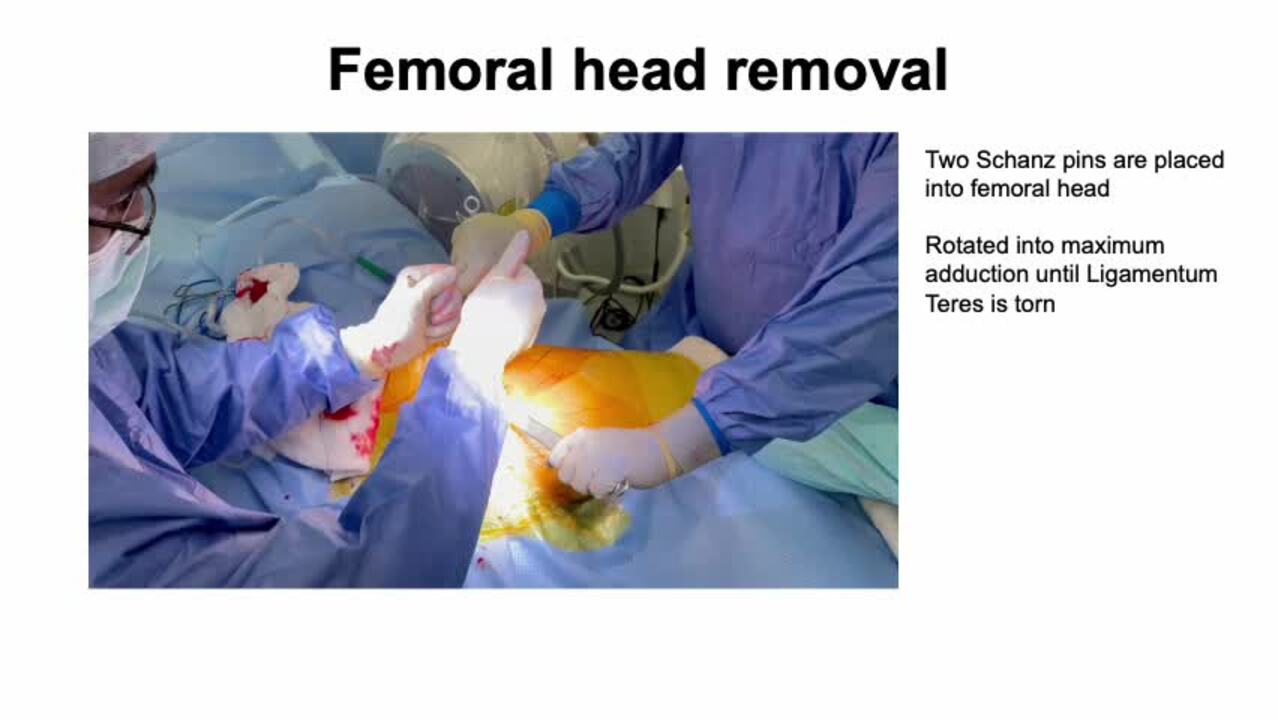
The Direct Superior Portal Assisted Total Hip Approach (SuperPath) for Total Hip Replacements (THR) is a less traumatic, micro-invasive technique utilising the inter-muscular interval between the gluteus medius/ minimus (anteriorly) and piriformis (posteriorly). The hip capsulotomy is performed superiorly, preserving the important posterior capsule. In literature, the SuperPath THR is associated with less pain; faster recovery; reduced length of stay and lower 30-day readmission; less overall complications and a 15% overall cost reduction compared to the traditional posterior, lateral and anterior THR approaches. In addition to the evidence based video theatre, the authors also report their Superpath outcomes.The SuperPath requires a standard operating table, with the patient in the familiar lateral decubitus position. The anatomy is familiar to the traditional posterior approach to hip. A 6-8cm incision is made in line with the postero-superior femur. The gluteus maximus fibres are dissected in-line. The gluteus medius/ minimus are retracted anteriorly while the piriformis is retracted posteriorly, with blunt Hohmann retractors. A super capsulotomy is performed, preserving the important posterior hip capsule thus improving stability. The femoral canal entry is gained through the piriformis fossa while a round osteotome is utilised on the piriformis fossa, femoral neck and head to fashion a slot for femoral broaching. Femoral broaching is performed with the femoral neck in-situ, reducing the risk of intra-operative iatrogenic calcar fracture. Sequential femoral broaching is performed to accept the templated broach with the broach-depth determined by pre-operative templating. The neck cut is completed over the top of the broach with an oscillating saw. A 1cm portal for the acetabular reamer shaft is placed using a portal placement assembly which includes an alignment handle and acetabular trial. Acetabular reamers are sequentially placed into the main incision while the reamer shaft is introduced through the cannulated portal. Once the acetabulum has been reamed sufficiently, the acetabular implant is introduced with the alignment handle and is subsequently medialised and axially impacted using the portal. The polyethylene liner is impacted, the trial head is placed into the acetabulum and the hip is trialled utilising modular neck trials. The head and trunion are coupled in-situ under direct visualisation through traction and external rotation manoeuvres. Closure is performed in layers, beginning with the superior capsule, the gluteus maximus fibres, deep fascia, subcutaneous tissue and skin. Two to three hours post-operatively, the patients are mobilised under physiotherapy guidance. There are no post-operative restrictions: patients are allowed to sleep on either hip; sit on low chairs; return to driving in 2 weeks or when confident in performing emergency braking and no requirement of aids such as toilet seat raises or grabbers. 182 patients underwent THR via the SuperPath approach in our centre between April 2021 and March 2025. 86 patients were male while 95 were female. Operative indications included Osteoarthritis, Avascular Necrosis, Developmental Dysplasia of the Hip, Septic Arthritis Sequelae and Fracture Neck of Femur. The mean length of stay was 1.1 (0-2) days. Mean Haemoglobin drop was 1.4mg/dL with no patients requiring a blood transfusion. Mean surgical time was 51 (32-89) minutes. Mean post-operative Visual Analogue Scale Pain Score was 4/10 at two days and 1/10 at two weeks post-operatively. The Mean time to discard walking aids was 10 days and Mean time to driving was 12.5 days. The mean time to return to work was 40 days. Oxford Hip Scores improved from 16 (7-28) at pre-op to 44 (37-48), 46 (36-48) and 47 (43-48) at 6 weeks, 6 months and 12 months, respectively. The Forgotten Joint Score improved from 55 (52-65) at pre-op to 93 (77-98), 97 (89-99) and 98 (94-100) at 6 weeks, 6 months and 12 months, respectively.