
Impaction Bone Grafting Technique for Bone Loss in Revision Total Knee Arthroplasty
Background: Bone loss in the setting of revision total knee arthroplasty (TKA) is a complex and challenging issue. As the number of revision cases continue to rise, understanding the various techniques and indications to reconstitute bone stock is tantamount to implant longevity. Depending on the degree and location of the bone loss, options include screws in cement, metaphyseal cones or sleeves, impaction bone grafting, bulk allograft, metal augments, megaprostheses, or hybrid techniques. Of these options, bulk allograft and impaction bone grafting attempt to recreate lost bone stock. Originally used in total hip arthroplasty, impaction bone grafting has also shown success in clinical and radiographic outcomes for revision TKA.
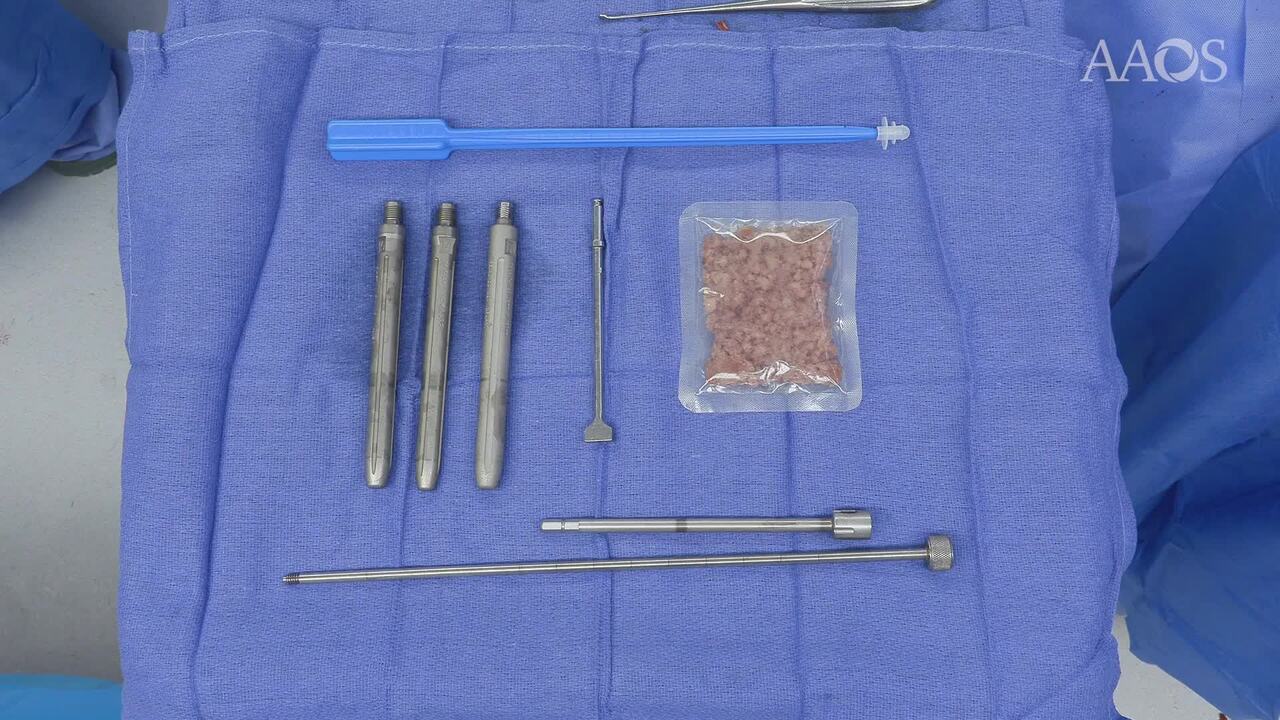
Purpose: This video overview and case presentation demonstrates the technique of impaction bone grafting to reconstitute the femoral canal for bone loss in the setting of multiple revision TKAs for aseptic loosening.
Methods: The available techniques for major bone loss in revision TKA are reviewed. A case of a 68-year-old male with a history of multiple revision procedures for aseptic loosening following TKA is presented. He underwent primary TKA in 2016 and underwent four revision surgeries, three for aseptic loosening and one for flexion instability. Infectious workup was completed and patient underwent MRI, which confirmed loosening of both components. Given his extremely limited function, revision history for loosening, and sclerotic canals devoid of a cancellous bony bed, the patient elected to procced with revision TKA with impaction bone grafting.
Results: The femoral canal was reconstituted with fresh, frozen cancellous allograft and radially impacted in 1 mm increments until the bone was 1 mm wider than the planned cemented stem size. Both femoral and tibial components were revised, with the tibial cone and patella component left in place. Immediate post operative radiographs confirmed appropriate implant placement and cement mantles. At six weeks follow up, the patient is progressing well clinically with activities and radiographs demonstrated no evidence of implant failure. He is walking without pain.
Conclusion: Impaction bone grafting is a viable option for major bone loss in the setting of complex revision knee arthroplasty. This technique attempts to biologically reconstruct bone defects, restore bone stock, and provide stable fixation for prosthetic components. Outcomes following this technique demonstrate excellent implant fixation, graft incorporation, and functional outcomes.