
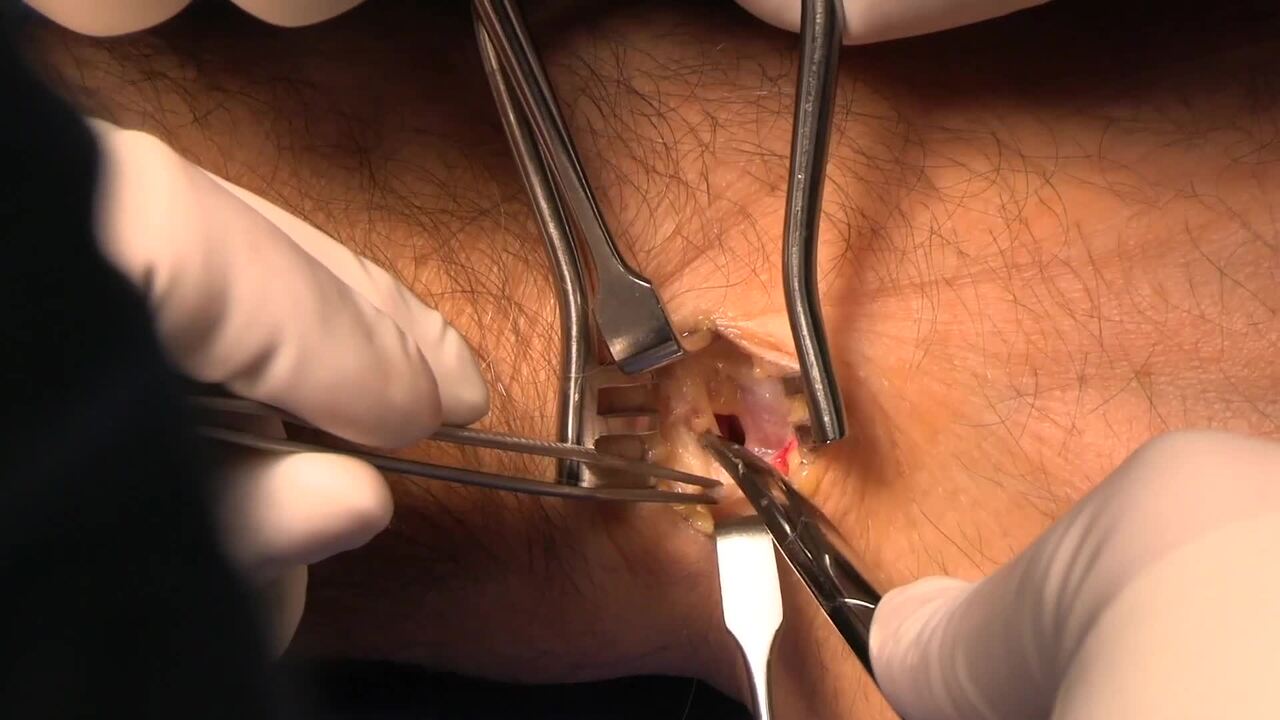
Hemi-hamate Arthroplasty for Chronic PIPJ Dorsal Fracture Dislocation
Proximal interphalangeal joint (PIPJ) dislocations are the most frequently encountered dislocations in the hand, with the small finger involved in nearly a quarter of cases. These injuries often stem from athletic trauma and are commonly accompanied by avulsion fractures at the volar base of the middle phalanx. When more than 40% of the articular surface is compromised, surgical treatment becomes an important consideration. Unfortunately, these injuries are sometimes overlooked or inadequately addressed, which may lead to chronic pain, swelling, limited motion, and post-traumatic arthritis, depending on the extent of the damage. Managing longstanding PIPJ dislocations poses particular clinical challenges. This video case report features a 52-year-old man who sustained a chronic dorsal fracture-dislocation of the right small finger PIPJ during a basketball injury. Due to the extent of bone loss and delayed presentation, he was treated with a hemi-hamate arthroplasty. The video illustrates the operative technique in detail, including graft harvest, preparation, and placement. It also incorporates a review of recent literature on hemi-hamate outcomes and highlights surgical decision-making, key technical tips, and potential pitfalls. At one month following surgery, the patient exhibited a good range of motion, preserved active flexion and extension, and minimal discomfort. He is continuing with occupational therapy to further improve function. This educational video outlines a comprehensive approach to hemi-hamate arthroplasty in the setting of chronic PIPJ fracture-dislocations. It underscores surgical indications, technique, and clinical reasoning, offering practical insights for hand surgeons faced with managing similar injuries.