
Posterior Sternoclavicular Joint Reconstruction with Semitendinosus Allograft
Background: Posterior sternoclavicular joint (SCJ) dislocations are uncommon due to the strength of the posterior joint capsule but pose a significant risk of neurovascular and mediastinal compression. Various surgical techniques have been described, with the sternal docking reconstruction using tendon allografts demonstrating improved biomechanical stability, elimination of anterior bulk, and ease of graft passage. This study outlines the sternal docking posterior SCJ reconstruction with a semitendinosus allograft for recurrent symptomatic posterior SCJ dislocations.
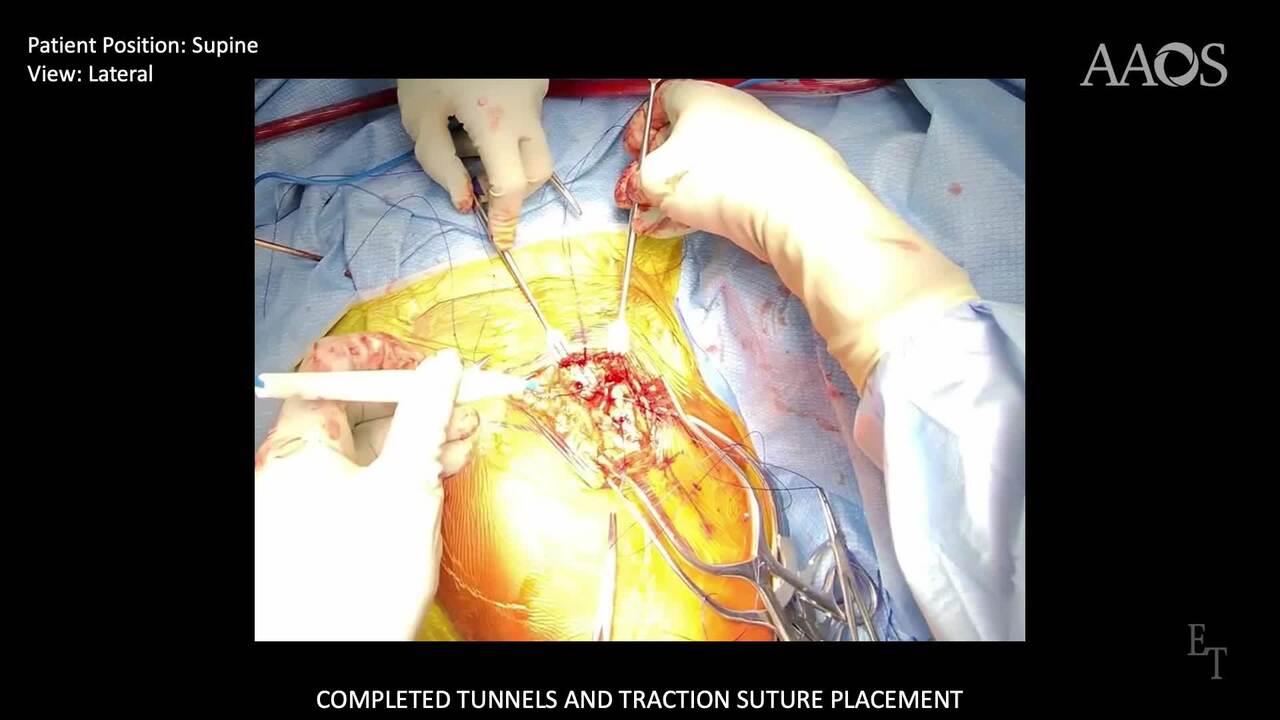
Indications: Surgical reconstruction is indicated in patients with symptomatic recurrent posterior SCJ dislocations that fail conservative management. A semitendinosus allograft with suture augmentation may be utilized due to its strength, availability, and ability to provide long-term stability while minimizing donor site morbidity.Technique Description: The procedure involves an open reconstruction using a semitendinosus allograft passed through bone tunnels in the clavicle and sternum to recreate the function of the sternoclavicular ligament. The graft is tensioned manually and secured using nonabsorbable high tensile suture to restore joint stability while allowing controlled mobility. The construct aims to replicate native joint biomechanics and reduce the risk of recurrent dislocations.
Results: At 2 weeks postoperatively, the patient reports satisfactory recovery with improved shoulder stability and pain managed with over-the-counter analgesics. He has not experienced complications such as infection, neurovascular impairment, or graft failure. Continued rehabilitation is expected to facilitate return to full function.
Conclusion: This study presents the surgical management of a recurrent posterior SCJ dislocation in an 18-year-old male with a semitendinosus allograft reconstruction. Given the rarity of symptomatic posterior SCJ instability, the optimal surgical approach remains debated. Further research is warranted to establish best practices and long-term outcomes in SCJ reconstruction, however numerous beneficial outcomes are reported for this reconstruction technique.Patient Consent Disclosure Statement: The author(s) attests that consent has been obtained from any patient(s) appearing in this publication. If the individual may be identifiable, the author(s) has included a statement of release or other written form of approval from the patient(s) with this submission for publication.