
Reverse Total Shoulder Arthroplasty with Glenoid Displacement and Scapular Fracture: Conversion to Hemiarthroplasty
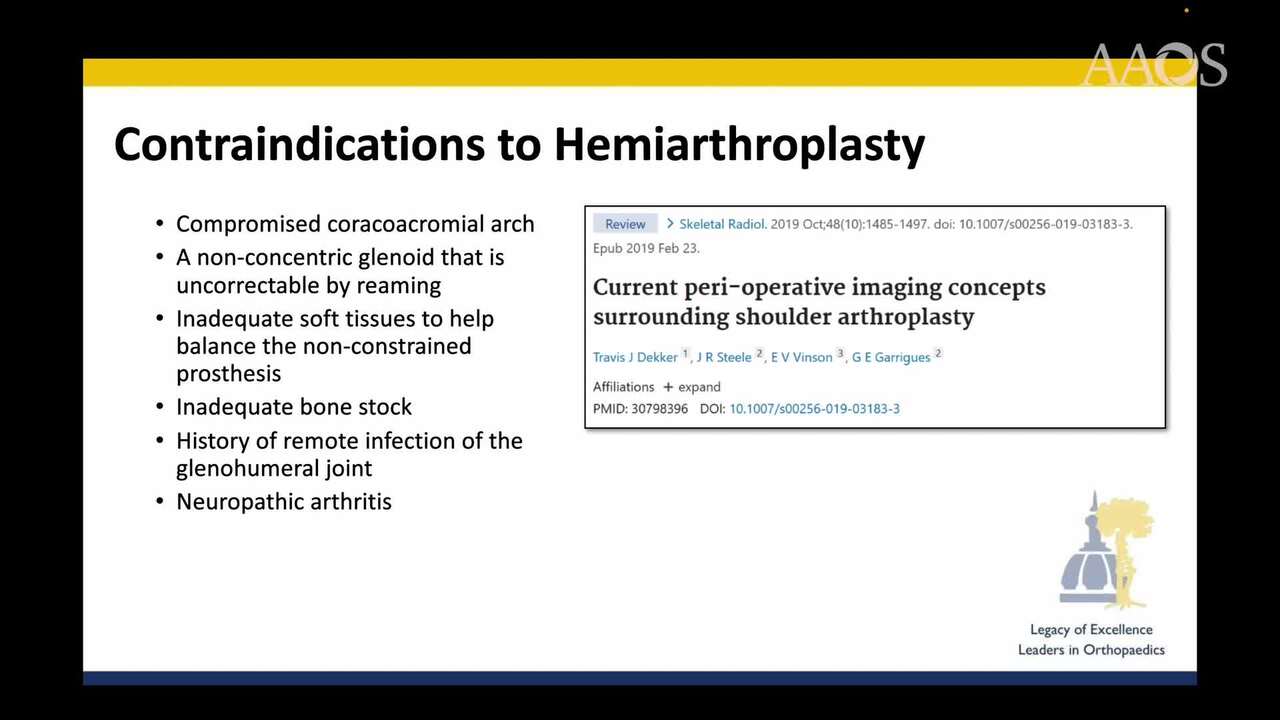
Introduction: An 84-year-old right hand dominant female with a history of Alzheimer’s and ataxia presented with increasing left shoulder pain due to periprosthetic scapular spine fractures with baseplate loosening, in the setting of a reverse total shoulder arthroplasty (RTSA) nine years ago. On physical examination, she had severe pain with limited range of motion. Preoperative radiographs demonstrated superior displacement of the glenosphere and baseplate, while the humeral stem appeared cemented. Computed tomography demonstrated a chronic scapular spine fracture as well as displacement of the glenoid component. There was also periprosthetic osteolysis surrounding the glenoid screws and proximal humeral stem. The radiographic findings combined with her clinical exam and severe pain indicated the need for a pain-relieving operation. These deficits may be managed with a conversion to a hemiarthroplasty as a salvage procedure, with was suitable for this patient with implant loosening, poor bone stock, and advanced age.
Indications: Conversion of RTSA to hemiarthroplasty is considered in patients presenting with glenoid component loosening, periprosthetic fractures involving the scapular spine or proximal humerus, and, less commonly, infection or instability. In many of these patients, this conversion is conducted as a salvage procedure due to insufficient bone stock. For this patient, the baseplate loosening along with fractures of the scapular spine along with the patient’s severe pain, limited rehabilitation potential, and low day-to-day demand led to the decision for this conversion.
Technique: The patient was brought into the operating room after surgical consent was obtained and the surgical site was signed. A surgical timeout was performed, and the operative site was verified, prepped, and draped in the standard sterile fashion with the patient in a beach chair position. A deltopectoral approach was used and upon entering the glenohumeral joint, the wound appeared clean, and synovial fluid was aspirated and sent for culture. The anterior soft tissue sleeve was removed before the humeral tray was dissociated and removed from the stem. Attention was then turned to the glenosphere, with removal of the soft tissue for better access to the central screw in order to allow for gentle removal of the glenosphere. The soft tissue around the baseplate was removed before the baseplate and screws were carefully explanted, with minimal evidence of bony ingrowth seen. The glenoid bone was cleaned, curetted, and reamed to match the dimensions of the humeral hemiarthroplasty head. Bony defects were packed with cancellous bone chips that had been soaked in a vancomycin bath and impacted to provide a stable foundation. An adaptor component was then secured into the humeral stem, which remained stable, and an additional adaptor component over the humeral neck was inserted and impacted in. Humeral head sizes were then trialed to achieve optimal joint stability, which was confirmed intraoperatively, before the final hemiarthroplasty components were implanted. The joint was thoroughly irrigated before the wound was closed in a layered fashion.
Discussion: In this case, conversion from a RTSA to hemiarthroplasty in an 84-year-old female provided pain relief and stable implant fixation in the setting of glenoid baseplate loosening, fractures of the scapular spine, and poor bone stock. Given the patient’s advanced age and limited functional demands, hemiarthroplasty served as an appropriate salvage procedure that would best alleviate the patient’s pain, as revision RTSA was not feasible.