
Conversion to Reverse Total Shoulder Arthroplasty Following Glenoid Allograft Reconstruction for Chondrosarcoma
Background: Glenoid reconstruction with osteochondral allograft is occasionally required following oncologic resection for chondrosarcoma of the scapula. While this approach may restore structural integrity, long-term complications include graft resorption, hardware failure, and persistent shoulder dysfunction. Conversion to reverse total shoulder arthroplasty (RSA) in this setting presents unique challenges due to altered anatomy, limited bone stock, and the presence of prior hardware.
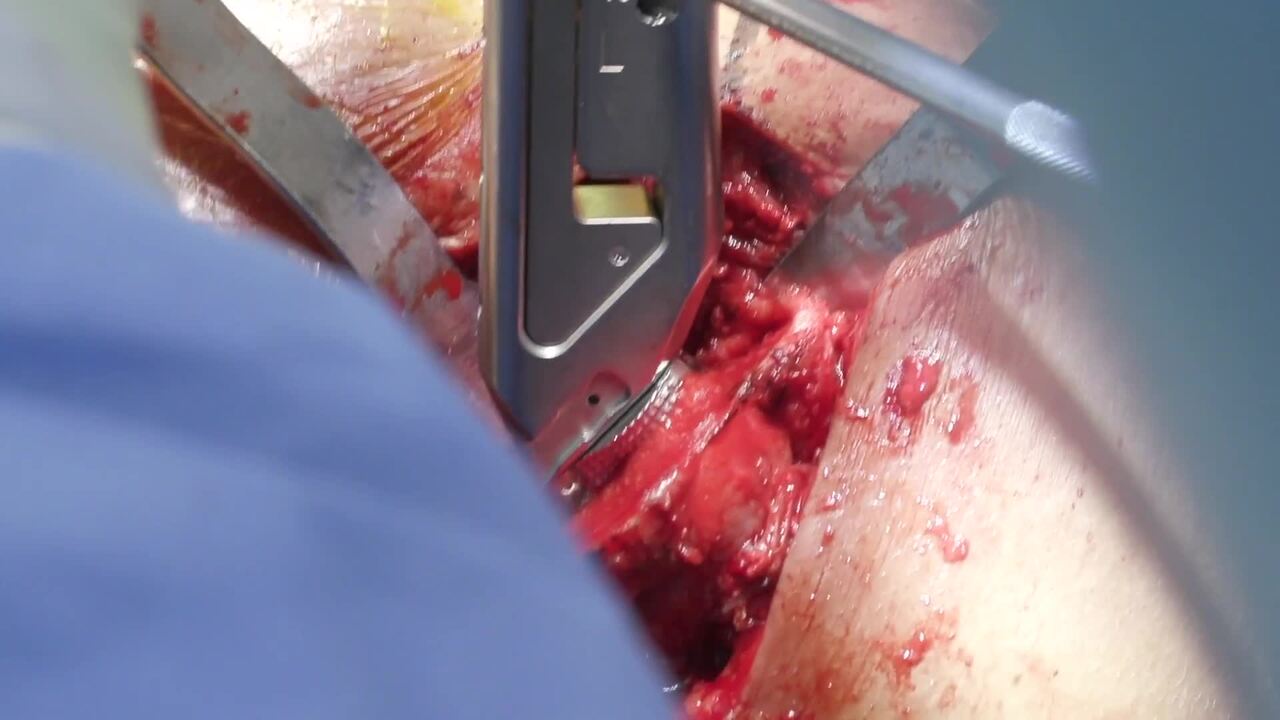
Purpose: This video overview and case presentation demonstrate the surgical technique and considerations for reverse total shoulder arthroplasty in a patient with prior glenoid allograft reconstruction following en bloc resection of a low-grade scapular chondrosarcoma.
Methods: The anatomy, oncologic background, imaging findings, and rationale for surgical decision-making are reviewed. A case of a 47-year-old female with chronic shoulder pain, rotator cuff deficiency, and failed glenoid allograft is presented. Surgical challenges included avoiding interference with prior hardware, achieving stable fixation into host bone, and protecting the brachial plexus after a previous neuropraxic injury.
Results: Stable baseplate fixation was achieved by bypassing the glenoid allograft and securing the implant in native scapular bone. The patient demonstrated significant improvement in pain and function postoperatively, with well-maintained implant position and no signs of recurrence at 3-month follow-up.
Conclusion: Reverse total shoulder arthroplasty is a viable salvage option for patients with failed glenoid allograft reconstruction following chondrosarcoma resection. Achieving secure fixation in native bone, managing existing hardware, and coordinating oncologic surveillance are critical for success. Early multidisciplinary planning and careful soft tissue handling are essential in these complex cases.