
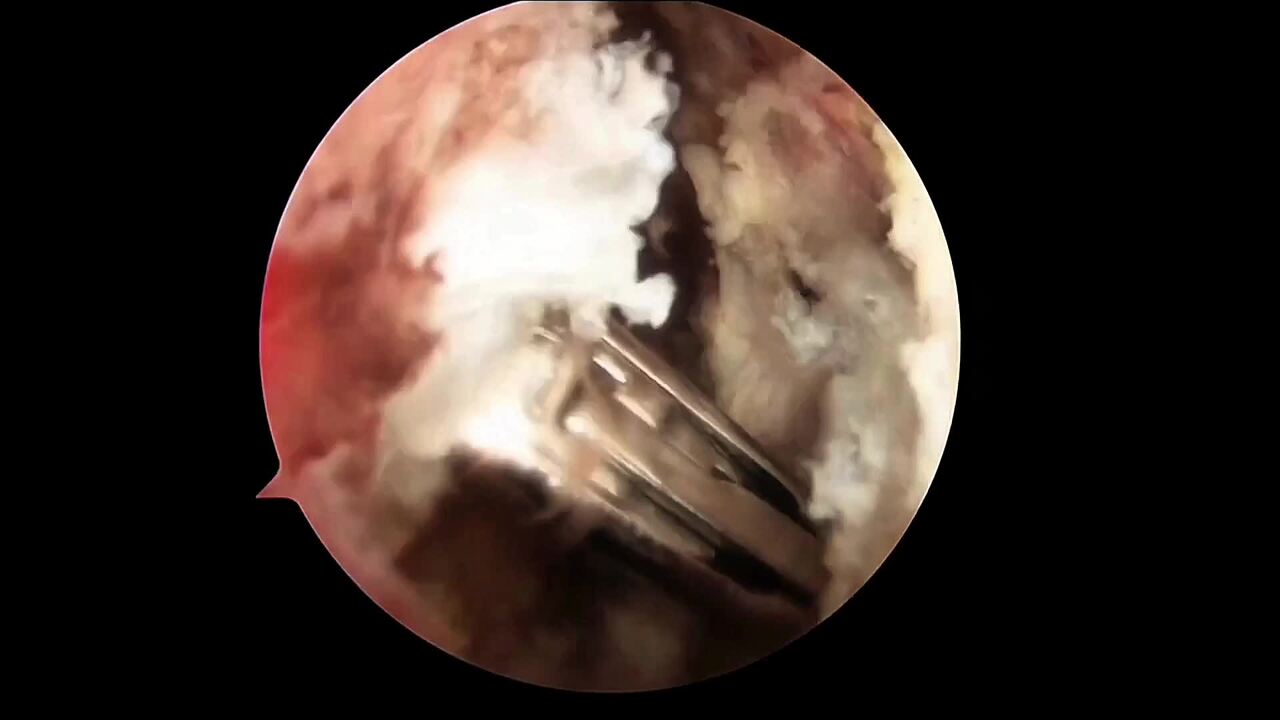
Novel Bioinductive Augmentation for Rotator Cuff Repair: Tips for Managing the Scaffold
Rotator cuff repair remains challenged by postoperative retear rates, which range from 15% to 21%, with healing variability influenced by multifactorial conditions. Recent literature demonstrates that bioinductive patch augmentation yields improved clinical outcomes compared to non-augmented repairs. BioBrace® represents a viable option for patch augmentation, offering both biomechanical support and biological integration.The standard surgical approach typically utilizes medial fixation points combined with a criss-cross configuration of knotless lateral anchors. Despite the standard approach, this augmentation technique also permits technical versatility while preserving biomechanical principles and augmentation integrity. We propose a series of technical modifications intended to enhance the surgical efficacy of BioBrace® scaffold placement, in a variation of the original technique. These adaptations facilitate intraoperative planning, improve intraoperative positioning over the repaired muscle, maintain the advantages of the crossed-anchor configuration, and may reduce the overall number of anchors required, contributing to both procedural efficiency and structural integrity of the repair.