
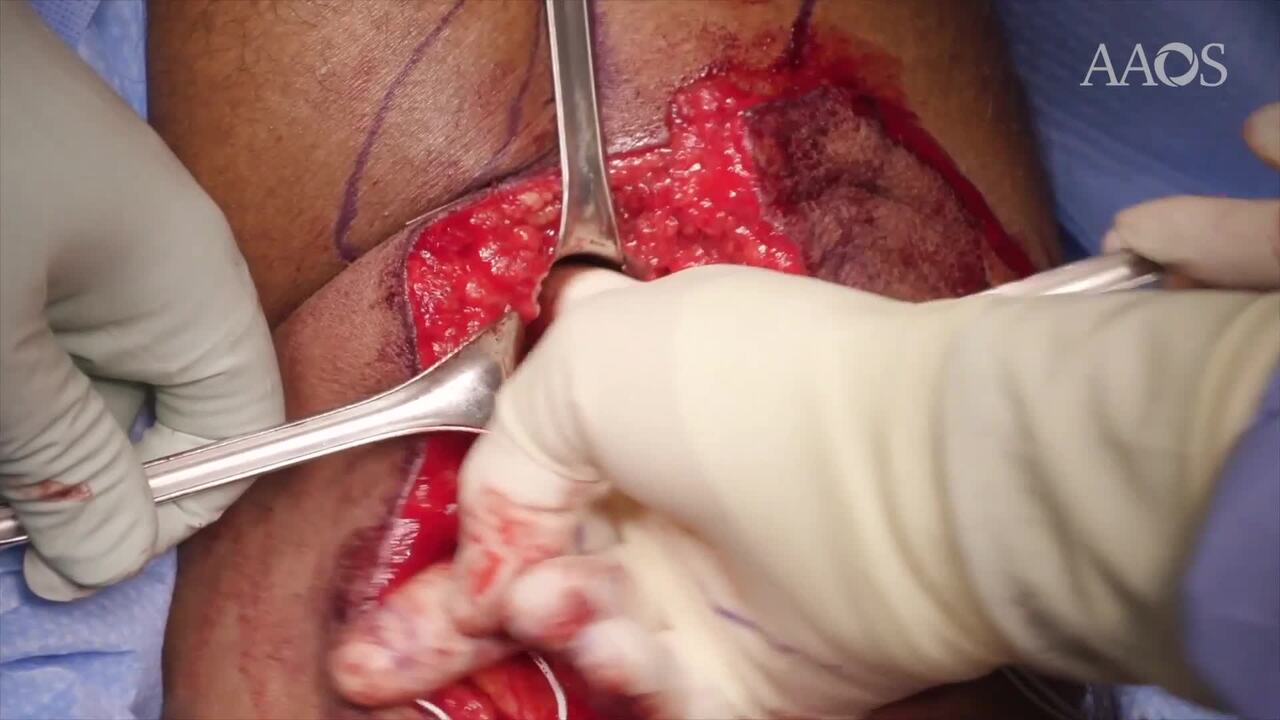
Hamstring Augmentation and Muscle Matrix Enhanced Reconstruction (HAMMER) Technique for Chronic Proximal Hamstring Rupture
Background: Proximal hamstring injuries frequently encountered in both athletic and middle-aged populations, often resulting from high-force eccentric loading. While acute injuries with minimal tendon retraction are amenable to primary repair, chronic tears—characterized by tendon retraction, scarring, and muscle atrophy—are less predictable and pose a reconstructive challenge. The HAMMER technique utilizes dual Achilles tendon allografts for reconstruction in chronic cases.
Purpose: This video presentation demonstrates the HAMMER technique using dual Achilles tendon allografts for proximal hamstring reconstruction in a recreational athlete with chronic symptomatic retracted tear unresponsive to conservative management with a focus on surgical indications, technical pearls, and functional outcomes.
Methods: Hamstring anatomy, injury mechanism, and treatment options are reviewed. A case of a 49-year-old male is presented with right posterior thigh pain and weakness following a waterskiing injury. MRI revealed chronic, complete tears of the semitendinosus and biceps femoris tendons with 12 cm retraction, and partial tearing of the semimembranosus. After non-operative treatment failed, the patient underwent open reconstruction with dual Achilles allografts utilizing the HAMMER technique.
Results: Postoperative recovery included partial weight-bearing with hip abduction bracing and progressive return to activity. At 3-month follow-up, the patient demonstrated full range of motion, improved strength (5/5 at 20°knee flexion), and minimal tenderness at the ischial tuberosity. Literature comparing acute and chronic proximal hamstring ruptures support the use of allograft reconstruction in chronic cases, showing substantial improvement in functional scores.
Conclusion: The HAMMER technique is a reproducible surgical solution for chronic proximal hamstring ruptures with significant retraction and scarring. This method restores proximal hamstring anatomy and function, offering reliable pain relief and improved strength. Patient selection and structured postoperative rehabilitation are essential to optimize recovery and return to activity.