
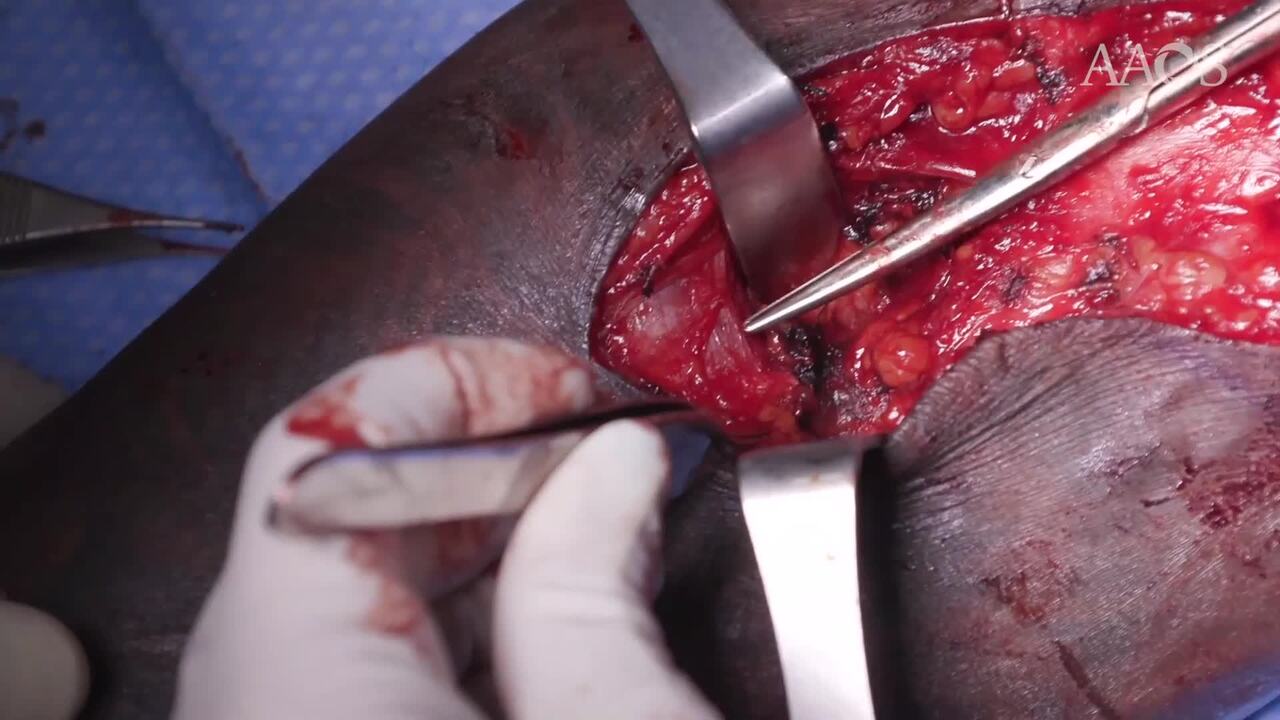
Chronic Distal Biceps Tendon Rupture Reconstruction with Achilles Tendon Allograft: Rebaar Technique (restoration of Biceps with Achilles Augmented Reconstruction)
Background: Chronic distal biceps tendon ruptures are uncommon injuries that present significant technical difficulties due to tendon retraction, scarring, fibrosis, and compromised tissue quality. These injuries often occur in middle-aged males following failed primary repair, delayed diagnosis or initial non-operative management. When direct repair is not feasible, reconstruction using tendon allograft presents a promising alternative to restore elbow flexion and forearm supination function. There is a paucity of literature regarding long term outcomes, with various surgical techniques. Nevertheless, in select patients, distal biceps reconstruction with allograft can achieve favorable functional results and high satisfaction.
Purpose: This video overview and case presentation demonstrates chronic distal biceps reconstruction using achilles tendon allograft utilizing the REBAAR Technique (REstoration of Biceps with Achilles Augmented Reconstruction).
Methods: The anatomy, pathogenesis, diagnosis, and treatment options for distal biceps repair and reconstruction are reviewed. A case of a 48-year-old female with a history of chronic distal biceps tear is presented. This injury occurred traumatically during a fall and prevented him from performing his activities of daily living and caused significant weakness and dysfunction. After a thorough discussion of risks, benefits and prognosis, the patient elected to proceed with distal biceps reconstruction with Achilles tendon allograft to improve his functional status.
Results: The distal biceps was reconstructed anatomically using Achilles tendon allograft. Post-operatively the repair was maintained both clinically and radiographically. The patient has had an excellent recovery and is progressing well in rehab.
Conclusion: Reconstruction is a viable surgical option for patients with chronic distal biceps rupture with significant retraction. This treatment allows for reconstitution of the biceps length-tension relationship with favorable functional and cosmetic outcomes.