
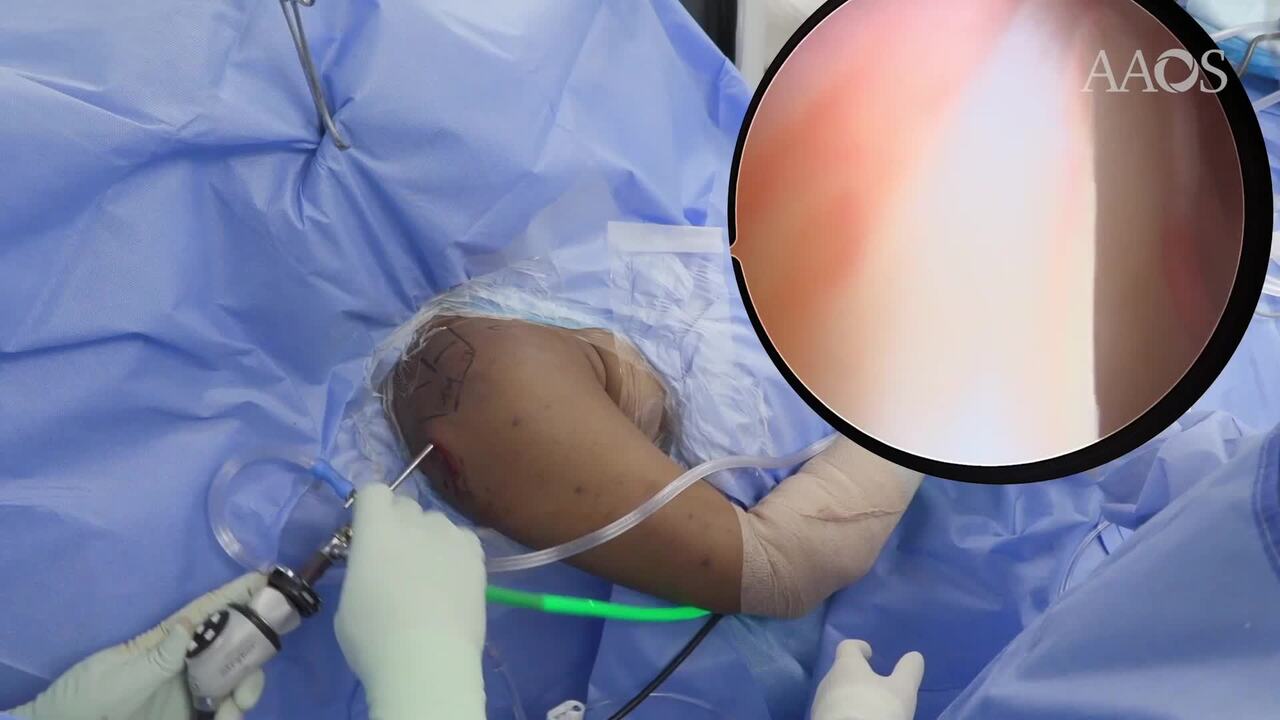
Humeral Head Core Decompression for Treatment of Avascular Necrosis
Background: Avascular necrosis (AVN) of the humeral head, though relatively rare, is the 2nd most common site of AVN for bone. Despite its generally low incidence, there are various traumatic and atraumatic etiologies that can lead to AVN of the humeral head which, if left untreated, can progress to debilitating arthritic changes of the shoulder that require definitive treatment with resurfacing or arthroplasty procedures. The early stages of AVN can be identified clinically and radiographically and, when identified in its early stages, can be treated with more conservative techniques that ultimately prevent the need for larger surgeries such as total shoulder arthroplasty. Core decompression with bone marrow aspirate concentrate is an alternative option for the early stages (stage 1-3) AVN. It is a minimally invasive surgical technique that can stimulate bony growth of the humeral head and prevent further progression of AVN.
Purpose: This video overview and case presentation demonstrates the technique of Core Decompression and use of bone marrow aspirate concentrate (BMAC) for the treatment of humeral head AVN.
Methods: The anatomy, examination, diagnosis, and treatment options for humeral head AVN are reviewed. A case of a 26-year-old female with a symptomatic humeral head AVN is described. After failure of non-operative treatment and a thorough discussion of risks, benefits and prognosis, the patient elected to proceed with humeral head core decompression with BMAC to improve functional status and prevent further progression of AVN.
Results: A core decompression was achieved and the decompression site was backfilled with BMAC and calcium phosphate. Post-operative clinical outcome showed improvement of symptoms at initial post op visits with XR demonstrating appropriate decompression and BMAC/calcium phosphate implantation.
Conclusion: Humeral head core decompression with BMAC is an effective and minimally invasive surgical technique to improve symptoms and prevent further progression of humeral head AVN in patients with stage 1-3 humeral head AVN.