
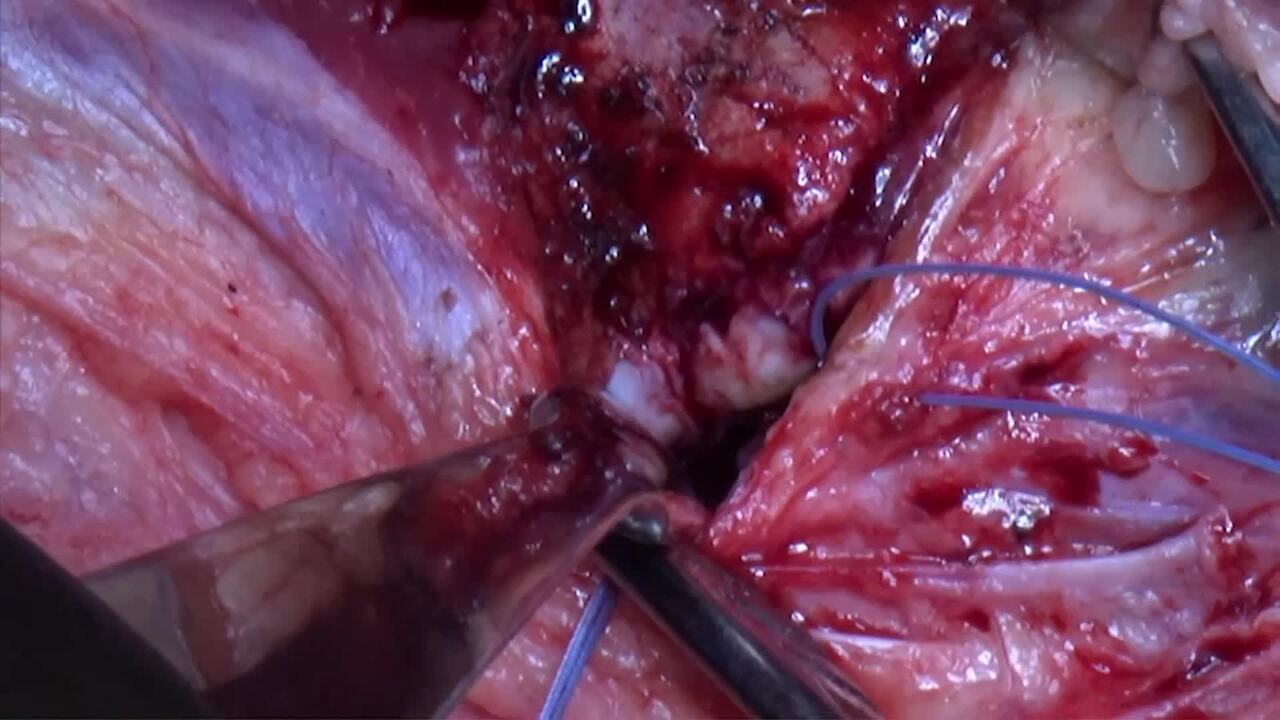
Posterolateral Tibial Plateau Fracture Operated Using the Two Window Non-osteotomy (Frosch) Approach
Tibial plateau fractures involving the posterolateral condyle cannot be directly accessed using the conventional anterolateral and supine posteromedial approaches. While different access strategies have been reported, we describe a split depression fracture of the posterolateral condyle with a displaced cortical rim and distal extension operated using the non-osteotomy approach described by Frosch, et al. The approach is indicated for fractures of the lateral tibial plateau involving the lateral column and the lateral part of the posterior column as per the 3 column classification system. The approach involves development of two windows; i) the conventional anterolateral window splitting the iliotibial band and ii) a retrofibular posterolateral window. Of the two windows, the anterolateral window is used for direct visualisation and assessment of articular reduction. Any fixation of the lateral column if needed can be performed through this window. The posterolateral window allows articular reduction manoeuvres and direct buttress fixation of the lateral part of the posterior column.