
Osteochondral Autograft From the Proximal Tibiofibular Joint for Reconstruction of Acute Tibial Plateau Fractures with Severe Chondral Defects
Purpose: We report a novel technique for reconstructing acute tibial plateau fractures with severe articular defects using an osteochondral autograft from the ipsilateral proximal tibiofibular joint. The educational goals of the presentation are to describe surgical options for management of severe articular defects in acute tibial plateau fractures, identify advantages and disadvantages of use of osteochondral autograft from the proximal tibiofibular joint and identify indications and contraindications for use of osteochondral autograft from the proximal tibiofibular joint.Significance:There are limited options for reconstruction of tibial plateau fractures with severe comminution with small free articular and delaminated cartilage fragments. Allografts are difficult to obtain in the acute setting, and total knee replacement is not ideal for young patients.
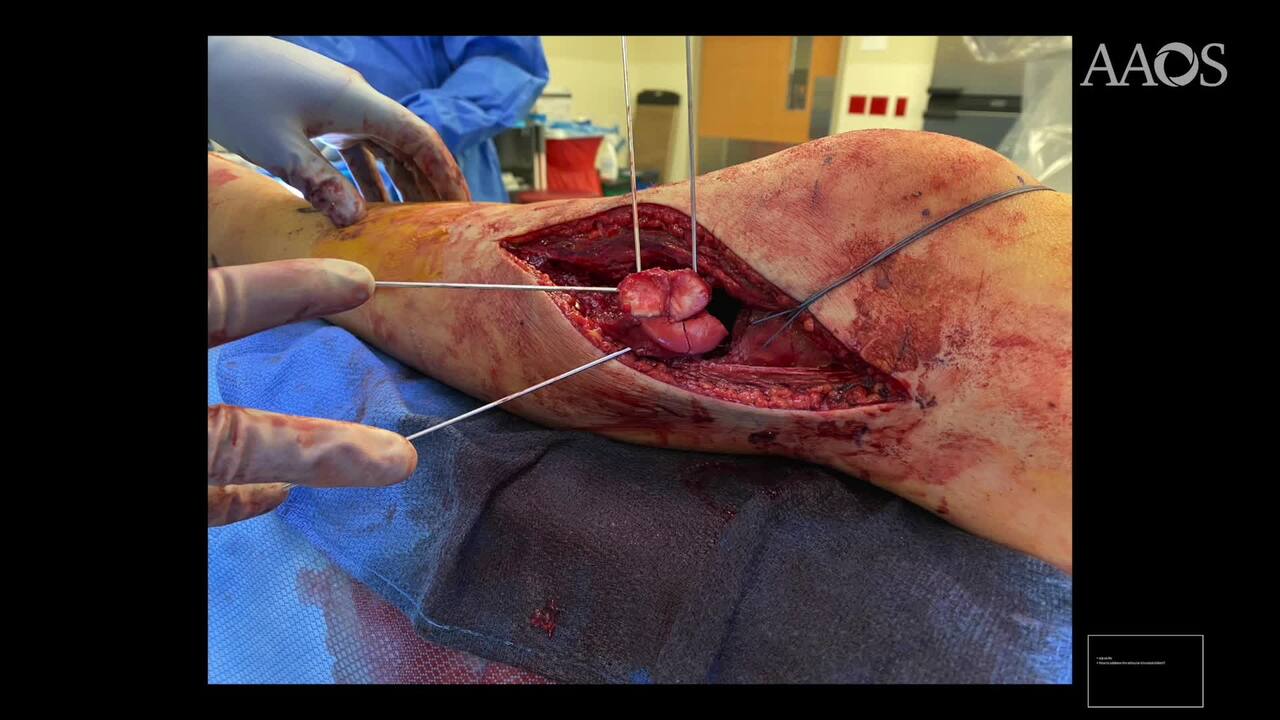
Methods: Three patients with closed acute tibial plateau fractures were treated with open reduction and internal fixation through a standard lateral approach, combined with osteochondral autograft harvested from the ipsilateral proximal tibiofibular joint. The fibular head was preserved to maintain the LCL attachment. Patients included a 37-year-old male with a Schatzker VI fracture and two females aged 24 and 54 with Schatzker II fractures.
Results: One patient developed a knee flexion contracture, which completely resolved following open release at 3 months, with pain-free function by 12 months post-op. No complications were seen in the other two patients. No patients had infection.Conclusion:This is the first reported use of a proximal tibiofibular osteochondral autograft for tibial plateau fracture reconstruction. This technique offers a new option for restoring the articular surface in complex fractures with minimal added morbidity.