
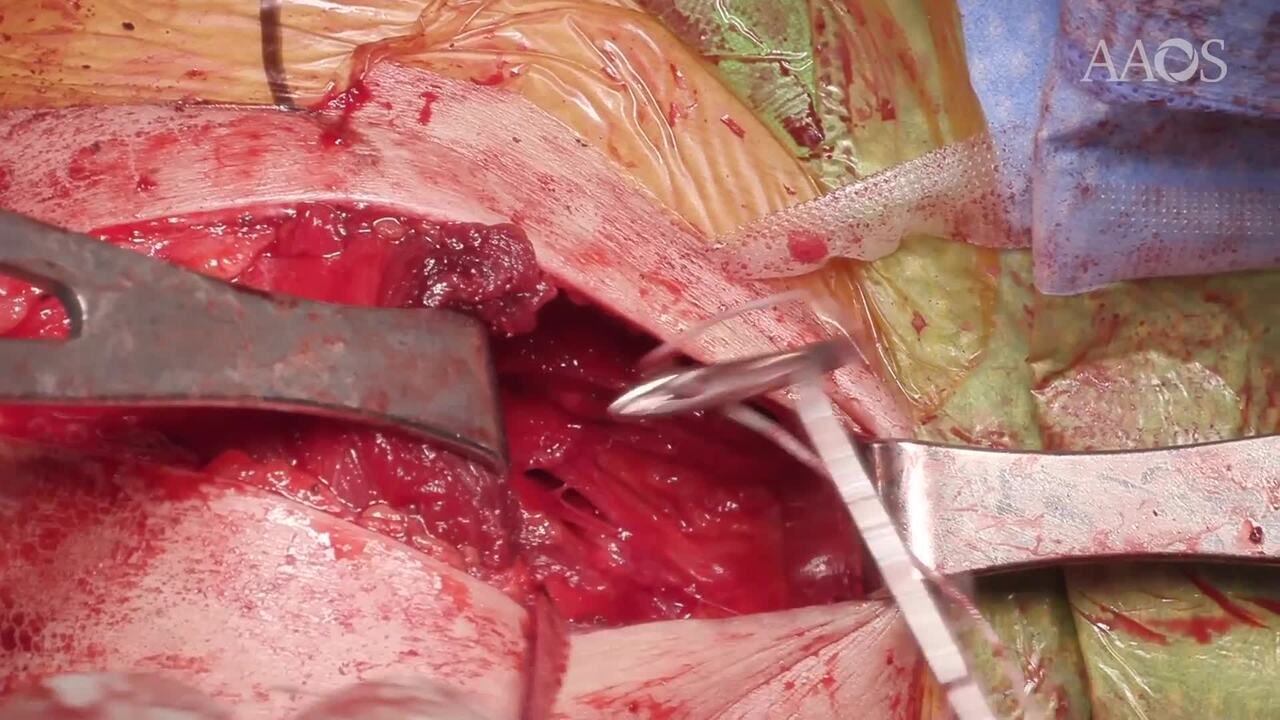
AC Joint Reconstruction Using Cortical Suture Button and Semitendinosus Allograft
Background: Acromioclavicular (AC) joint injuries comprise 9% of all shoulder girdle injuries. For AC joint injuries requiring operative intervention, there are several proposed reconstructive techniques including allograft, cortical suture button, coracoacromial ligament transfer, and combined techniques. Recent studies have demonstrated promise with AC joint reconstruction using combined cortical suture button and allograft. The theoretical benefits include primary and secondary biomechanical stability, offering a means of backup fixation in case one mode fails. Furthermore, there is synthetic and biological fixation present. By tensioning the cortical button first, there is theoretically less tension on the graft and more reliable long term biologic stability.
Purpose: This video overview and case presentation demonstrates AC joint reconstruction using a cortical suture button augmented with semitendinosus allograft for restoration of function in a Rockwood Type V AC joint separation.
Methods: The anatomy, examination, diagnosis, and treatment options for AC joint separations are reviewed. A case of a 38-year-old male with a Rockwood Type V AC joint separation is presented. This injury occurred while skiing. After failure of non-operative treatment and a thorough discussion of risks, benefits and prognosis, the patient elected to proceed with AC joint reconstruction with combined cortical suture button and semitendinosus allograft to improve his functional status.
Results: The AC joint was anatomically reduced intra-operatively. Post-operative clinical outcomes showed excellent restoration of range of motion and maintained radiographic reduction at the most recent 3-month follow up.
Conclusion: AC joint reconstruction with combined cortical suture button and semitendinosus allograft is a viable surgical option for AC joint separations requiring operative fixation, offering excellent functional outcomes and low rates of radiographic failure compared to other described techniques. Larger case studies and prospective studies are warranted to investigate the described technique further.