

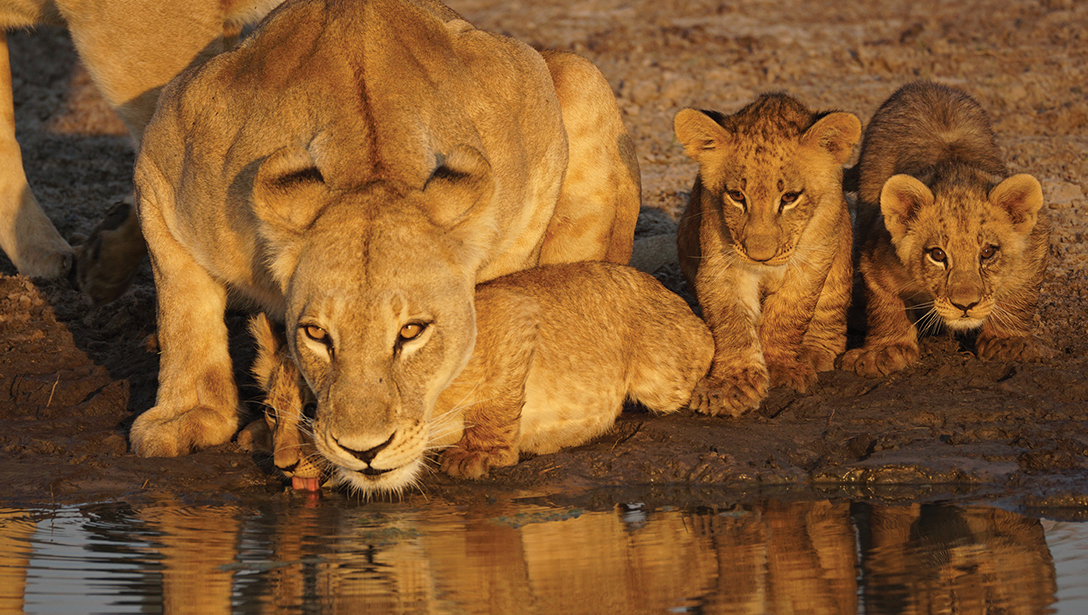
Lioness and cubs in the Okavango Delta in Botswana
Courtesy of Odion Binitie, MD, FAAOS
Published 12/17/2025
|
Odion Binitie, MD, FAAOS
Editor’s note: The Final Cut is a recurring editorial series written by a member of the AAOS Now Editorial Board.
I went on my first safari in 2017. I traveled to a large game reserve, Sabi Sand, outside of Kruger National Park in South Africa. It was spring in the Southern Hemisphere and the dry season. Jacaranda trees with their beautiful purple flowers were blooming all over Johannesburg, where my journey began. Leaving the city in a small plane to the small Skukuza Airport, which was in the middle of the national park, provided the first signs of change. The landscape shifted from busy city to red clay roads, then green and brown savanna grasslands with Acacia, Thorn, and Marula trees and shrubs. As we flew over impalas and a tower of giraffes grazing by the tarmac, I was introduced to the menagerie of animals in this wonderland.

Odion Binitie, MD, FAAOS
Lioness and cubs in the Okavango Delta in Botswana
Courtesy of Odion Binitie, MD, FAAOS
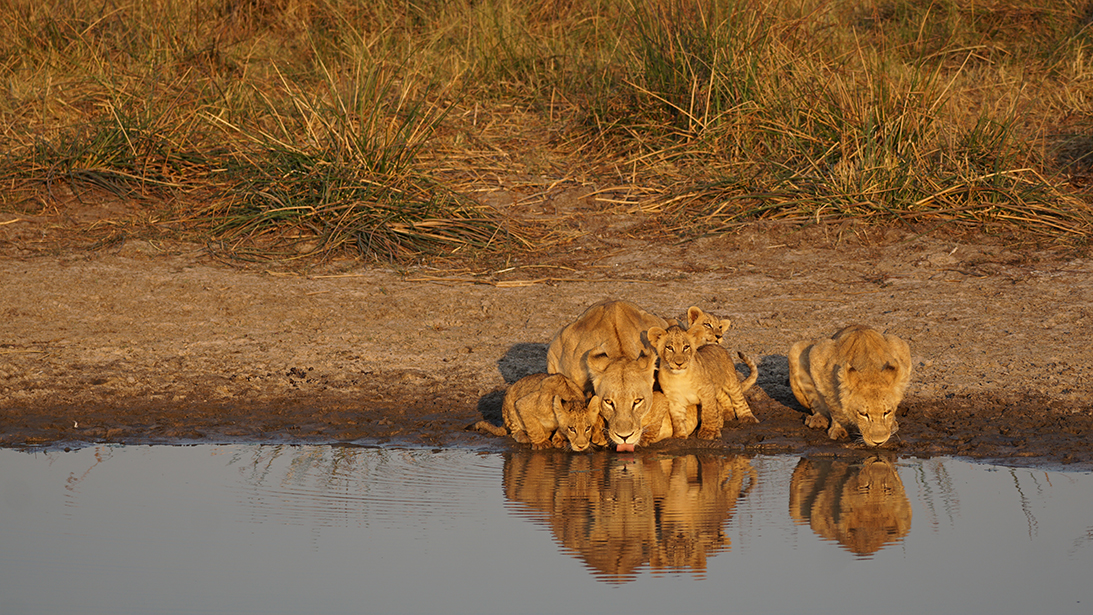
Lioness and cubs in the Okavango Delta in Botswana
Courtesy of Odion Binitie, MD, FAAOS
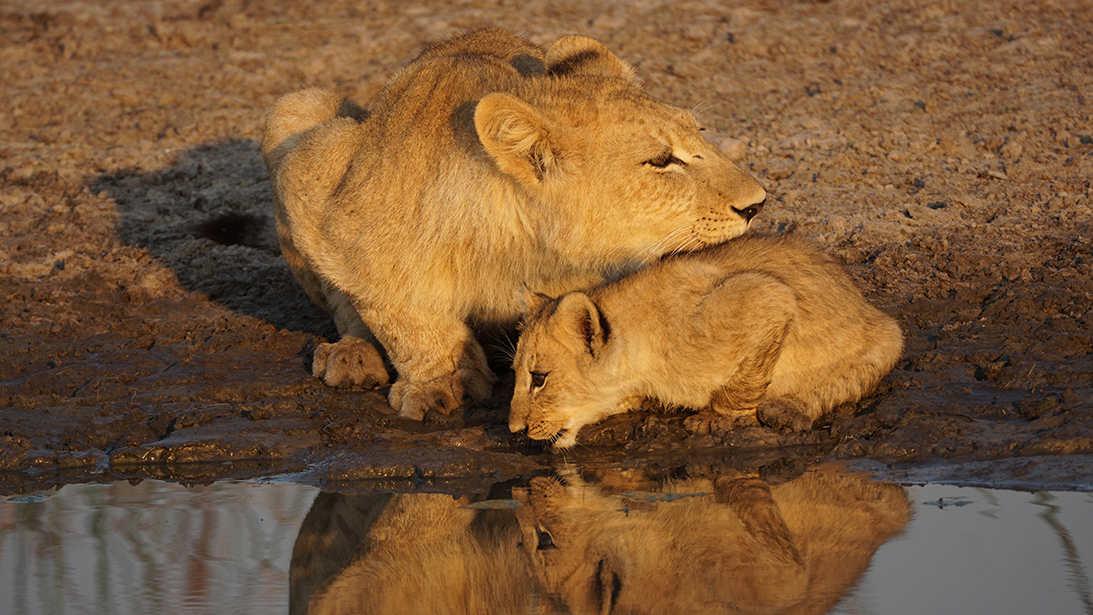
Lioness and a cub in the Okavango Delta in Botswana
Courtesy of Odion Binitie, MD, FAAOS
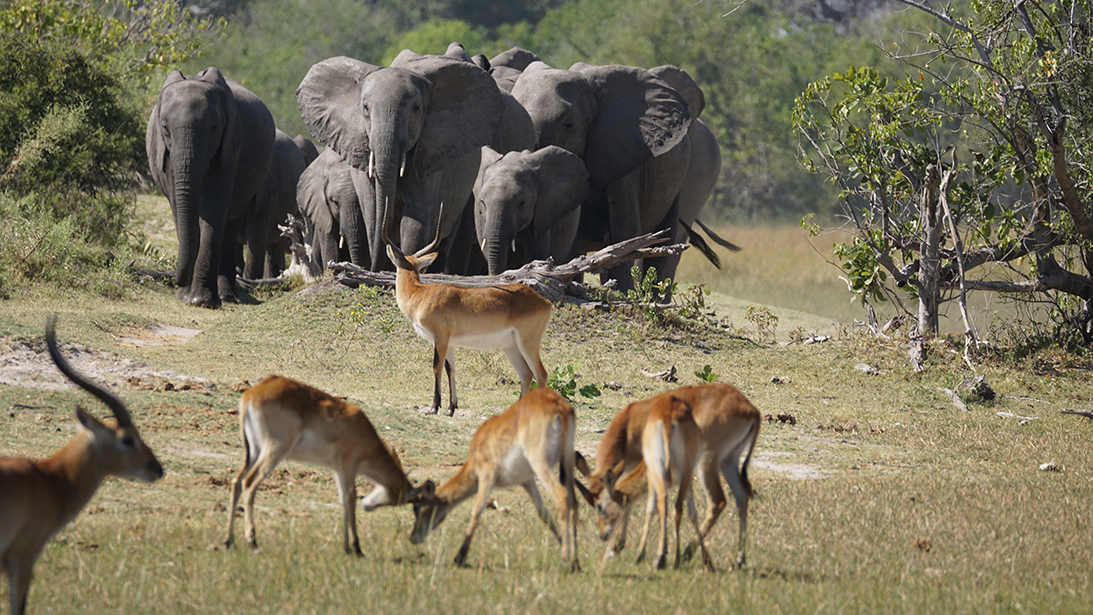
Courtesy of Odion Binitie, MD, FAAOS
Kruger is a 7,500-square-mile national park located in the northeast of South Africa. Established by the government in 1918, its origins go back to the late 19th century, when farmers fenced off land to protect animals. It has since evolved into a national park protecting wildlife from poachers. Sabi Sand reserve, which is about 250 square miles, borders Kruger. With no fences, the animals roam freely. The Tsonga people, who were forcibly removed from the land in the early 20th century, had ownership restored in 2015 and now have profit share in the safari business.
Each day, we would get up early and head out before sunrise, in open-topped Land Cruisers with a guide and a rifle on the front dash to scare away any unruly animals who might charge at us (which never happened). My guide/driver was extremely well informed: He could recognize every animal or bird and almost every plant species we came across. He knew all the roads, paths, and trails as we navigated across the reserve. It was astonishing to see the animals roaming free in their natural habitats, without fences or cages. Predators and prey; carnivores, herbivores, and omnivores; big cats, small cats, birds, lizards, and antelope of all varieties roaming free. I was immediately hooked. We would sometimes drive for hours in search of a leopard that had been spotted up a tree or a rhinoceros in a clearing. The big five — buffalo, elephant, leopard, lion, and rhinoceros, a term originated by big-game hunters for the top five animals most difficult to hunt on foot — now serve as a “bucket list” for any safari-goer to see. Some, leopards and rhinos, are more elusive or almost extinct; however, after two game drives, I checked all five off my list.
On safari, my interest in photography was rekindled, my lens now trained on the wildlife around me. I had always enjoyed photography as a young child. I recall using my father’s 35 mm camera to take family photographs and attempts to see the inner workings of his Instamatic camera. In college, toting my own 35 mm Canon SLR (single-lens reflex camera), I continued taking pictures and dabbled in a dark room. I was drawn to abandoned rail tracks, graffitied buildings, and the amazing way sunrises and sunsets could light up the sky, painting breathtaking landscapes. Over the years, I gifted framed photographs to family members but never pursued it further. I had since upgraded to digital photography, and on that first safari brought along my Sony Alpha 6000, a mirrorless camera, smaller and lighter than the standard DSLR (digital SLR), with a 28/70 mm lens.
A trip to the Galápagos Islands was captured next with my camera. Flying 500 miles from mainland Ecuador, we landed on Santa Cruz, the second largest of the archipelago and the most populous. It is also home to the Charles Darwin Research Station, where we saw the famous giant land tortoises that the archipelago is named after. These tortoises can live longer than 170 years in captivity and roam all over the station. We were also introduced to Darwin’s finches. There are 18 different species, and on every island we visited we saw their remarkable range of adaptive diversity. UNESCO recognized the islands in 1978 as a world heritage site, and in 1986 the 27,000 square miles surrounding the islands were designated a marine reserve. The topography of the islands varied from rocky outcroppings, which looked like a moon scape, to grasslands, forests, and black sand beaches. Taking a boat to travel between mostly uninhabited islands, we saw birds of all kinds: Red-footed, blue-footed, and Nazca boobies; herons; flightless cormorants; egrets; frigate birds; finches; and many more. We also saw land and marine iguanas, turtles, and seals. We witnessed a sight right after the birth of a seal calf — as the mother recovered, marine iguanas nearby crept up and fed on the placenta. It looked like a scene out of a nature show, only missing David Attenborough’s narration. All these sights were captured on my camera, which I had upgraded with a 55/210 mm zoom lens. Unlike on safari, we walked all over the islands, providing a different vantage for my camera lens.
When travel reopened after the COVID-19 epidemic, I returned to southern Africa, this time visiting the Okavango Delta in the northern part of Botswana. It is one of few inland deltas that does not flow to a sea or ocean. The Okavango River runs from the Angola highlands and swelling from the heavy rains in the summer eventually reaches the delta and floods the area. Grazing animals searching for green grass follow the water, and their accompanying predators follow their scent. My travel was via ever-smaller planes, hopping from airstrip to airstrip, until it was just a pilot and me in a two-seater prop plane, speaking over headphones. It was all worth the travel, as the wildlife and, in turn, my photographs were astounding.
Botswana is home to Africa’s two rhinoceros species: The white rhino and the critically endangered black rhino. There are approximately only 26,700 rhinos left in the wild, and only about 6,788 black rhinos. These elusive black rhinos are only found in 12 countries in Africa. They have suffered a drastic decline due to poaching in the 1970s through the ’90s, which reduced their population by 96%. On safari in Botswana, you are not allowed to take pictures of rhinos with your phone, to help protect their whereabouts from geolocation. Botswana has undertaken other initiatives to reduce poaching, including dehorning rhinos, evacuating them to fenced and guarded undisclosed locations, and militarizing their borders. However, a lot of these efforts have been unsuccessful, as the numbers continue to decline. Unfortunately, the Botswana government stopped reporting poaching figures in 2021.
During the day, we saw elephants, giraffes, zebras, impala, elands, waterbucks, lions, birds, and hippos. On night game drives, equipped with flashlights to spot the red of the nocturnal animals’ eyes, we watched hyenas and jackals fight over the carcass of a buffalo killed a day earlier by a lion — all witnessed from the safety of the Land Cruiser. We heard the roar of a male lion from miles away and gasped at the ease with which a leopard carried an antelope up a tree to keep it away from the prying hyena on the ground. Sometimes we did not even need to leave the camp, as a baby hippopotamus followed its mother to chomp on grass right in the middle of our camp. My trusty camera provided myriad memories, with a 100/400 mm zoom lens. This time, several pictures were framed and gifted to family and coworkers.
In 2025, my camera accompanied me to the great migration in the Serengeti. Wielding an upgraded Sony Alpha 7IV camera and a 600 mm telephoto lens, I visited Serengeti National Park in Tanzania and Maasai Mara National Reserve in Kenya. More than 2 million wildebeests, zebras, and gazelles move in a cyclical journey searching for fresh grass across the savannah. Peaking in August to October, myriad animals must cross the Mara River, leading to iconic scenes of thousands of ungulates stampeding across the river. Some die due to drowning, succumbing to crocodiles, or being stomped. The lions, leopards, cheetahs, and other predators follow the deluge of animals, while hyenas, jackals, vultures, and other scavengers await the carcasses.
The trip was capped with a visit to the Bwindi Impenetrable Forest in Uganda, one of two places in East Africa where the remaining mountain gorillas are found. I arrived here soon after news of the death of Jane Goodall, PhD, adding a flair of grandeur and appreciation of her impact. Unlike the other trips, we hiked into the forest on foot, trackers and rangers leading the way with machetes. We went to visit gorilla families who had undergone a habituation process of two to three years to get used to humans. We were assigned the Katwe family, comprising eight gorillas, including two silverbacks. After a 30-minute hike, we found them lounging on the ground and climbing trees. With surgical masks covering our noses and mouths, we spent an hour in their company. While we kept a distance of 7 to 9 feet away, the gorillas moved around freely, and we were sternly reminded to stay still. The experience was simultaneously scary and awe-inspiring. As they were so close, my zoom lens was unnecessary. After feverishly taking dozens of pictures and video, we were advised to put the cameras away and just take it all in, which was truly the best part. Quoting Dr. Goodall, “Chimpanzees, gorillas, orangutans have been living for hundreds of thousands of years in their forest, living fantastic lives, never overpopulating, never destroying the forest. I would say that they have been in a way more successful than us as far as being in harmony with the environment.”
Traveling on photographic safaris has allowed me to experience the remarkable beauty of animals on faraway islands, in distant jungles, and on vast savannas. Although my pictures have offered a tangible reminder of these explorations, the people, culture, food, and histories have etched forever memories in my heart and mind. With so many more places to visit, and so little time, I have wholeheartedly accepted the challenge to explore not just new places but new ways of seeing, feeling, and connecting with our shared humanity, in harmony with the environment.
Odion Binitie, MD, FAAOS, is a professor and senior member in the Department of Sarcoma at Moffitt Cancer Center. Dr. Binitie is a member of the AAOS Now Editorial Board.