

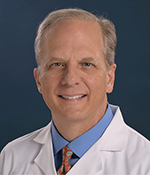
Douglas W. Lundy, MD, MBA, FAAOS
Published 11/20/2025
|
Douglas W. Lundy, MD, MBA, FAAOS
Editor’s note: The following letter is in response to the article “Collective bargaining may help protect physicians’ rights in a commoditized healthcare system,” by Aghdas Movassaghi, BS; Het Chavda, MS; and Vani J. Sabesan, MD, FAAOS, published in the July issue of AAOS Now.
Through the residency program at my institution, I have the distinct privilege to participate in the training of the next generation of orthopaedic surgeons. Just this past January, my faculty and I interviewed more than 50 bright, ambitious medical students who are seeking a categorical position in orthopaedic surgery. Every time we meet the next class of students, my colleagues and I are astonished with the incredible achievements and deep-rooted drive these budding physicians display. The massive volume of high-quality applications we receive every year fares extremely well for our profession, and many times we struggle with rank ordering the best applicants because they are all just that good.
Every year during the interview process, our faculty discusses the topic of “grit” and how it relates to surgical training. Author Angela Duckworth describes grit as a special blend of passion and perseverance. People with grit are able to maintain their determination and motivation over long periods despite experiences with failure and adversity. During the Chair Forum at the 2025 American Orthopaedic Association Annual Meeting, grit was named the one determinant that probably supersedes all others on an orthopaedic residency application. I have interviewed medical students who served in U.S. Army Special Forces; those who served in the U.S. State Department interviewing terrorists; and even one who grew up in poverty as an orphan in Africa, moved to the United States, and has distinguished himself with an incredible CV packed with research and academic awards. The resilience and grit of the applicants are absolutely inspiring and astonishing.
When I look at my residents and the new surgeons I have hired over the past two decades, I see hard-working, tough individuals ready to “do the right thing.” They want to polish their talents and serve our patients with the highest standards of care. Our residents hold each other accountable to levels that inspire and push the attendings to be better. They demonstrate grit, integrity, and perseverance. They make me proud of what I do.
I recently read the article from Movassaghi et al., published in the July issue of AAOS Now, with a profound sense of disappointment. I refuse to believe that we as orthopaedic surgeons are powerless victims run over by the healthcare apparatus. Over the past 26 years, I have worked in three very different practice settings, and I have never been in a situation where I was a helpless pawn in the healthcare system. It is long past time for us to understand the realities of modern practice, and we desperately need to realize the incredible opportunity that we have to practice orthopaedic surgery in the United States.
My issue is that the narrative in this article implies that orthopaedic surgeons are all helpless victims of our environment, and we will become ineffectual subordinates in the healthcare space if we do not participate in collective bargaining. (Ironically, I moderated the American Orthopaedic Association symposium on resident unions in June 2024, and my views of collective bargaining are completely irrelevant to this issue.) For me and my colleagues, we are no one’s victim, and our grit demands that we are masters of our own fate.
The contrast between the experiences of the residency applicants I’ve encountered and the narrative presented in the aforementioned article is striking. The authors state, “Today’s surgeons spend more than twice as much time on documentation and electronic health record tasks than on patient care.” If this had been the case in my previous private practice, we would have been bankrupt. The authors say that we “face a complex set of systemic pressures, including nonnegotiable contracts, inequities in call burdens, unrealistic targets for relative value units, and accelerated discharge expectations, which are all shaped by institutional financial priorities.” Acknowledging that there are certainly toxic practice environments where this is probably true, in my experience, most leaders work with physicians to establish reasonable expectations. The gritty medical students and residents I know would not be victims of these pressures. I have seen them rise up against far greater trials and succeed brilliantly.
It is incredibly naïve for us to expect that we can do whatever we want just because we are physicians. The United States spends twice as much on healthcare per person than any other developed nation in the world, and we cannot boast any advantages in quality for that additional expense. Many hospitals across the country report miniscule or negative margins on their income statements. If we expect to be able to practice tomorrow, we’d better pay attention to cost today! This includes discharge plans, choice of implants, and relative value unit targets. Clearly, there are situations that are abusive, but overall, we need to be far better stewards of the resources with which we are entrusted.
I have been advocating for our profession in the halls of Washington, D.C., for more than 20 years. The average orthopaedic surgeon is in the top 0.5% of earners in our country. Our petitions to Congress are often that we face cuts in payment and loss of autonomy, while other lobbying groups focus on delivering better care for less money. We complain about how others are threatening our status quo, which Congress clearly recognizes is unsustainable. If you were in Congress, which argument would you be persuaded by?
I adamantly agree that we should always strive to improve care delivery and infrastructure. We should constantly advocate for the benefit of our patients, for increased quality with lower costs and greater accessibility. Likewise, we should never cease working to improve the digital platforms and workflows we use to care for patients. Always strive for better.
The problem lies in the philosophy and worldview we embrace. Every year, I am astonished when I learn of the incredibly brilliant and talented medical students that somehow were unable to match in orthopaedic surgery. When I consider how exceptionally fortunate I am to have the most rewarding job in the world, working with some of the greatest people doing the most rewarding work known to man, I realize how exceedingly blessed and humbled I am. Electronic health records can be frustrating, difficult patients are challenging, and administrative tasks never cease, but every day I realize I have the best occupation in the world. I am honored to teach the next generation of surgeons, and I will never lose the incredible satisfaction of helping trauma patients recover from one of the worst days in their lives. I’ve had the privilege of practicing my art in eastern Europe, Asia, and extensively across sub-Saharan Africa, gaining far more professional satisfaction than I ever thought possible. We have the best position in the world, and it is time for us to act like it.
It’s all about how we view the world and the incredible privilege that society has bestowed upon us. Let’s continue to endeavor to deliver the best care possible and to improve our profession. It is time for us to redemonstrate the grit that got us to where we are.
Douglas W. Lundy, MD, MBA, FAAOS, is chair of orthopaedic surgery and chief of orthopaedic trauma surgery at St. Luke’s University Health Network. Dr. Lundy is a member of the AAOS Now Editorial Board.
References
- Duckworth A. Grit. Simon & Schuster; 2007.
- Salary percentile calculator for the United States. DQYDJ. Accessed October 20, 2025. https://dqydj.com/salary-percentile-calculator/
- Orthopedic surgeon salary guide 2025. AMN Healthcare. June 25, 2025. Accessed October 20,2025. https://www.amnhealthcare.com/blog/physician/locums/orthopedic-surgeon-salary-guide-2025/