

Published 10/19/2025
|
Jennifer Lefkowitz
In August 2025, the AAOS Board of Directors approved the updated Evidence-Based Clinical Practice Guideline (CPG) for the Management of Rotator Cuff Injuries. Since the previous version in 2019, the CPG now includes more recommendations to optimize the healing environment for patients with rotator cuff injuries and highlights the use of biologics and improvements in surgical repair techniques to reduce retears and improve outcomes.
“Given the prevalence of shoulder disease and its associated pain and disability, this CPG covers a broad scope of indications to improve care for our patients,” said David Kovacevic, MD, FAAOS, co-chair of the CPG work group. The updated CPG includes 21 recommendations and eight options.
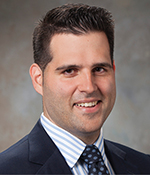
David Kovacevic, MD, FAAOS
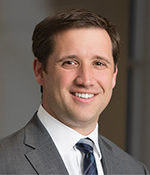
Aaron Chamberlain, MD, MBA, MSc, FAAOS
The updated guideline introduces a new analysis of evidence for operative versus nonoperative management (physical therapy) for rotator cuff tears, with a moderate recommendation that patients with healed rotator cuff repairs experience improved functional outcomes and report greater improvement than those treated with physical therapy alone or whose repairs did not heal.
The update continues to strongly recommend either operative treatment or physical therapy for symptomatic small to medium full-thickness tears, as both result in significant improvement in patient-reported outcomes (PROs). Evidence also remains consistent to support that long-term nonoperative management (i.e., physical therapy only) shows improved PROs in patients with full-thickness rotator cuff tears. However, tear size, muscle atrophy, and fatty infiltration may progress over five to 10 years with nonoperative management. The recommendation advises that patients who select physical therapy should be informed that over a 10-year period, their tear size may progress and could lead to a decline in their perceived and measurable outcomes, which could result in needing surgical repair.
“Patients who respond well to physical therapy often don’t need surgery, especially for small to medium-sized tears where the surrounding shoulder muscles, like the deltoid, rhomboids, and the remaining intact rotator cuff, can compensate,” Dr. Kovacevic said. “Large or massive tears are different; the shoulder simply can’t make up the loss. For these patients, I monitor closely with follow-ups every six to 12 months and repeat imaging. If the tear has grown, surgery may become the better option because larger tears require longer recovery and carry a lower likelihood of fully healing after repair. That is the challenge with rotator cuff disease: The longer a significant tear goes untreated, the harder it is to restore full function.”
The CPG also added a new strong recommendation against the use of prolotherapy for patients with full-thickness rotator cuff tears as a nonsurgical injection treatment. However, a corticosteroid injection with local anesthetic was upgraded from moderate to high evidence but was downgraded to a moderate recommendation due to the heterogeneity of PROs and the variability of study findings. The recommendation supports the use of corticosteroids for short-term pain and functional improvements in patients with shoulder pain.
Postoperative management
For patients undergoing arthroscopic repair of small to medium-sized full-thickness rotator cuff tears, there is a high level of evidence showing that postoperative outcomes and patient-reported measures are comparable whether mobilization with a sling begins early or is delayed for up to eight weeks.
Additionally, a moderate recommendation suggests that some patients may immediately wean off a sling (i.e., up to two weeks after surgery) to allow for active range of motion for activities of daily living, as prolonged sling use (i.e., four to six weeks after surgery) achieves similar postoperative healing, functional outcomes, and PROs.
Research also shows that supervised physical therapy provides no additional benefit in pain and function outcomes (at three months, up to one year) over a well-taught home-exercise program following arthroscopic rotator cuff repair for a small tear. This recommendation can be particularly beneficial for physical therapists managing patients with a limited number of payer-approved sessions, as it supports the use of home-exercise programs to extend care beyond coverage limits.
“Payers often look for ways to define how many physical therapy visits are ‘necessary’ following a repair, which presents challenges from a billing standpoint,” Dr. Kovacevic explained. “The same procedural code applies to both a small full-thickness tear and a massive tear, even though recovery times can be vastly different. A patient with a small tear may be ready after eight sessions over a few months, while a massive tear could require 16 to 24 sessions, or even double that over six months.” Because many patients only have a set number of visits covered for this procedure, this becomes a relevant issue.
“The complexity of payer coverage makes this a valuable recommendation,” Dr. Kovacevic continued. “If a patient with a small full-thickness tear is compliant with their home program, physical therapists can be more strategic with the limited sessions covered by insurance by implementing a well-taught home-exercise plan.”
Biologics
With advances in biologics, new evidence has informed recommendations that were unavailable in the 2019 CPG. The update now includes a strong recommendation for the use of bioinductive implants during rotator cuff repair, as it may reduce the chances of retear and improve PROs.
“Biologics are often thought of as the last frontier in rotator cuff repair,” said Aaron Chamberlain, MD, MBA, MSc, FAAOS, co-chair of the CPG work group. “As surgeons, we’ve utilized different approaches to surgery (open versus arthroscopic), different constructs (single-row versus double-row repair), and experimented with the number of anchors and sutures. However, achieving consistent healing remains a challenge in certain cases. That’s why many in the field see biologic augmentation as a promising approach to address the underlying healing deficiencies that persist when repairs fail.”
The recommendation for dermal allografts was upgraded from limited to moderate quality of evidence, supporting their use as they can improve PROs. The guideline does not support porcine allograft in rotator cuff augmentation.
“This is not necessarily an endorsement to use bioinductive implants and dermal allografts for every tear because many small to medium-sized rotator cuff tears heal well without augmentation,” Dr. Chamberlain added. “But for select cases, there’s now moderate to high-quality evidence to guide the judicious use of these tools. More work is needed to pinpoint exactly which patients will benefit most.”
Registry impacts
The methodology for this CPG was updated to remove prognostic factor recommendations from the previous version, as they do not meet the criteria for actionable guideline recommendations. Instead, a Prognostic Summaries of Evidence (PSE) document was produced for prognostic population, intervention, comparison, and outcome (also known as PICO) questions included in AAOS CPGs and was published separately as a companion document to support shared decision-making and patient-clinician communication. The PSE did not recommend for or against any interventions but rather provided a summary of the current available evidence. As such, the PSE did not undergo a formal review period nor public comment.
“The Shoulder & Elbow Registry can play a critical role in filling the knowledge gaps about how prognostic factors affect recovery and retear rates,” Dr. Kovacevic said. “By analyzing large datasets of populations that have undergone rotator cuff repair and shoulder arthroplasty, the registry can provide insights into which patients are more likely to benefit from specific procedures based on factors such as age, comorbidities, and demographics. Because the Shoulder & Elbow Registry captures real-world data at scale and can be combined with statistical modeling and machine learning, it allows us to forecast outcomes, identify where evidence is lacking, and even generate prospective level two or level three evidence to help bridge gaps until higher-level evidence is available.”
The workgroup recommends that future studies focus more on how comorbidities such as diabetes mellitus, hypertension, hypercholesterolemia, smoking, and BMI affect rotator cuff injury outcomes.
The full CPG and accompanying documentation are available through AAOS’ OrthoGuidelines website and free mobile app.
Jennifer Lefkowitz is a freelance writer for AAOS Now.