

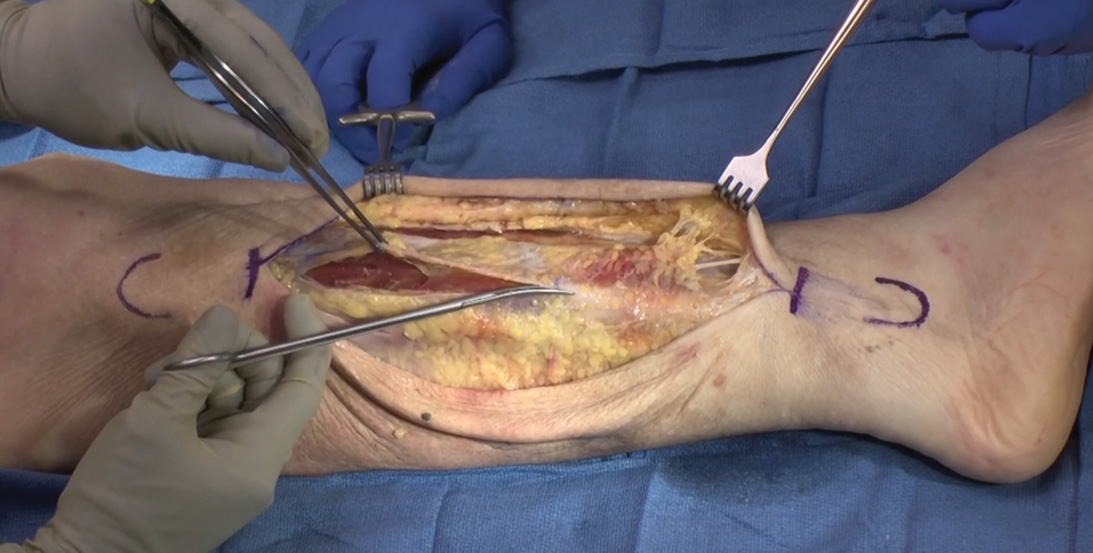
Figure 1: This OrthoDome® video demonstrates a lower-extremity fasciotomy technique using a single posterolateral incision.
Published 10/19/2025
|
Neil Jain, MD; Michael DeRogatis, MD, MS; Paul Issack, MD, PhD, FAAOS, FACS
Editor’s note: The following article is a review of a video available via the AAOS Orthopaedic Video Theater (OVT). AAOS Now routinely reviews OVT Plus videos, which are vetted by topic experts and offer CME. For more information, visit aaos.org/OVT.
Lower-extremity compartment syndrome is a devastating condition if not promptly diagnosed and managed. “The five Ps” can help guide objective physical exam findings: pain, paresthesia, pallor, paralysis, and pulselessness. However, intra-compartmental pressures >30 mmHg or perfusion pressure differences ≤30 mm Hg also can be used to confirm the diagnosis. Management involves surgical fasciotomy and is typically described with a two-incision technique to release the four compartments of the lower extremity.
In a recent AAOS OrthoDome® video from Mayo Clinic, available on the OVT platform, the authors present an alternate technique utilizing a single posterolateral incision on the lower extremity (Figure 1). In demonstrating the approach, the authors review the relevant landmarks. These include identifying the head of the fibula and the lateral malleolus. The incision begins 5 cm distal to the fibular head and spans longitudinally to 5 cm proximal to the tip of the lateral malleolus.
After the skin is incised, full-thickness anterior and posterior flaps are raised. Blunt dissection is used to separate the skin and subcutaneous fat from the underlying fascia. During this step, the authors note the importance of maintaining the underlying perforating vessels emanating from the fascia and protecting the superficial peroneal nerve. This nerve can be identified perforating the fascia of the lateral compartment roughly 12 cm proximal to the tip of the lateral malleolus. Once the skin flaps have been adequately elevated, the anterior, lateral, and superficial posterior compartments are visualized. Identification of the compartments can be assisted by the anterior and lateral intermuscular septa. Longitudinal incisions are then made over the three visible compartments and are extended the entire length of the fasciotomy with Metzenbaum scissors.
To locate the deep posterior compartment, the peroneal muscles are elevated anteriorly off the anterior aspect of the lateral intermuscular septum. The lateral intermuscular septum is then followed to its attachment on the posterolateral aspect of the fibula. To release the deep posterior compartment, the lateral intermuscular septum is incised off its attachment through the entire length of the fasciotomy. Proper release of this compartment can be confirmed by plantarflexing/dorsiflexing the great toe while observing for excursion of the flexor hallucis longus muscle.
Overall, this video offers a detailed and technically excellent demonstration of the steps for a single-incision fasciotomy for compartment syndrome of the lower extremity. Surgeons already comfortable with performing a two-incision technique may find that this approach offers an opportunity for decreased operative times and reduced risk of wound complications.
Neil Jain, MD, is a postdoctoral orthopaedic surgery research fellow at St. Luke’s University Health Network in Bethlehem, Pennsylvania.
Michael DeRogatis, MD, MS, is an orthopaedic surgery resident at St. Luke’s University Health Network in Bethlehem, Pennsylvania.
Paul S. Issack, MD, PhD, FAAOS, FACS, is a clinical associate professor in the Department of Orthopaedic Surgery, Weill Cornell Medical College, and a trauma and adult reconstruction orthopaedic surgeon at New York–Presbyterian/Lower Manhattan Hospital. He is also a member of the AAOS Now Editorial Board.
Video details
Title: Single incision fasciotomy for compartment syndrome
Authors: Mayo Clinic Foundation for Medical Education and Research
Published: March 22, 2024
Time: 6:40
Tags: Trauma, Compartment Syndrome, Surgical Techniques
Visit aaos.org/OVT to view this award-winning title and more than 1,600 other videos from across orthopaedic topics, institutions, practice management, and industry.