

Published 4/24/2026
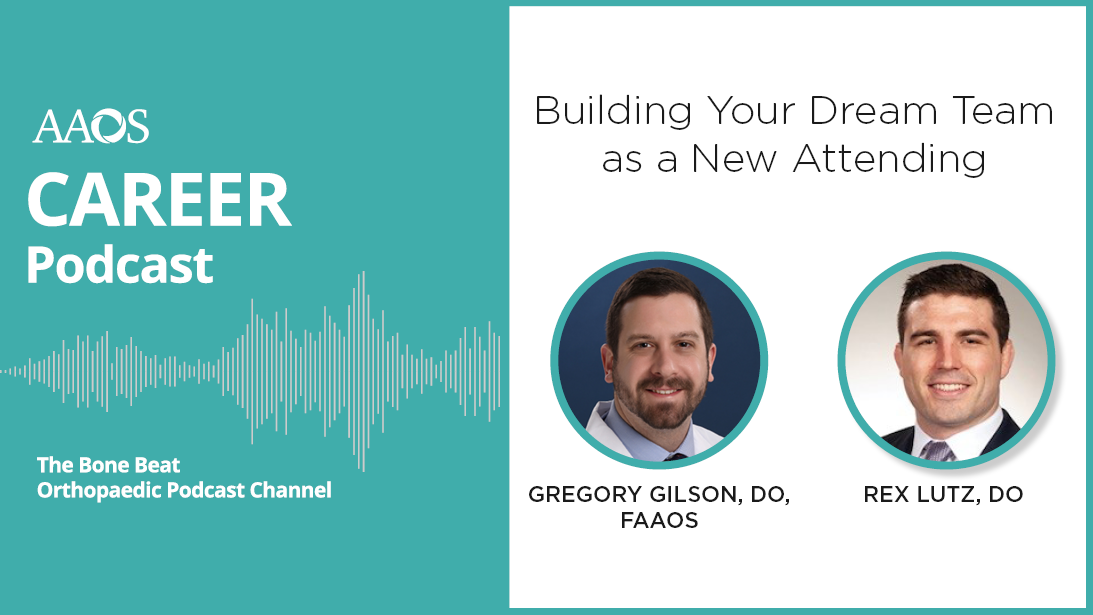
In a recent episode of the AAOS Career Podcast, Rex Lutz, DO, spoke with Gregory Gilson, DO, FAAOS, an adult reconstruction surgeon with the St. Luke’s University Health Network, Bethlehem, Pennsylvania, on how to become an effective leader as a new attending. The discussion focused on the transition from residency and fellowship into practice, when surgeons suddenly assume leadership of clinical and surgical teams.
Dr. Lutz opened the conversation by asking Dr. Gilson about mentors who influenced his leadership style. Dr. Gilson described his training at the Philadelphia College of Osteopathic Medicine and shared that several attendings, particularly James Nace, DO, shaped both his technical approach to arthroplasty and his philosophy about teamwork and culture.
When Dr. Lutz asked what was most challenging about becoming an attending, Dr. Gilson explained the primary hurdle was the shift in the weight of responsibility. He noted that while residents and fellows always have some oversight of patient care, being an attending requires taking ultimate accountability for decisions. “At the end of the day, it’s you in charge of that operating room,” he said. That abrupt transition where everyone looks to you for answers, Dr. Gilson said, can be intimidating at first.
Creating a positive surgical and clinical culture
Dr. Lutz continued the discussion by asking how Dr. Gilson approaches leading his surgical and clinical teams. Dr. Gilson explained that his residency exposed him to a wide range of work environments, allowing him to observe what fostered productive, positive teams and what undermined morale. He intentionally carried forward the practices he admired and avoided behaviors that created tension or inefficiency.
Dr. Gilson said one lesson that has stuck with him is mutual respect is the foundation of a successful orthopaedic team, noting the attending surgeon should “treat people how you want to be treated.” He emphasized every role matters equally and respecting everyone, regardless of title, is essential to building a healthy workplace culture. The goal is to create an environment where staff enjoy coming to work and are focused on the common goal of providing safe, effective, efficient patient care.
Learning through early challenges
When Dr. Lutz asked about learning from early missteps and growing pains, Dr. Gilson acknowledged that the start of practice required him to make significant adjustments — first and foremost, of his expectations. He described moving from a fellowship environment with extensive support to a setting where it was initially just him and his physician assistant. This required rethinking workflows to maintain safety and efficiency with fewer hands. Over time, as his team expanded, he learned to rely more heavily on others and to relinquish some control, enabling the team to become more cohesive and confident.
One piece of advice Dr. Gilson offered surgeons at any career stage but especially those in their early years is this: Instead of simply telling team members about wanting something done in a specific way, take time to explain the reasoning behind it. Understanding the why behind the what will help team members more readily embrace the surgeon’s preferences instead of feeling they are blindly following orders.
Dr. Gilson also talked about how to ensure team members are a good fit and what to do when team chemistry is not working. While it can be difficult to have conversations with staff members when the fit is not right, it is better to have honest, respectful conversations focused on what is best for both the team and the individual. Dr. Gilson emphasized that aligning people with roles where they work best and feel most comfortable ultimately strengthens the team, ensures quality patient care, and enables everyone to thrive.
Sustaining team trust
The discussion then turned to building trust as a leader through communication, feedback, and accountability. Dr. Gilson explained that leading a team with diverse personalities and experience levels requires transparency and approachability. He recommended attendings address any issues early, and he shared team members typically receive feedback well when it is conveyed in a respectful manner as an opportunity for growth and improvement. He described his team as being very much like family, noting the amount of time surgeons spend with their coworkers and the bonds that often develop. Dr. Gilson said he makes it a priority to show appreciation for his team, explaining how small gestures such as regularly providing meals go a long way toward letting his team know he values them.
As the episode concluded, Dr. Gilson emphasized that patient safety and quality care remain his central focus, adding when the attending surgeon establishes a supportive, respectful culture, individuals will respond accordingly and move the team forward together.
Listen to episode 42 and subscribe to the AAOS Career Podcast to catch future episodes and gain more insights into professional development, research, and leadership in orthopaedics.