


Published 6/22/2026
|
Armin Arshi, MD, FAAOS
Orthopaedic surgery is a profession built on precision — alignment, balance, and technique. Yet the longer I practice, the more I realize that the most important dimension of what we do is not measured in millimeters or implant survivorship curves. It is measured in relationships.
That realization did not come to me naturally, nor did it originate with me. I learned it from mentors.
During residency, I worked with an attending who had been in practice for more than four decades. He was not famous. He never lectured at national meetings. Outside of our hospital, few would recognize his name. But to his patients — and to those of us fortunate enough to train under him — he embodied what it meant to be a true physician. When one of his patients suffered a prolonged postoperative complication, he personally showed up at the rehabilitation facility after hours with a group of us residents simply to sit with him and bring him a meal. It was a small gesture, but it spoke volumes about responsibility and presence.
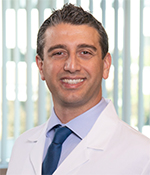
Armin Arshi, MD, FAAOS
Years later, when I began my arthroplasty practice, I joined a senior generalist partner cut from the same cloth. He had quietly cared for generations of families in our community. I once watched a patient return to him for a knee replacement who had first met him as a child, when he treated her pro bono for a forearm fracture because her family had no insurance. Decades later, she sought him out again — not for his surgical reputation, but for his character.
Those examples shaped me more than any case, textbook, or course ever could. They taught me a simple lesson: keep your patients close, and your surgical patients even closer.
As orthopaedic surgeons, we live in a world where cases are often routine. But for our patients, that surgery is anything but routine. Elective arthroplasty may be scheduled and planned, yet it is still a moment of surrender. Patients place their mobility, independence, and trust squarely in our hands.
In hip and knee replacement, the stakes are arguably uniquely high. We offer life-changing procedures that have very high rates of success and satisfaction. We routinely see people return to walking without pain, traveling again, playing with grandchildren, and reclaiming parts of their lives they thought were lost forever. Few fields offer such tangible transformation.
At the same time, arthroplasty is fraught with real risk: infection, instability, venous thromboembolism, nerve injury, and fracture. These are not theoretical possibilities, and statistically speaking, they will happen when we do 500 of them each year. When they occur, they can be devastating physically and emotionally. In those moments, patients do not simply need a technically competent surgeon. They need their surgeon. That is where I have learned that closeness matters most.
At the beginning of my career, I gave selected surgical patients my personal cell phone number. The initial motivation was practical. I wanted to know about problems immediately, not days later, after messages filtered through office staff, answering services, or electronic portals. A photo of an incision or a quick text about swelling could prevent an unnecessary emergency room visit or allow early intervention.
What I did not anticipate was how much this helped me as well. Direct communication reduced my own anxiety. I slept better knowing that if something was wrong, I would hear about it right away.
Eventually, I began offering my number to all of my surgical patients. Colleagues warned me that this would be overwhelming. In reality, it rarely is. Anecdotally, fewer than 10% use it. A small group contacts me appropriately with legitimate concerns. Those interactions are almost always brief, focused, and helpful.
Of course, there are exceptions. I have had patients who treated direct access as an open invitation for non-urgent questions at all hours. I had one particularly painful experience in which a dissatisfied patient — and multiple family members — used my personal number to harass me repeatedly.
For a time, I stopped giving out my number altogether. But I ultimately returned to it, because the benefits were greater than the risks. With clearer boundaries and expectations, it became manageable again.
None of this is meant to suggest that this approach is easy, universally appropriate, or without cost.
We practice in an era already saturated with communication. Patient portals generate a constant stream of messages, many arriving at night and on weekends. Reimbursements continue to decline while expectations for availability rise. Burnout is real, and uncompensated labor has become a defining feature of modern medical practice.
Offering direct access adds another layer to that burden. It also introduces potential medicolegal exposure through informal communication channels. These are legitimate concerns, and any surgeon who chooses this path must do so carefully.
I do not pretend that this model is feasible for everyone. What I do believe is that, however we structure our practices, we must resist the drift toward emotional distance from surgical patients. It is easy — especially under productivity pressures — to let layers of staff, portals, and call centers stand between the people we operate on and us. But when complications arise, or when anxiety peaks at 2 a.m., those layers can feel cold and impersonal.
In a recent article I co-authored on managing complications, we emphasized the importance of “running toward” problems rather than avoiding them. Nowhere is that more relevant than in orthopaedic surgery. An infected joint replacement or a dislocated hip prosthesis is not merely a technical setback; it is a life-altering event. Patients need to feel that their surgeon is present and accountable in those moments.
Over the years of my still young practice, the most rewarding part of my practice has not been the perfectly executed cases. It has been the relationships that follow them. Each holiday season, I inevitably receive messages from former patients thanking me for helping them walk again, travel again, or simply live without pain. I receive cards, photos, and occasional small, thoughtful gifts. These connections are reminders that our work is profoundly human. When you know a patient as a person rather than as a “case,” every decision carries greater humility and care.
I recognize that this perspective is shaped by my mentors and by the specialty we share. Orthopaedics — perhaps more than any other field — offers the chance to restore function in visible, meaningful ways. That privilege comes with responsibility.
With gratitude to the mentors who continue to inspire me and give me advice — Bruce A. Brown, MD, FAAOS, and Raymond B. “Barry” Walsh, MD.
Armin Arshi, MD, FAAOS, is a hip and knee arthroplasty surgeon practicing in Southern California. He is also a member of the AAOS Now Editorial Board.
References
- Gold P, Arshi A. Dealing with complications as a young surgeon. Arthroplast Today. 2024;27:101419. doi:10.1016/j.artd.2024.101419