

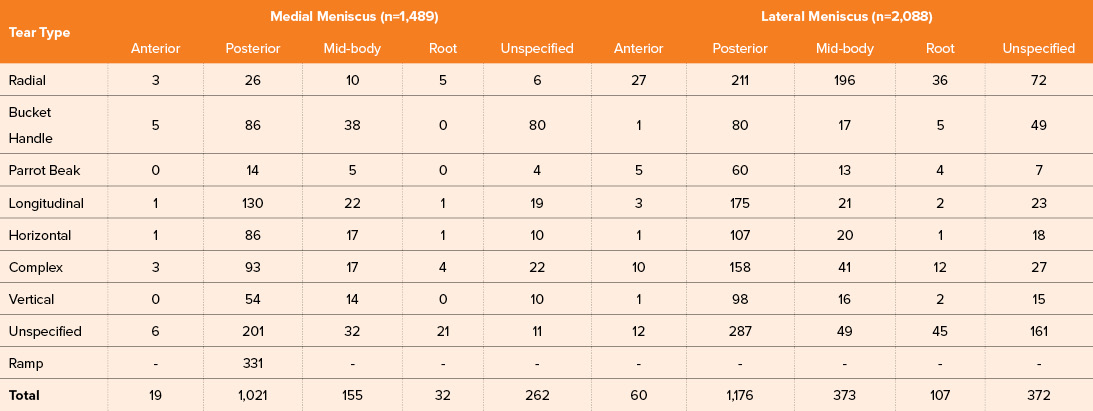
Table 1: Meniscus Injury Location and Tear Type
Courtesy of the study authors
Published 6/22/2026
|
Kelsey E. Ingram
A study presented at the AAOS 2026 Annual Meeting provides fresh insights into the prevalence, patterns, and predictors of concomitant meniscal injuries in patients undergoing anterior cruciate ligament (ACL) reconstruction in a predominantly acute injury population, with implications for preoperative evaluation and surgical planning.
The ACL works synergistically with the menisci to provide knee stability, and a range of variables have been associated with meniscus injury concomitant with ACL tears. Prior studies have often been small, multicenter, or based on large databases that may not capture important demographic or injury-related details, underscoring the need for a large, rigorously characterized single-center cohort.
Table 1: Meniscus Injury Location and Tear Type
Courtesy of the study authors
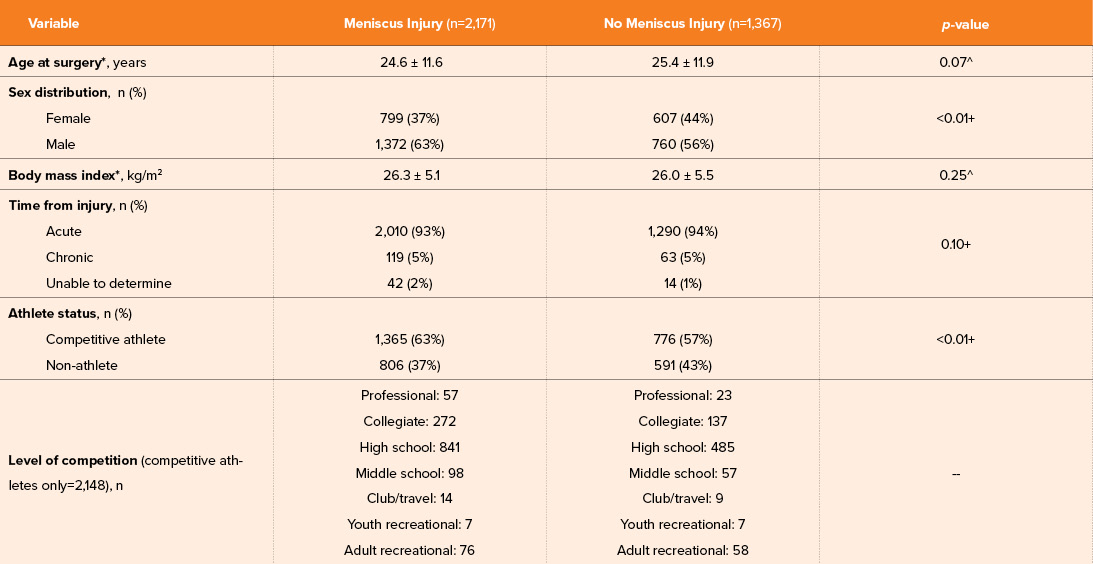
Table 2: Demographic and Sport-Related Data and Comparisons Between Groups
Courtesy of the study authors
Researchers used a prospectively collected database to retrospectively identify study participants who underwent ACL reconstruction at a high-volume sports medicine center. They included patients who underwent ACL reconstruction and were at least two years postoperative and excluded those with prior ipsilateral knee surgeries or missing preoperative data. Clinical notes, operative reports, and surgical images were reviewed to classify meniscus tear location, size, and morphology, and demographic and sport-related predictors were analyzed using independent t-test, Chi-square tests, and logistic regression modeling.
Among the 3,538 patients (average age 25 years; 60% male; 61% competitive athletes; 93% with acute injuries), 61% had a concomitant meniscus injury prior to ACL reconstruction. Lateral meniscus injuries were more common than medial injuries, and posterior horn tears of the lateral meniscus accounted for 54% of all tears, with radial tears comprising the majority. The cohort also included 331 ramp lesions, representing 9% of patients. (Table 1)
The high percentage of patients in this cohort presenting with meniscal injuries may be relevant for clinical evaluation and intraoperative assessment. These findings remind surgeons to be aware of the high likelihood of concomitant meniscus pathology, especially lateral posterior horn and ramp lesions, when treating patients with acute ACL tears. Although this study did not directly compare preoperative imaging with intraoperative findings or assess how these findings altered surgical decision making, the detailed characterization of tear location and morphology highlights the importance of careful intraoperative inspection to identify injuries that may not be fully characterized preoperatively.
Higher proportions of male patients and competitive athletes were found in the group with meniscus injuries (63% and 63%, respectively) compared to those without (56% and 57%). Male sex was associated with 1.4 times higher odds of having a concomitant meniscus injury, and competitive athlete status was associated with 1.3 times higher odds. Age, BMI, and injury acuity were not associated with concomitant meniscus injury. (Table 2)
“We found that 61% of patients [who] underwent ACL reconstruction demonstrated concomitant meniscus tears, which falls at the upper threshold of rates reported in the literature,” the authors wrote. “Our finding that lateral meniscus tears were the most common injury location was expected, as over 90% of our cohort had acute injuries. Specifically, 33% of lateral meniscus injuries were to the posterior horn, which is a rate comparable to previously reported values.
“The trend toward increased meniscus injuries in younger-age patients may be explained by the fact that younger people are more likely to be engaged in competitive sports. Further study should examine predictors of specific meniscus injury subtypes as well as stratifying meniscus injury types within athletes and non-athletes, between sexes, and between those with acute and chronic ACL injury,” the authors added.
The authors of “Characterization and Predictors of Concomitant Meniscus Injuries in 3,538 Patients Prior to Undergoing Anterior Cruciate Ligament Reconstruction at a Single, High-Volume Institution” are Tomas F. Vega; James B. Segars, BS; Campbell Bowman Aiken, BA; Sharan Sankar; Matthew P. Ithurburn, DPT, PhD; Alex Yates, MA; Marcus Anthony Rothermich, MD, FAAOS; Benton A. Emblom, MD, FAAOS; Jeffrey R. Dugas, MD, FAAOS: and E. Lyle Cain, MD, FAAOS.
Kelsey E. Ingram is the associate editor of AAOS Now.