

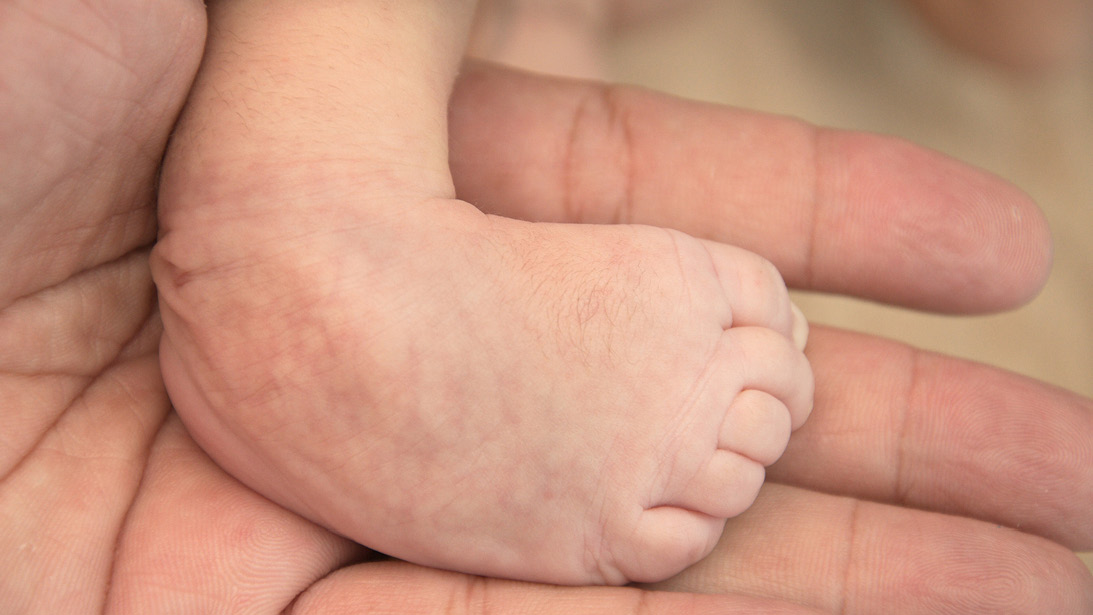
A new study found that missed visits have a higher impact than Area Deprivation Index on the recurrence rates in idiopathic clubfoot.
Published 6/23/2026
|
Theresa Witham
A new study presented at the AAOS 2026 Annual Meeting last month in New Orleans discovered that missed visits have a higher impact than Area Deprivation Index (ADI) on the recurrence rates in idiopathic clubfoot. The ADI reflects the degree of socioeconomic disadvantage in a neighborhood, incorporating factors like income, education, employment, and housing quality, and the researchers had hypothesized that it, along with race, would influence brace non-compliance and idiopathic clubfoot recurrence.
“We conducted a retrospective review of 260 idiopathic clubfoot patients initially treated at a single tertiary children’s center from January 2009 to April 2024,” stated the researchers. “Recurrence was defined as need for treatment such as repeat casting, [physical therapy] or surgery, following initial successful treatment. Variables collected included patient demographics, treatment data, and Medicaid enrollment. ADI scores (created by the University of Wisconsin) were determined by national percentile and categorized into Low Risk (ADI 1-70) or high socioeconomic and High Risk (ADI 71-100) or low socioeconomic cohorts. Missed appointment was defined as two or more consecutive missed visits.”
The study included 183 male and 77 female patients, with a mean age of 4.2 weeks at treatment start. Of those,123 had unilateral deformity. The patients had a mean of five casts and 52 (20%) did not undergo tenotomy as part of their primary treatment. In addition:
- 78 (30%) were defined as clinical recurrence;
- 109 patients had an ADI of 71-100; and
- 76 families were on Medicaid.
The study included 199 Caucasians and 15 African Americans, with the remainder being Hispanics or mixed race.
Researchers found that the following had significantly higher recurrence:
- older age at diagnosis (P < 0.001);
- bilaterality (36% vs 23%; P = 0.016);
- lack of initial tenotomy (94% vs 64%; P < 0.001);
- missed visits (OR=3.39; P < 0.001); and
- non-Hispanics (47% vs 26%; P = 0.03).
On the other hand, gender, number of initial casts, and Medicaid insurance did not influence recurrence. Analysis indicated that recurrence peaked around an ADI score of 50 for the missed v‑isit groups.
Factors that significantly influenced missed visits included:
- African American race (73% vs 41%; P = 0.015);
- non-Hispanics (50% vs 40%; P = 0.044); and
- Medicaid insurance (55% vs 38%; P = 0.009).
However, age and ADI were not significant factors in missed visits (P = 0.5).
“Recurrence rates in idiopathic clubfoot can be targeted by focusing on modifiable risk factors, mainly two or more missed visits,” the authors stated. “We also highlight treatment initiation at the earliest possible age, with tenotomy during the Ponseti technique being an essential step. Hispanics were found to have less recurrence, with missed visits being common among African Americans and families with Medicaid. Surprisingly, ADI did not influence recurrence in our sample.”
The authors of “Missed Visits and Not ADI Determine the Recurrence Rates in Idiopathic Clubfoot” are Smitha Elizabeth Mathew, MBBS; Chase M. Ochs, BS; Boston Small; Anna Blaschko; Currey M. Zalman, MD.
Theresa Witham is managing editor for AAOS Now.