

Published 6/22/2026
|
Sarah Rogers, MD, MPH; Robert M. Orfaly, MD, MBA, FAAOS
Medicine has changed dramatically over the past 20 years. The understanding of disease processes and the roles of genetics, environment, and personal factors has evolved rapidly. Technology has refined many interventions and created an array of entirely new options.
It is not surprising that this increased knowledge and technological advances have dramatically impacted medical education. Although 24/7 internet access has diminished the need to memorize thousands of disparate facts, and new technologies have simplified some procedures, other technologies require significant advanced training, with even steeper learning curves. While some skills can be developed outside of the operating room with simulation labs and augmented reality, problem-solving through complex scenarios remains as important as ever. Against this backdrop, economic pressures shaping modern healthcare are also influencing medical education and the decisions made by both educators and trainees.

Sarah Rogers, MD, MPH
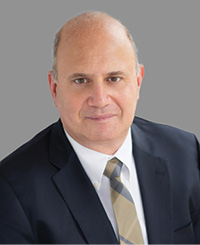
Robert M. Orfaly, MD, MBA, FAAOS
Expectations of increased efficiency and case volumes loom over decisions to allow a resident time to develop their technical skills. Mentoring and lecturing are often elements that provide the greatest draw to an academic career, but these activities can be viewed as an unfunded mandate when institutional support is lacking. The combined pressure of increasing clinical volumes and inadequate compensation for core academic activities means that, for academic surgeons, mentoring and teaching time compete with clinical care, research obligations, or personal time.
This pressure is colliding with the reality that the U.S. has a growing need to increase its ability to provide musculoskeletal care to an aging population. The Health Resources and Services Administration estimates the U.S. faces a current shortage of 5,080 orthopaedic surgeons. Meanwhile, the number of total joint arthroplasties sought by the U.S. population is projected to increase 70% from 2019 to 2050. If orthopaedic surgeons follow the same aging trend as the general population, the number of active surgeons is projected to decline 14% during this period. The number of orthopaedic residents trained each year will need to be substantially increased to meet these growing needs.
Technological advances, while promising increased efficiency, can have the unintended consequence of sidelining learners of various levels within the patient-care team. Artificial intelligence scribes or virtual visits, for example, may curtail student or resident involvement in performing and documenting patient care in the clinic.
The resident’s perspective
When discussing economics from an orthopaedic resident’s perspective, the most potent topic is undoubtedly the effect of the rising cost of medical education. The average debt carried by a newly minted orthopaedic surgeon has never been greater. Adding to economic anxieties, provisions in the One Big Beautiful Bill will limit annual federal borrowing to $50,000 per year. This is less than tuition alone at several institutions and will make it difficult to afford tuition and living expenses at many more.
Advanced training before, during, and following medical school and residency means that individuals devote many years of deferred benefits to supporting their education. Granted, orthopaedics benefits from a relatively high average compensation. However, a calculation of the return on investment of an orthopaedic career showed a deterioration between 1989 and 2019. The internal rate of return decreased from 25% to 15%, and the multiple on invested capital decreased from 21.5x to 8.0x. During the same time, the inflation-adjusted cost of medical education increased 172%. The burden of loan interest accumulation often adds stress to the already taxing experience of residency, while loan repayment anxiety is often strongest while new attendings are transitioning to practice. Because physicians typically complete training and enter independent practice in their early-to-mid 30s, loan repayment begins in earnest at a life stage that nationally coincides with peak rates of first births (mean age of 27.5 per data from the Centers for Disease Control and Prevention) and first home purchases (median age 35 per Redfin). This convergence means that new attendings — already navigating the transition to full clinical responsibility — simultaneously face compounding financial demands across multiple major life domains.
In addition to personal finance concerns, the adverse effects of financial constraints often become evident once a resident enters a training program. As government funding for graduate medical education decreases, residency programs attempt to do more with less and often look to industry-supported educational opportunities. Such external support can be highly valuable but must be actively managed to avoid conflicts of interest or skewed learning experiences. For example, newer (and typically more expensive) technology will likely be more prominent in this programming. Industry-sponsored resident research projects take on greater importance as government and philanthropic funding sources become scarcer.
Acquiring a breadth of experience is critical to resident preparation for independent practice. As caseloads rise and the focus on clinical productivity increases, changes in case distribution can create gaps in resident experience, especially when straightforward cases are moved away from the central academic hospital in a large health system or when other team members, such as physician assistants, work directly with attendings without resident involvement.
Furthermore, the pressure for increased attending productivity can lead to increased tension between teaching and completing a high volume of cases. Moreover, lower-quality surgical experiences are no substitute for higher-quality teaching cases. The effect of productivity-based faculty compensation on surgical residents is not clear, and some studies have shown no perceived effect. However, the critical factor may be less the compensation model itself than how efficiency targets are implemented — specifically, whether they are institutionally supported or placed on individual surgeons, with downstream implications for resident training.
Residents looking to obtain jobs face several market realities. Private practice roles, while offering greater control and flexibility, carry a risk of private equity buy-out. With horror stories regarding the effects of private equity in medicine, this is a situation many new graduates are hoping to avoid. Academic practice and hospital-employed positions can offer a theoretically lower risk alternative, but with different constraints. Hospital-employed positions often offer little flexibility in scheduling, while academic positions come with multiple, conflicting pressures, as even seasoned full-time faculty feel increased pressure to produce clinical volume compared to scholarly or educational pursuits.
Compared to historical financial returns, a career in orthopaedic surgery is less lucrative today. However, within the modern healthcare landscape, orthopaedic compensation remains comparatively strong. Orthopaedic residency spots continue to be highly competitive and support a pipeline of young talent. An eye toward mitigating some of the financial challenges surrounding student and resident training has the potential to pay dividends down the road in generating new surgeons well prepared to provide musculoskeletal care, research, and education into the future.
The need to attract applicants will remain critically important as the U.S. addresses the growing healthcare needs of its aging population. Maintaining interest in orthopaedic surgery must also be balanced by an appropriate evaluation of the number of residency positions in the U.S. With these numbers and funding remaining largely stagnant, declining access to healthcare will threaten the standards many have come to expect in this country.
Sarah Rogers, MD, MPH, is a fourth-year orthopaedic resident at Oregon Health and Science University. Her orthopaedic interests include upper-extremity topics, health policy, and public health.
Robert M. Orfaly, MD, MBA, FAAOS, is a professor in the Department of Orthopaedics and Rehabilitation at Oregon Health and Science University. He is also the immediate past editor-in-chief ofÊAAOS NowÊand a member of itsÊEditorial Board.
References
- Mody KS, Christopher M, Barbera J, et al. How has the return on investment of a career in orthopaedic surgery changed over time? Journal of Orthopaedic Experience & Innovation 2021;2(2). doi.org/10.60118/001c.25327
- American Academy of Orthopaedic Surgeons. AAOS 2023 Annual Meeting media fact sheet: orthopaedic surgeon workforce. Published 2023. Accessed April 23, 2026. https://aaos-annualmeeting-presskit.org/2023/downloads/research-news/AAOS-2023-Annual-Meeting-Media-Fact-Sheet-Orthopaedic-Surgeon-Workforce.pdf
- Poteet SJ, Harzman A, Chao AH. Surgical residents’ perceptions of the impact of productivity-based faculty compensation at an academic medical center. J Surg Res. 2021;259:114-120. doi:10.1016/j.jss.2020.11.025
- Woelfel I, Wang T, Pieper H, Meara M, Chen XP. Distortions in the balance between teaching and efficiency in the operating room. J Surg Res. 2023;283:110-117. doi:10.1016/j.jss.2022.10.032
- Medscape. Medscape Physician Compensation Report 2026 [Internet]. New York: Medscape; 2026 [cited 2026 Jun 1]. Available from: https://www.medscape.com/sites/public/physician-comp/2026
- Redfin. Redfin reports the typical first-time homebuyer is 35 years old. Published February 25, 2026. Accessed June 2, 2026. https://www.redfin.com/news/press-releases/redfin-reports-the-typical-first-time-homebuyer-is-35-years-old/
- Centers for Disease Control and Prevention. Births and natality. CDC/National Center for Health Statistics. Updated September 17, 2025. Accessed June 2, 2026. https://www.cdc.gov/nchs/fastats/births.htm