


Courtesy of Sarah Rogers, MD, MPH (created using AI with Microsoft CoPilot)
Published 3/28/2026
|
Sarah Rogers, MD, MPH
As I wrap up my final year of residency, I have had more time to reflect on the ways in which my training has changed me. I am more confident and more direct, and my surgical skills have certainly improved. But I also think about how stepping into graduated responsibility for patient care has profoundly changed the way I interact with the world. One such change involves the “ghosts” I have accrued.
When I say “ghosts,” I am referring to the phantom psychological talisman that develops after particularly poignant patient experiences. We are fortunate that, in the majority of orthopaedic care, these talismans rarely arise from mortality. Nevertheless, the situations that create them are emotionally charged. It is the frustration, pain, or sadness of the situation that leaves an imprint.
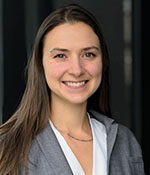
Sarah Rogers, MD, MPH
Courtesy of Sarah Rogers, MD, MPH (created using AI with Microsoft CoPilot)
My first surgical ghost came from breaking a Kirschner wire in a medial malleolus as a second-year resident when overdrilling for a cannulated screw; I was indirectly supervised for just a moment as the attending checked on another patient. The frustration and embarrassment of my mistake, as well as the longstanding nature of the outcome (that wire was still there), have kept that moment with me. This ghost reminds me to slow down and guides my hands into coaxial alignment when drilling over a wire.
As a surgeon grows, the situations that form ghosts change as well. Today, while still early in my career, a broken K-wire would be unlikely to leave a new imprint. With each promotion in responsibility has come a proportional expansion in my awareness of everything that can go wrong. The layers of potential harm that were once invisible to me are now in constant peripheral view. And perhaps because of this heightened vigilance, it takes a more significant moment, a more consequential near-miss or true complication, to etch itself into memory. Later ghosts include patients who shifted my pre-test probability for can’t-miss diagnoses, changed the way I conceptualize preoperative planning, and raised my level of paranoia during critical portions of cases. I have worked to process each of these ghosts — to sit with them, understand them, and learn from them. But processing has not meant overcoming. I have not exorcised them. Instead, I have simply grown more comfortable in their company.
As I reflect on my own ghosts at this early stage, I recognize that surgeons with full careers carry many more. Of course, we should always strive for clinical excellence. But as humans working in an incredibly complex field, no surgeon is immune to the occasional suboptimal moment or outcome. My reflection is simply this: Do not let the wave of negative emotions that follow these moments cause you to lock away your ghosts. Those same emotions are what give them their staying power and their ability to guide you long after the event itself has faded.
If we allow ourselves to feel the discomfort fully, we carry forward not just the memory of what went wrong but also the quiet guidance that helps ensure it is less likely to happen again.
We spend years learning anatomy, biomechanics, and technique. We spend far less time acknowledging the invisible instructors that follow us from case to case. Our ghosts are not evidence of failure; they are proof of attention, humility, and growth.
Sarah Rogers, MD, MPH, is a fourth-year orthopaedic resident at Oregon Health and Science University. Her orthopaedic interests include upper-extremity topics, health policy, and public health.
Wellness for Healthcare Professionals Toolkit
The Wellness for Healthcare Professionals Toolkit is a compilation of information, resources, and tools tailored to aid AAOS members in understanding and effectively managing their mental wellness. Within this toolkit, you’ll find a wealth of resources spanning advocacy, practice management, and educational materials, all aimed at supporting surgeons’ well-being in the medical field.