


Published 5/28/2026
|
Robert M. Orfaly, MD, MBA, FAAOS
“No margin, no mission.” This expression has been used as the rationale for many parts of modern healthcare that receive criticism from the public and within the profession, including the heightened focus on cutting costs, intensified attention on work that creates a profit for the institution, and business degrees being more common in top administrative positions than healthcare degrees. However, the expression did not originate with the Wall Street elite.
The phrase was coined in the 1980s by Sister Irene Kraus, a Catholic nun who was the founding president and CEO of the Daughters of Charity National Health System and later the first woman chair of the American Hospital Association. Her argument reportedly was that a hospital system could not rely on charity alone and needed to implement a sustainable funding model to maintain its charitable work and invest in services. In this context, organizational financial health is an enabler of charitable care rather than a competitive focus.
There have been many changes in the US healthcare landscape over the past 40 years that have challenged this viewpoint, and academic medical centers have often experienced profound effects of these changes. Academic orthopaedic departments have substantially transformed their strategies and operations in an effort to adapt to declining reimbursements, rising costs, and narrowing (or negative) margins seen by many medical centers.
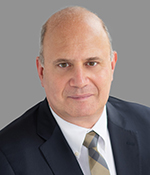
Robert M. Orfaly, MD, MBA, FAAOS
One of the most visible changes has been the increased focus on clinical productivity and efficiency. Academic medical centers (AMCs), like most medical centers, are working to adapt to value-driven payment models while also feeling the pressure to increase case loads to make up for diminishing margins. The days of exposing trainees to multiple comparable implant systems as an educational exercise are largely gone, as purchasing contracts aim to leverage standardization and volume for better pricing. Academic centers have been heterogeneous in their adoption of ambulatory surgery center models as a method of reducing costs and attracting a higher volume of routine cases. Caring for complex surgical problems has historically been profitable at the hospital level, but often more challenging to resource allocation at the department or individual surgeon level. Cases involving expensive surgical equipment and implants and long, intensive hospital stays have been a strength of large academic centers, but their financial viability is under continuous stress.
Partly in response to these forces, AMCs are increasingly acquiring or partnering with non-academic hospitals to form regional networks to manage costs, vary their service models, and gain scale. However, these mergers and the shifting focus toward clinical productivity carry risks of decreased focus on what is considered the core academic mission.
One of the core tenets of academic medicine has been the commitment to research activities. However, fewer than one in 20 academic orthopaedic surgeons receives National Institutes of Health funding, and the dwindling funds flowing from federal and other funding sources have led to a shift away from basic science toward clinical, industry-sponsored studies. The shift in institutional focus toward increased productivity has also potentially changed hiring criteria in favor of economic efficiency over research prowess.
From the perspective of the individual surgeon, research has often been a supported activity, and decreased support can weaken the comparative proposition of entering or remaining in an academic position. In a study of academic orthopaedic surgeons from 2016 to 2022, slightly more than half of this group remained in a university practice across this period. Surgeons employed in higher-ranked programs and those with stronger publication results were more likely to remain in academics. While success typically produces greater satisfaction and retention in any model, the data suggest that institutional and external research support are important factors in faculty retention, and some lower-ranked programs may find it progressively more difficult to maintain an adequately sized department.
A conversation about faculty recruitment and retention would not be complete without a discussion of compensation. Academic orthopaedic surgeon income fell somewhat short of inflation in a survey between 2017 and 2023. With private practice settings typically offering higher pay and a greater sense of autonomy and work-life balance, the pressure on AMCs to support faculty compensation over direct clinical care income is almost certain to increase. The move toward hybrid academic/community networks with “privademic” practices has blurred the distinction between these practice models and lowered the acceptance of decreased income in a traditional academic position, although private practice income often reflects participation in the financial risks and rewards of running a business.
If this brief overview of the challenges facing an academic orthopaedic department illustrates anything, it is that strategic planning requires a dynamic, business-oriented perspective. Most problems facing leadership are not technical, with answers that may be complex but rather clear and certain. The adaptive challenges continue to gain strength, but these are far more difficult to define and easier to ignore until a crisis is looming. These are also issues that can rarely be solved by a single individual, no matter how talented or charismatic. Leaders must be adept at bringing together often loosely coupled groups of individuals with different needs and navigate effective change management that will often be uncomfortable and even conflict with long-held beliefs and culture. Leaning on such transformational leadership, academic medical centers can continue to serve the mission articulated by Sister Kraus in providing high-quality, efficient healthcare for all who require their services.
Robert M. Orfaly, MD, MBA, FAAOS, is a professor in the Department of Orthopaedics and Rehabilitation at Oregon Health and Science University. He is a past editor-in-chief of AAOS Now and serves on the AAOS Now Editorial Board.
References
- Flores Pérez P, Alperovich M, Malhotra A. Academic surgeons confront stagnant pay, persistent gaps in compensation. Bull Am Coll Surg. 2025;110(8). Published September 10, 2025. Accessed April 23, 2026.