

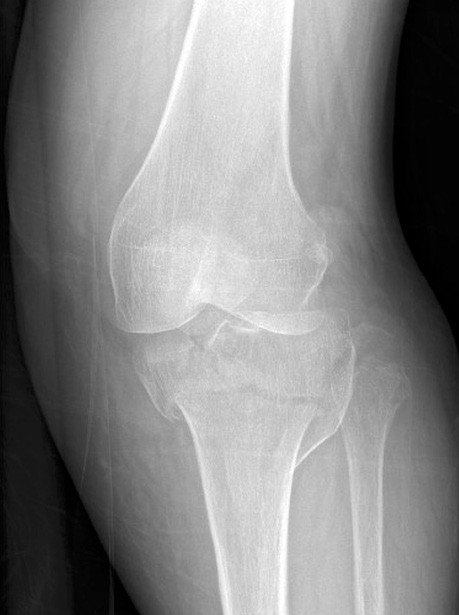
Figure 1: Initial injury radiograph demonstrating a Schatzker VI tibial plateau fracture in a patient whose BMI decreased from 35.02 to 28.41 after 789 days of GLP-1 RA therapy.
Courtesy of Kenneth Egol, MD, FAAOS
Published 9/20/2026
|
Amelia R. Goldstein; Kenneth A. Egol, MD, FAAOS
At a Glance
- GLP-1 RA users demonstrated lower rates of post-traumatic osteoarthritis.
- Nonunion occurred more frequently among GLP-1 users.
- Nutritional assessment may be important during fracture recovery.
Estimated read time: 3 minutes
Glucagon-like peptide-1 receptor agonists (GLP-1 RAs) are increasingly encountered in orthopaedic trauma patients presenting for operative fracture fixation. Approximately one in eight Americans has now tried a GLP-1 RA, and each successive derivative has demonstrated greater weight-loss efficacy.
Although initially developed for glycemic control in type 2 diabetes mellitus, GLP-1 RAs exert systemic effects beyond glucose regulation. These agents influence satiety, insulin sensitivity, adiposity, systemic inflammation, and metabolic homeostasis. Increasing evidence also suggests potential effects on cartilage metabolism, osteoblast differentiation, bone turnover, and inflammatory signaling pathways involved in joint degeneration and fracture repair. As such, the multifactorial effects of GLP-1 RA therapy represent a new and evolving variable for orthopaedic surgeons to consider in the context of fracture recovery.
Obesity impacts recovery after tibial plateau fractures
Tibial plateau fractures provide an important clinical model for evaluating the relationship between metabolic therapy and fracture recovery. These intra-articular proximal tibia fractures often involve articular depression and soft-tissue compromise. Operative management aims to restore articular congruity, mechanical alignment, and joint stability (Figure 1).
Figure 1: Initial injury radiograph demonstrating a Schatzker VI tibial plateau fracture in a patient whose BMI decreased from 35.02 to 28.41 after 789 days of GLP-1 RA therapy.
Courtesy of Kenneth Egol, MD, FAAOS

Table 1: GLP-1 RA users had lower rates of post-traumatic osteoarthritis but higher rates of nonunion.
Despite appropriate surgical treatment, tibial plateau fractures remain associated with high rates of post-traumatic osteoarthritis, stiffness, infection, nonunion, and need for reoperation. Outcomes are influenced by fracture morphology, quality of reduction, articular step-off, alignment, fixation stability, patient comorbidity burden, and postoperative rehabilitation.
Obesity adds both mechanical and biologic risk. Increased axial load across the tibiofemoral joint may accelerate cartilage degeneration following intra-articular injury, while chronic systemic inflammation, altered adipokine signaling, impaired wound healing, and delayed functional recovery may further compromise outcomes. Given the expanding use of GLP-1 RAs, a recent study sought to determine whether these medications modify obesity-associated risks following tibial plateau fixation.
Comparing GLP-1 RA users with BMI cohorts
A retrospective cohort study was performed using a prospectively maintained tibial plateau fracture database at a single urban multisite academic institution. The study included 424 patients who underwent operative fixation of tibial plateau fractures between 2016 and 2024 and had at least six months of clinical and radiographic follow-up.
Patients receiving long-term GLP-1 RA therapy before and after injury were identified and compared with three non-GLP-1 RA cohorts stratified by body mass index. The final cohort included 24 GLP-1 RA users, 150 normal BMI patients, 150 overweight BMI patients, and 100 obese BMI patients. The GLP-1 RA cohort had a mean pretreatment BMI of 33.40 ± 5.38 kg/m² and a mean BMI at injury of 28.27 ± 6.29 kg/m², reflecting substantial interval weight reduction before fracture presentation. The mean duration of pre-injury therapy was 919.2 ± 983.2 days.
Related Content
The groups were evaluated for demographic, clinical, injury-related, and radiographic variables, including age, Charlson Comorbidity Index, Schatzker fracture classification, fixation method, pre-injury Kellgren-Lawrence osteoarthritis grade, post-reduction articular step-off, and implant alignment. Immediate postoperative imaging was reviewed to assess articular congruity and fixation parameters. Primary outcomes included radiographic post-traumatic osteoarthritis, fracture nonunion, fracture-related infection (FRI), nerve injury, hardware removal, and revision surgery.
GLP-1 RA users had lower rates of PTOA, higher nonunion
The principal finding was that untreated obese patients exhibited the highest incidence of radiographic post-traumatic osteoarthritis (PTOA) following tibial plateau fixation. PTOA occurred in 32.0% of obese patients not receiving GLP-1 RA therapy, compared with 16.7% of GLP-1 RA users, 16.7% of normal BMI patients, and 18.7% of overweight BMI patients. Statistically, GLP-1 RA users had PTOA rates similar to those of non-obese cohorts despite a history of obesity (Table 1).
This finding is notable because GLP-1 RA users had greater baseline radiographic osteoarthritis before injury. The GLP-1 RA cohort had higher pre-injury Kellgren-Lawrence grades than the normal BMI, overweight BMI, and obese BMI cohorts, suggesting that the lower observed PTOA rate was not simply attributable to more favorable pre-injury joint status. Similarly, there was no significant difference in fracture morphology by groups. Rather, GLP-1 RA therapy may have modified the expected association between obesity and post-traumatic joint degeneration.
The findings were not uniformly favorable. GLP-1 RA users demonstrated a higher observed rate of fracture nonunion. Nonunion occurred in 8.33% of GLP-1 RA users compared with 0.7% of normal BMI patients, 0.7% of overweight BMI patients, and 0% of obese patients. Although the GLP-1 RA cohort was small, this finding raises concern that prolonged GLP-1 RA therapy, substantial weight loss, or associated metabolic or nutritional changes may influence fracture-healing biology.
Rates of FRI, nerve injury, hardware removal, and revision surgery did not differ significantly between groups.
Weight loss and inflammation may help explain the results
The lower rate of PTOA among GLP-1 RA users may reflect both mechanical and biologic mechanisms. Weight reduction decreases load transmission across the injured tibiofemoral joint, potentially reducing stress on damaged cartilage and subchondral bone. Improved insulin sensitivity and decreased systemic inflammation may also attenuate the inflammatory cascade that follows intra-articular fracture and contributes to cartilage degradation.
A direct chondroprotective effect is also biologically plausible. Preclinical studies suggest that GLP-1 RA signaling may suppress inflammatory cytokine activity, reduce oxidative stress, and modulate pathways involved in extracellular matrix degradation, chondrocyte apoptosis, and synovial inflammation. In tibial plateau fractures, where articular cartilage injury and subchondral bone disruption initiate a prolonged inflammatory response, these mechanisms may help explain the lower observed rate of radiographic PTOA.
The nonunion signal may reflect a competing biologic consideration. Fracture healing requires adequate vascularity, mechanical stability, osteoblast activity, protein intake, and overall anabolic reserve. Patients undergoing prolonged pharmacologic weight loss may experience reduced caloric intake, inadequate protein consumption, sarcopenia, or micronutrient deficiency. Although GLP-1 RAs have demonstrated favorable effects on bone metabolism in some experimental models, their effect on acute fracture healing remains incompletely defined.
Nutritional assessment remains important
GLP-1 RA therapy may mitigate obesity-associated PTOA following tibial plateau fracture fixation and, based on the present study, should not preclude operative management with open reduction and internal fixation. However, this potential benefit must be interpreted alongside the higher observed rate of nonunion in GLP-1 RA users. Orthopaedic surgeons should therefore consider nutritional and metabolic risk assessment in patients receiving GLP-1 RA therapy, particularly among those with rapid weight loss or prolonged treatment.
Amelia Goldstein is a second-year medical student at NYU Grossman School of Medicine.
Kenneth A. Egol,, MD, FAAOS, is the Joseph E. Milgram Professor of Orthopedic Surgery in the Department of Orthopedic Surgery at NYU Grossman School of Medicine.