

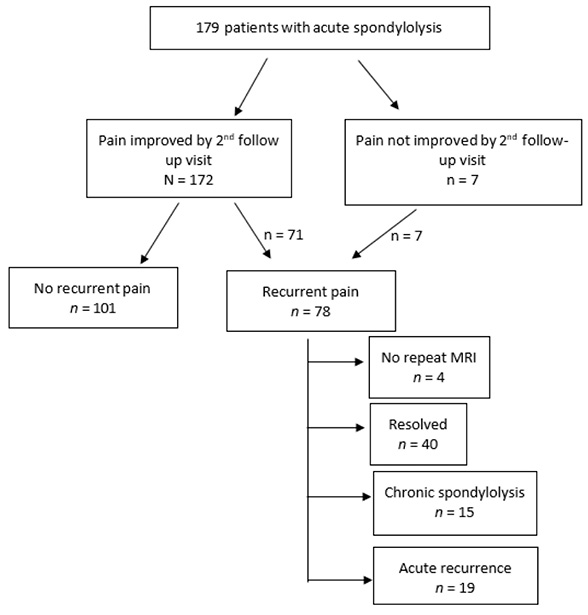
Figure 1: Flowchart of Patient Progress Following the Spondylolysis Protocol
Most adolescent athletes treated nonoperatively for acute spondylolysis achieved pain resolution, with outcomes shown for those who experienced recurrence.
Courtesy of Patrick P. Nian, BA
Published 9/20/2026
|
Theresa Witham
At a Glance
- Most athletes returned to sport after nonoperative treatment.
- Persistent pain predicted slower recovery and recurrence.
- Longer bracing may reduce recurrent acute spondylolysis.
Estimated read time: 3 minutes
A new study looks at the clinical outcomes of adolescent athletes who were treated nonoperatively for acute spondylolysis with a protocol of rest, bracing, and physical therapy (PT), finding excellent rates of return to sport (RTS). The research was presented at the AAOS 2026 Annual Meeting in March.
“Spondylolysis is a defect of the pars interarticularis of the vertebrae, most commonly seen in the lumbar spine,” explained lead author Patrick P. Nian, BA, and colleagues. “The etiology of isthmic spondylolysis is generally considered a consequence of repetitive mechanical stresses to a congenitally weak portion of the vertebrae. The optimal nonoperative treatment algorithm for spondylolysis in adolescent athletes remains unclear, specifically with regards to length of activity restriction, need for bracing, and time of initiating physical therapy.”
The study was a retrospective review of 179 adolescent athletes (68% male, with a mean age of 14.4 ± 1.6 years) who presented with acute spondylolysis, defined by the presence of edema in the pars interarticularis on MRI, including stress reactions, defined fracture lines, and spondylolysis with spondylolisthesis, from February 2016 through August 2024.
The researchers used ICD-10 codes to identify patients who met the criteria. “All patients were treated nonoperatively by four fellowship-trained pediatric orthopaedic surgeons with approximately 12 weeks of activity restriction and bracing, and eventual progression to [physical therapy] around four to six weeks of treatment,” according to the researchers.
The study looked for functional recovery, defined as clearance to RTS. Secondarily, the researchers examined resolution of pain, recurrence of pain, recurrent acute spondylolysis, progression to chronic spondylolysis (defined by persistence of pain with pars defect and lack of edema on MRI), and surgical intervention.
According to the researchers, “multivariable linear and logistic regression analyses evaluated the association of demographic variables, injury characteristics, and treatment characteristics with time to RTS clearance and recurrent acute spondylolysis/chronic spondylolysis, respectively.”
The research had strong results: 179 patients were treated with rest, a mean bracing time of 11.0 ± 2.3 weeks, and initiation of PT at a mean of 5.9 ± 1.6 weeks. At a mean of 13.3 ± 3.9 weeks, 178 (99.4%) of patients received RTS clearance. Also, 79% of patients had no pain at their first follow-up visit (mean of 6.8 ± 2.2 weeks from start of treatment), which increased to 96% by the second follow-up visit (mean of 13.9 ± 3.6 weeks from the start of treatment).
About 44% (78) had recurring pain after completion of the protocol. Of those, 19 (10.6%) were diagnosed with recurrence of acute spondylolysis, and 15 (8.4%) progressed to chronic spondylolysis (Figure 1). Five (2.8%) patients required surgical intervention (four L5/S1 fusions, one pars fixation).
Interestingly, longer bracing (β = 0.47, 95% confidence intervals [CI]: 0.24-0.70, P < 0.001) and delayed start of PT (β = 0.69, 95% CI: 0.33-1.05, P < 0.001) were associated with faster RTS clearance, a finding the authors characterized as paradoxical.
Persistent pain at follow-up visits emerged as one of the strongest clinical predictors of slower recovery, recurrent injury, and progression to chronic spondylolysis. Persistent pain at the first (β = 1.70, P = 0.009) and second (β = 2.59, P = 0.050) follow-up visits predicted longer time to RTS clearance. An additional week of bracing was associated with 22% lower odds (95% CI: 0.63-0.96, P = 0.019) of recurrent acute spondylolysis.
The following were found to be associated with higher odds of recurrence of acute spondylolysis:
- multilevel spondylolysis (odds ratio [OR]: 8.21, 95% CI: 1.13-59.82, P = 0.038),
- persistent pain at the second follow-up visit (OR: 10.65, 95% CI: 1.79-63.51, P = 0.009), and
- each week delay in initiating PT (OR: 1.43, 95% CI: 1.08-1.90, P = 0.013).
Also, persistent pain at the first follow-up visit was associated with higher odds (OR: 4.95, 95% CI: 1.63-15.01, P = 0.005) of progressing to chronic spondylolysis.
The study has limitations. “First, due to the study’s retrospective design, we classified patients who did not have documented recurrence of pain into the nonrecurrent cohort. However, this is limited by the lack of follow-up from these patients, who may have been treated at a different institution, thereby underestimating the rate of recurrent pain, acute spondylolysis recurrence, or surgical rate,” the authors explained. In addition, the definition of RTS was assessed based on the surgeon providing clearance, and the study did not assess compliance with brace wear. Finally, the nonoperative algorithm differs among orthopaedic surgeons, sports medicine doctors, and physiatrists. “A comparative study evaluating types of braces, bracing use, and time to initiation of PT (immediate versus delayed) is critical to our understanding of the ideal treatment algorithm,” the authors noted.
“Our nonoperative spondylolysis protocol that utilized activity restriction, bracing, and PT demonstrated high rates of RTS clearance and clinical resolution of pain,” the authors stated. “Persistent pain was an important clinical sign indicating extended time to RTS clearance, acute spondylolysis recurrence, and potential progression to chronic spondylolysis. These results demonstrate the success of our spondylolysis protocol involving 12 weeks of bracing with initiation of physical therapy at four to six weeks following rest.”
Nian’s coauthors of “Non-operative Treatment Protocol for the Management of Acute Spondylolysis in Adolescent Athletes: Excellent Rates of Return to Sport Clearance and Clinical Resolution in 179 Patients,” are Amith Umesh, BA; Ithika S. Senthilnathan, BS; Isabella G. Marsh, BS; Austin C. Kaidi, MD; Shevaun M. Doyle, MD; John S. Blanco, MD; Roger F. Widmann, MD; and Jessica H. Heyer, MD.
Theresa Witham is managing editor of AAOS Now.