

AAOS Now, June 2020
-

Which Surgical Attire Prevents Perioperative Infection?
Appropriate personal protective equipment (PPE) and attire within the hospital setting has never been under such scrutiny as it has been during the COVID-19 pandemic. Not only is it important for the safety of patients but that of healthcare providers as well.
-
Frequently Asked Questions Regarding Telemedicine Coding in the Era of COVID-19
Editor’s note: The information contained in this article was current as of June 2; coding guidance may have since been revised. For any updates, visit cms.gov or the AAOS Member Resource Center for the latest telemedicine coding guidance during the COVID-19 pandemic.
-
Who Has Access to Elective Orthopaedic Surgery During a Pandemic?
On Jan. 31, the Department of Health and Human Services declared that the United States was in a state of public health emergency due to the 2019 novel coronavirus (COVID-19). Both the Centers for Disease Control and Prevention and the U.S. Surgeon General recommended postponing elective procedures in an effort to limit exposure to the virus, preserve personal protective equipment, and reduce the burden on healthcare facility resources and personnel. The Centers for Medicare & Medicaid Services has since shared recommendations and tiering for determining “nonemergent, elective treatment.”
-
COVID-19 and a Surgeon’s Guilt
Many orthopaedic surgeons start their careers with an interest in trauma: It is the foundation of our specialty and the core experience of our training. We choose to jump into emergent situations and play our role in preserving life and limb—training for 10 years through countless hours with the sacrifice of time, money, energy, and personal well-being. In all of that academic rigor, we do not prepare for the unpredictable forces of biology.
-

COVID-19 Is Increasing Moral Distress Among Physicians
Physicians were strained prior to the COVID-19 pandemic: long hours, clicking through electronic health records, endless emails with administrative issues, changes in reimbursement, and decreased time with family and friends. The pandemic has changed these stressors and the healthcare environment.
-
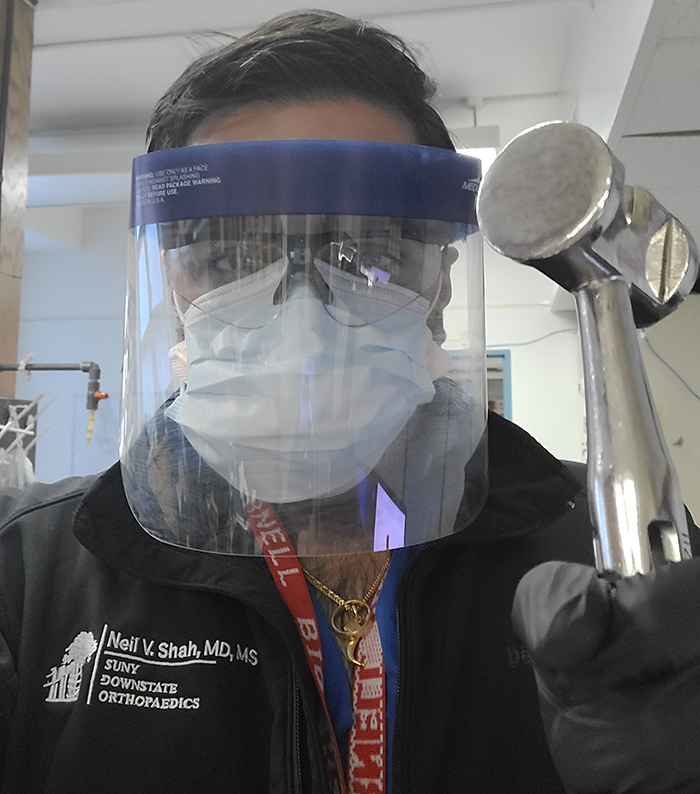
Redeployed Resident Answers Call to Action
I have always admired those who have the courage to serve our nation as members of the uniformed services. Just several weeks ago, I listened intently to wartime stories of veterans during my Veterans Affairs (VA) rotation. I could see their internal conflict; many struggled to reconcile cherished memories of brotherhood and camaraderie during their tours with often devastating memories of war and combat. I never thought I would experience war firsthand. However, on March 1, the first case of the novel coronavirus (COVID-19) was reported in New York, and shortly thereafter, I was at “war” with an invisible enemy.
-
The Role of the Orthopaedic Surgeon in Ensuring America’s Children Are Vaccinated
Since the onset of the COVID-19 global pandemic, nearly all in-person clinic visits across all specialties have transitioned to telehealth. However, there has been one notable exception: well-child visits. Although recommendations from leading organizations have transformed over time—from an initial focus on only those aged 24 months or younger to now all children—the ultimate goal has always been to continue to monitor child development and maintain protection from deadly diseases through vaccination. Unfortunately, there is growing evidence that childhood vaccination rates are considerably down over the past few months.