
Technique for Safe Harvesting of Bone Marrow Aspirate Concentrate During Hip Arthroscopy
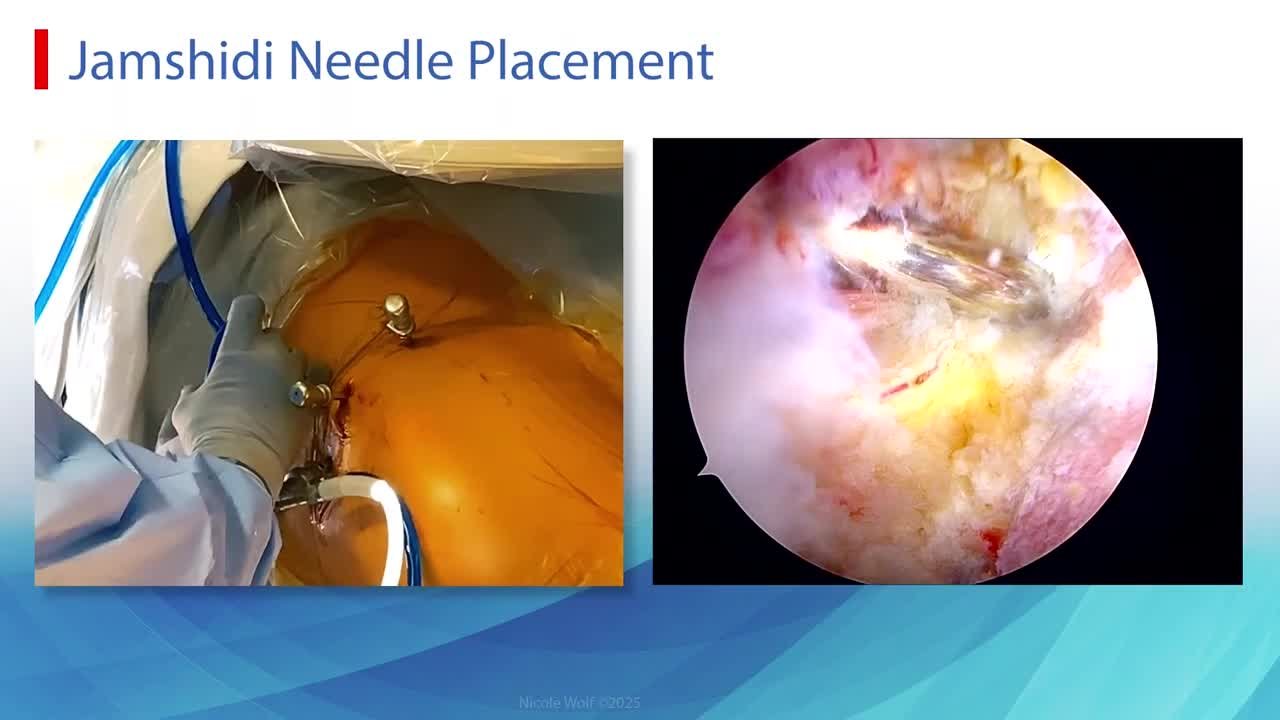
Background/Purpose: Acetabular labral tears present management challenges due to the labrum's poor intrinsic healing capacity from limited vascular supply. Bone marrow aspirate concentrate (BMAC) augmentation shows promise in enhancing natural healing processes and improving functional outcomes. Methods: We present a standardized technique for safe BMAC harvesting during hip arthroscopy using the iliac body as the donor site. The procedure utilizes four arthroscopic portals (anterolateral, anterior, midanterior, and Dienst) with puncture capsulotomy technique. BMAC is harvested using a 15-gauge Jamshidi needle through a coronal plane approach, targeting cancellous bone 1cm proximal to the acetabular sourcil. The technique typically yields 120-130mL of bone marrow aspirate combined with platelet-rich plasma to create a "megaclot" mixture for application to the repair site. Results: In our series of 62 patients, complications were minimal with only 3% experiencing heterotopic ossification and one case of transient pudendal neuralgia. At 60 months follow-up, 94.9% of BMAC patients achieved minimal clinically important difference (MCID) compared to 78.6% in the control group. Conclusions: This standardized BMAC harvesting technique during hip arthroscopy is safe, reproducible, and demonstrates superior clinical outcomes, particularly in patients with chondrolabral junction injuries and underlying osteoarthritis. The technique requires no additional incisions and maintains low complication rates while providing statistically significant functional improvements at long-term follow-up.