

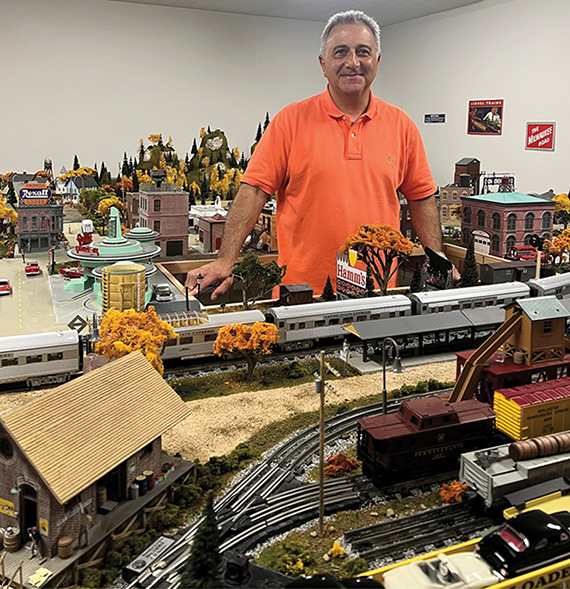
Cassim M. Igram, MD, FAAOS, train enthusiast, with his layout
Courtesy of Cassim M. Igram, MD, FAAOS
Published 7/30/2025
|
Cassim M. Igram, MD, FAAOS
Editor’s note: The Final Cut is a recurring editorial series written by a member of the AAOS Now Editorial Board.
The March/April issue of AAOS Now featured several articles about the aging orthopaedic surgeon and retirement. One common theme that I took away from many of those articles is that it is important to have interests outside of orthopaedics.
Cassim M. Igram, MD, FAAOS, train enthusiast, with his layout
Courtesy of Cassim M. Igram, MD, FAAOS
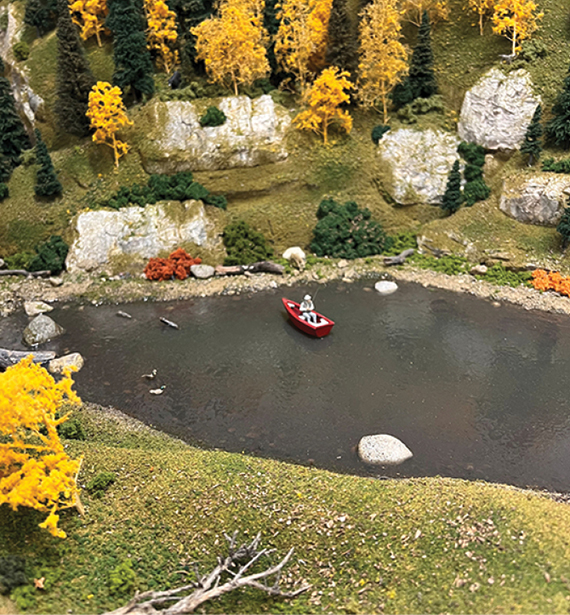
A lake scene from the model railroad layout of Cassim M. Igram, MD, FAAOS
Courtesy of Cassim M. Igram, MD, FAAOS
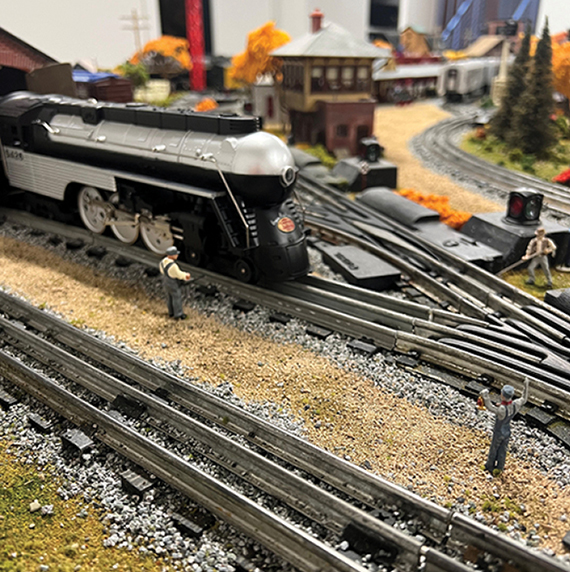
A model railroad layout
Courtesy of Cassim M. Igram, MD, FAAOS
From a young age, I enjoyed working with my hands. I started building plastic models of cars and aircraft in elementary school. It was very relaxing and rewarding. As I got older and could be trusted with power tools, I moved on to woodworking. Time, patience, and manual skill are all necessary to successfully complete a project. It is quite satisfying to see the fruits of one’s labor after spending much time and effort on a project.
In the midst of that, I became interested in O gauge model railroading. For those who are unfamiliar with O gauge models, they are fairly large cars and engines in 1:48 scale — 1 inch on the layout converts to 48 inches in real life. My dad had an old postwar Lionel train set at our house. I spent hours putting together train layouts and building models and scenery. My only limit was my imagination.
Model railroading came into being around 1900. After World War II, it rapidly gained popularity in the United States. By the 1970s, its popularity started waning. Nonetheless, I remained a model-train enthusiast. Eventually, I moved off to college and medical school and did not have the time or resources to enjoy my hobby.
In the early 1990s, I finished my training and settled into private practice. At the same time, model railroading was enjoying a new surge in popularity, driven by a reorganized Lionel Corporation, American Flyer, Marx Corporation, as well as a new entry to the market, Mike’s Train House. The internet also made it much easier for model-railroad enthusiasts to shop for the latest offerings from these corporations, as well as the multitude of accessories that could be utilized on a layout, such as the train track, buildings, and scenery. I was fortunate to have the resources to be able to expand my train collection and add to the pieces that I had from my childhood. I also acquired much better manual skill and admittedly was better at handling power tools. As surgeons, we tend to take these skills for granted.
The first stage of building a model-train layout involves carpentry to assemble bench work that will eventually support the train track. Once that is complete, the next stage involves laying down the track and proper wiring. My skills as an electrician were definitely put to the test.
The best part comes next — building the layout. Modeling realistic scenery gives life to a layout. As orthopaedic surgeons, using plaster casting rolls is second nature. As it happens, it also makes for building fantastic scenery. I had a box of various sizes of casting tape at my house and used it to build mountains and terrain on my layout. It was easy to use and appears quite realistic. Trees, buildings, and people also bring a layout to life. Assembling and painting buildings can be very tedious. Fortunately, I am used to delicate work as a spine surgeon. In fact, I brought home my surgical loupes and headlight to help me assemble and paint small objects that required very fine detail. The first time my wife saw me wearing my loupes and headlight, she definitely thought I had lost it. Making scenery look realistic takes time, patience, and effort. Coincidentally, these are some of the same skills that go into successfully completing an operation.
The point of this Final Cut is that, although I am an orthopaedic surgeon, it is not the only thing that defines me. To this day, I still enjoy working on my train layout and seeing my model trains make their way through it. Anytime I bring home a new train car or engine, the reaction from my wife is still the same: “Do you really need that?” If you are model-train enthusiast, you will understand that the answer is also always the same: “Yes, I definitely need to add that to my collection.”
To some it may seem strange that orthopaedic surgery and model railroad could intersect. Many of the same skills that I use every day in the OR, I put to use building my layout. It is, of course, not the only activity that I enjoy outside of orthopaedics, but definitely one of the most satisfying. As I near retirement age and anticipate having more time on my hands in a few years, I have been thinking about building a completely new layout — which my wife will certainly find concerning.
Many retirees are concerned that they will not be able to fill their newfound free time. The people who seem to be happiest are the ones who had a multitude of outside interests while they were working. In fact, one of my now-retired senior partners is always up to something fun and interesting. I asked him once if he ever thought about orthopaedics or ever looked in the rearview mirror. He insists that he has never looked back and that life is too short to not enjoy it — sage wisdom coming from someone who has been there.
Now I need to figure out how to expand my layout to occupy my entire basement.
Cassim M. Igram, MD, FAAOS, is a clinical professor in the departments of orthopaedic surgery and neurosurgery at the University of Iowa. He is a member of the AAOS Now Editorial Board, treasurer of the Political Action Committee of the American Association of Orthopaedic Surgeons, and a member of the AAOS Committee on Professionalism.