

Published 11/20/2025
|
Timothy J. Skalak, MD; R. Carter Clement, MD, MBA, FAAOS
Children comprise the largest group of Medicaid recipients, representing approximately 40% of enrollees. The One Big Beautiful Bill Act (OBBBA), which was signed into law on July 4, is expected to reduce federal Medicaid spending by $910 billion over 10 years. This will be detrimental to many children, including those receiving orthopaedic care. The bill’s most direct impact on this population will occur by limiting coverage. Although OBBBA’s efforts to cut coverage primarily target “expansion adults” (i.e., individuals who are childless, non-disabled, aged 19 to 64 years, and not eligible for Medicaid before the 2010 Affordable Care Act) rather than children, previous legislation has proven that children’s enrollment rises and falls alongside their parents’ coverage, a phenomenon known as the “Welcome Mat Effect.”
OBBBA introduces work requirements for “expansion adults” enrolling in Medicaid, which the Congressional Budget Office (CBO) estimates will leave 4.8 million people uninsured. Specifically, OBBBA demands certain criteria, such as 80 hours of work or community service per month, to retain coverage. Moreover, eligibility must be verified every six months, which introduces new administrative burdens for enrollees and is expected to reduce federal Medicaid spending by $167 billion over 10 years. Similar legislation in Georgia and Arkansas led to precipitous drops in enrollment, even among eligible adults, due to the associated administrative churn. Parents with children aged 13 years or younger are exempt from these new requirements, but coverage can be expected to drop among children aged 13 to 17 years. The administrative challenges will be particularly acute among families with language or technology barriers. Additionally, OBBBA introduces a five-year wait for legal immigrants applying to Medicaid. This potential delay could be devastating for many chronic pediatric orthopaedic conditions; fortunately, states have the option to waive this stipulation for children. Similarly, the bill creates copays up to $35 for “expansion adults,” but children are exempt.
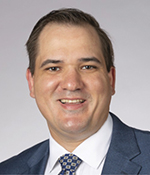
Timothy J. Skalak, MD

R. Carter Clement, MD, MBA, FAAOS
Finally, OBBBA reduces retroactive coverage. In the past, when a child was enrolled, Medicaid typically covered claims over the preceding three months. Beginning in 2027, this period will be limited to two months for children and one month for “expansion adults.”
More indirectly than cutting coverage, OBBBA will restrict care for children through several measures that squeeze state Medicaid budgets. States rely on provider taxes (e.g., from hospitals and nursing facilities) to fund Medicaid. Historically, these tax rates have been admissible up to 6%, but OBBBA caps them at 3.5%. CBO estimates this will reduce federal Medicaid spending by $200 million over 10 years.
The bill also introduces financial penalties for states with high Medicaid error rates. States report their error rates to the federal government annually, including the percentage of overpayments and payments to ineligible recipients. Traditionally, rates higher than 3% triggered corrective actions, but not fiscal penalties. Under OBBBA, high error rates will trigger reductions in federal Medicaid funding, anticipated to save the federal government $7.6 billion over 10 years. These penalties will strain state Medicaid budgets, encourage lower spending, and incentivize greater administrative burdens, such as prior authorizations and denials, to save money and avoid errant Medicaid payments.
‘Soft caps’
In response to these tax cuts and penalties, states will likely restrict coverage in several ways that will affect pediatric orthopaedic patients. Early and Periodic Screening, Diagnosis, and Treatment (EPSDT) is a federal Medicaid policy that guarantees coverage of all “medically necessary” tests and treatments for enrollees up to 21 years of age. Whereas states can refuse to cover “optional” benefits for adults, coverage is required for children. As a result, when Medicaid funds drop, states must find ways to reduce spending in this population without directly cutting services (i.e. “hard caps”). Instead, they implement de facto limits on care (i.e. “soft caps”). For example, states can reduce provider reimbursement; this saves money immediately but also leads to fewer providers taking Medicaid patients, longer wait times, and ultimately decreased Medicaid spending through diminished access to care.
Another likely “soft cap” is stricter criteria for prior authorization and “medical necessity.” This leads to greater administrative burdens for doctors, hospitals, and patients. Treatments will be denied and/or delayed, reducing medical expenditures. Even claims that can ultimately be approved on appeal (because the same care is still protected under EPSDT) would be postponed. This approach restricts access and effectively creates waiting lists, reducing state Medicaid spending by “slow walking” care.
Another lever states can pull to save money is narrowing benefits. Even though EPSDT theoretically prevents this approach, gray areas exist because states have different definitions of “medical necessity.” For example, legal disputes have occurred when states have denied certain braces, home services, and physical therapy referrals. Budgetary constraints will encourage more of these denials under narrower definitions of “medically necessary.” Benefits considered “optional” for adults but protected for children under EPSDT are particularly likely to be excluded, especially considering that many of these are relatively expensive and/or high-volume, such as prosthetics/orthotics, physical/occupational therapy, and wheelchairs. Losing these benefits would be particularly detrimental to vulnerable pediatric orthopaedic patients, including those with cerebral palsy, spina bifida, arthrogryposis, and spinal muscular atrophy.
Children’s and rural hospitals
Children’s hospitals will also be at risk under OBBBA. These facilities treat a large share of Medicaid patients, which generates a financial loss or minimal profit. Many children’s hospitals also offer free-care charity programs for uninsured patients. Reducing Medicaid coverage or reimbursement rates would shift even more costs from the government to children’s hospitals, potentially forcing these centers to restrict access to Medicaid or uninsured patients. Moreover, with reduced Medicaid payment and coverage rates, other practitioners in the community will be less likely to see these patients, shunting them to children’s hospitals, further compounding the problem and potentially straining the hospitals’ capacities.
Similarly, rural hospitals will face approximately $155 billion in Medicaid cuts. In a gesture to address this shortfall, OBBBA created a $50 billion fund to support these facilities, but it clearly will not make up the difference. As a result, children in rural areas will face decreased access to care and greater travel times, especially to see specialists.
How to prepare
OBBBA will be detrimental to pediatric orthopaedic care in myriad ways. Here are some concrete steps clinicians can take to prepare for these challenges:
- Incorporate EPSDT language in prior authorizations, referrals, and notes to reduce the risk of denial.
- Develop standard templates for appeals, especially physical/occupational therapy extensions, brace replacements, and surveillance imaging, which will all be likely targets for denials.
- Create network maps of local orthotists and therapists who continue to take children with Medicaid.
- Build telehealth capabilities, especially to serve rural regions in your catchment area.
Finally, to address this issue and others, consider supporting the Political Action Committee of the American Academy of Orthopaedic Surgeons, which advocates for orthopaedic surgeons, our interests, and our patients before Congress.
Timothy Skalak, MD, is a pediatric orthopaedic surgeon at Manning Family Children’s and Tulane University in New Orleans. He is a member of AAOS and the Pediatric Orthopaedic Society of North America, where he serves on the Advocacy Committee.
R. Carter Clement, MD, MBA, FAAOS, is a pediatric orthopaedic surgeon at Manning Family Children’s and the Louisiana State University Health Sciences Center New Orleans. He is a member of AAOS, where he serves on the Health Care Systems Committee, and the Pediatric Orthopaedic Society of North America, where he chairs the Advocacy Committee.
References
- Euhus R, Williams E, Burns A, et al. Allocating CBO’s estimates of federal Medicaid spending reductions across the states: Enacted reconciliation package. Accessed Sept. 7, 2025. https://www.kff.org/medicaid/allocating-cbos-estimates-of-federal-medicaid-spending-reductions-across-the-states-enacted-reconciliation-package/
- Hudson JL, Moriya AS. Medicaid expansion for adults had measurable “welcome mat” effects on their children. Health Aff (Millwood). 2017;36(9):1643-1651.
- Hinton E, Diana A, Rudowitz R. A closer look at the work requirement provisions in the 2025 Federal Budget Reconciliation Law. Accessed Sept. 7, 2025. https://www.kff.org/medicaid/a-closer-look-at-the-work-requirement-provisions-in-the-2025-federal-budget-reconciliation-law/
- Park E. Medicaid and CHIP cuts in the House-passed reconciliation bill explained. Accessed Sept. 7, 2025. https://ccf.georgetown.edu/2025/05/27/medicaid-and-chip-cuts-in-the-house-passed-reconciliation-bill-explained/
- Sommers BD, Goldman AL, Blendon RJ, et al. Medicaid work requirements — results from the first year in Arkansas. N Engl J Med. 2019;381(11):1073-1082.
- Chan L. Georgia’s Pathways to Coverage Program: The first year in review. Accessed Sept. 7, 2025. https://gbpi.org/georgias-pathways-to-coverage-program-the-first-year-in-review/
- Health provisions in the 2025 Federal Budget Reconciliation Law. Accessed Sept. 7, 2025. https://www.kff.org/medicaid/health-provisions-in-the-2025-federal-budget-reconciliation-law/
- Jahncke R. Federal bill’s Medicaid reforms are necessary. Accessed Sept. 7, 2025. https://www.ctinsider.com/waterbury/opinion/article/beautiful-bill-medicaid-reform-21021932.php
- Brooks T. Budget reconciliation law takes aim at Medicaid and the Affordable Care Act. Accessed Sept. 7, 2025. https://ccf.georgetown.edu/2025/07/17/budget-reconciliation-law-takes-aim-at-medicaid-and-the-affordable-care-act/
- State definitions of medical necessity under the Medicaid EPSDT benefit. Accessed Sept. 7, 2025. https://nashp.org/state-tracker/state-definitions-of-medical-necessity-under-the-medicaid-epsdt-benefit/