

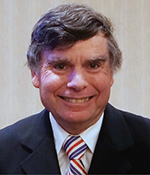
Stuart J. Fischer, MD, FAAOS
Published 11/20/2025
|
Stuart J. Fischer, MD, FAAOS
Editor’s note: The Final Cut is a recurring editorial series written by a member of the AAOS Now Editorial Board.
I stopped operating two years ago after 42 years of practice. Over my career, I have had many successes and some disappointments, but what I remember most are my relationships with long-term patients. Many patients stayed with me over the lifetime of my practice, and I saw some families for multiple generations. I learned that the best results weren’t always the most satisfied patients, and sometimes cases you feel did not turn out so well had the happiest patients.
Many stories have stayed with me. I think about the wayward teenager I operated on one Fourth of July night early in my practice. He had blown up his hand with a firecracker. I spent the whole night debriding and skin grafting his injuries. I remember going to bed at five o’clock that morning thinking, “This kid will never amount to anything.”
Almost 20 years later, a patient showed up in my office wearing an expensive three-piece suit. The face sheet said he was a partner at a prestigious New York law firm. He walked in and asked, “Remember me?” When I didn’t, he showed me his hand, opened his palm, and said “Now you do!” All the grafts were there, and I was so happy to see that my prediction was wrong!
Rose had been a patient in the office since the 1950s. I performed several total joint replacements on her. Coincidentally, when my aunt broke her hip, Rose was her roommate, and the two stayed in touch. After many years, Rose came into the office, 99 years old, with loosening of the revision total knee I had done years before. She was still living independently in her own home and wanted her knee taken care of. She asked, “I’m still healthy and my heart is good. Can’t you do my knee?”
To Rose, age was just a number — but we agreed bracing was a better option. We always kept in touch after that.
I had a full-scale, complete model skeleton hanging in a locker in my office that I loved to show to children who visited, particularly around Halloween. I laughed when one 30-year-old patient — whom I had treated for a wrist fracture at age 6 — asked, “Do you still have that skeleton in your closet?”
A 78-year-old woman came to my office in New Jersey from northern Virginia just to see me. She had a total knee replacement in Virginia that became infected, and she presented to me with a cracked second spacer in need of reimplantation. When I asked why she came all the way to New Jersey, she replied, “Don’t you remember? You operated on my knee 33 years ago, and it was the best operation I ever had!”
Two of my total joint patients called me the morning after their kidney transplantations. Both left a similar message with my assistant: “Tell Dr. Fischer I had my transplant and it went well — he will want to know.” It was gratifying that they thought enough of our relationship to call right after life-changing procedures.
On the other hand, some patients don’t remember you. One woman came to my office with a long vertical scar down the front of her knee. When I asked her what she had done, she said that she had a tibial tubercle transfer for a dislocating kneecap. She said the surgeon used a novel technique where he undercut the fixation slot and didn’t have to use screws.
When I asked her where it was done, she said the town where I practice. She couldn’t remember the surgeon — but I remembered. I asked, “Wasn’t your maiden name Alice C.?” She looked back and said, “How did you know?”
Others remember you all too well. One stopped me at a supermarket recently and asked whether I was a surgeon. When I said yes, he replied, “You fixed my right hand 35 years ago when I was a teenager and did something stupid. It still feels tight!”
You never know how patients are going find you. Traditionally, patients are referred by doctors in your medical community. Some patients know your reputation around town. Others find you online or from insurance directories. I always want to know whether patients are referred by a friend, neighbor, relative, or someone at the hospital or surgical center where I work.
When I was young, there was one busy referring doctor who never sent me any cases and deliberately ignored me. However, one day he asked me to take a charity case: A woman with rheumatoid arthritis (RA) and avascular necrosis (AVN) of her hip. I had recently published a paper on AVN, so I was happy to accept. It turned out the woman was actually well-insured and became a lifelong patient. I did six total joints and several other procedures to treat her RA. I also took care of her mother. (Years later, that referring physician was in an automobile accident in Chile and had himself airlifted back to the United States in my care! We became very friendly, and his daughter even became my daughter’s piano teacher.)
Some patients who you would never expect can lead to a string of referrals lasting for years. I did an arthroscopic bucket-handle medial meniscectomy in early 1982 when I was early in practice, when few were doing bucket handles arthroscopically. Despite the great result, the patient kept his insurance check. Even after many calls from my office, he never paid.
But he showed off his knee to his buddy at work. That friend came in for surgery, then referred other members of his family. They sent their plumber, other relatives, and best friends. There were more fractures, anterior cruciate ligament injuries, and multiple total joints. All told, more than 25 procedures over 30 years! (Ironically, the first patient, who never paid his bill, came back into the office 37 years later. Of course, I never collected!)
Some cases were especially satisfying. I think about Joe S., who presented with a deformed arthritic hip and bowed femur with 2 and three-quarter inches of shortening 25 years after hip and femur fractures. He always wore an extended lift on that side. When I did his total hip replacement, I had a femur custom made to fit the bow and put back 2 and a half inches in length. When he was ready for discharge, his wife said, “Keep him for the rest of the day. I have to go out and get him a pair of regular shoes!”
Some patients give you things you have for a lifetime. Claire was a PhD researcher who had an above-elbow amputation due to an infected open fracture in 1940 before penicillin was available. She came to me when her opposite shoulder developed osteoarthritis, and she could no longer function.
In those days, total shoulder replacements weren’t very common. Because that was her only useful arm, I was reluctant to do the surgery and tried to refer her to some well-known surgeons in New York.
But I had a long-term relationship with her and her life partner, and she insisted that I be the surgeon. She recovered amazingly well. In five days she was feeding herself, and in five weeks she was driving. I’m an active skier, and her gift to me was a specially made Steuben glass crystal piece with a skier etched on the front. To this day, it sits on my mantelpiece as a reminder of how thoughtful patients can be.
And I remember Marlene, a woman in her 50s with a mild form of cerebral palsy, whom I operated on in early 2001 for a dislocating kneecap. Her knee would give way when she twisted or went down stairs. Later that year, on 9/11, she was on the 63rd floor of the first tower of the World Trade Center. She was in the bathroom when the first plane hit and sensed what had happened. She never went back to her office but instead was able to run down the 63 flights of stairs to safety.
I still have the letter she wrote reminding me that her successful surgery was what saved her life. (As a footnote, I replaced that knee years afterward.)
In this age of corporate medicine, value-based protocols, and patient-reported outcome measures, it is important to remember that our interactions are often just as important as our outcomes. After a lifetime of practice, I still remember the fractures I fixed, the joints I replaced, and the new surgical techniques that pushed orthopaedics forward. But most importantly, I remember the many stories and long relationships with patients and their families that I enjoyed. It is something you can take with you and look back on with pride and satisfaction. As a surgeon, nothing can be better.
Stuart J. Fischer, MD, FAAOS, is an orthopaedic surgeon in private practice in Watchung, New Jersey. He also serves on the AAOS Membership Council, Board of Councilors, and Committee on Evidence-Based Quality and Value. Dr. Fischer is a member of the AAOS Now Editorial Board.