

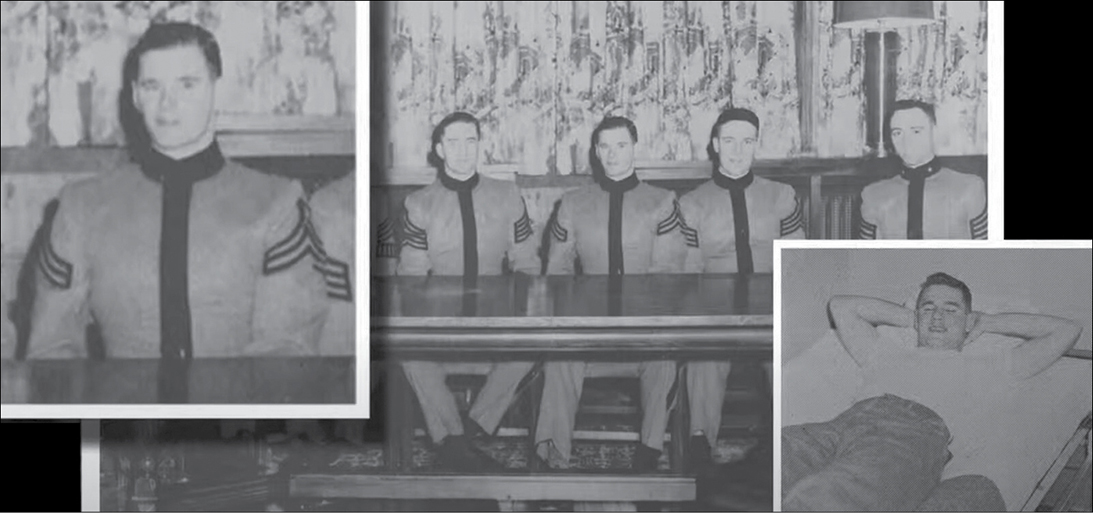
John A. Feagin Jr., MD, was a 1955 West Point graduate and a pioneer in orthopaedic surgery. In 2004, the U.S. Army Joint and Soft Tissue Trauma Fellowship was renamed the John A. Feagin Jr. Sports Medicine Fellowship, honoring Dr. Feagin’s foundational role.
Courtesy of the United States Military Academy West Point
Published 11/20/2025
|
Matthew A. Posner, MD, FAAOS; LTC Michael A. Donohue, MD, FAAOS; Dean C. Taylor, MD, FAAOS
The John A. Feagin Jr. Sports Medicine Fellowship at West Point, the only Department of Defense–funded orthopaedic sports medicine fellowship, embodies the academy’s ethos of “every cadet an athlete.” Rooted in the vision of John A. Feagin Jr., MD, a 1955 West Point graduate and pioneering orthopaedic surgeon, the fellowship has grown into a globally recognized program that integrates cutting-edge clinical training, military-relevant research, and dedicated service to the U.S. Military Academy’s athletic programs. This article traces the fellowship’s origins, development, research achievements, and impact, highlighting its contributions to sports medicine and military healthcare.
Dr. Feagin’s impact on orthopaedics
While serving as chief of orthopaedics at Keller Army Community Hospital in the 1970s, Dr. Feagin observed a high volume of soft-tissue injuries among cadets, driven by the academy’s rigorous physical curriculum and guiding principle of “every cadet an athlete.” Recognizing the need for specialized care, Dr. Feagin envisioned a sports medicine program to enhance cadet readiness and health.
John A. Feagin Jr., MD, was a 1955 West Point graduate and a pioneer in orthopaedic surgery. In 2004, the U.S. Army Joint and Soft Tissue Trauma Fellowship was renamed the John A. Feagin Jr. Sports Medicine Fellowship, honoring Dr. Feagin’s foundational role.
Courtesy of the United States Military Academy West Point
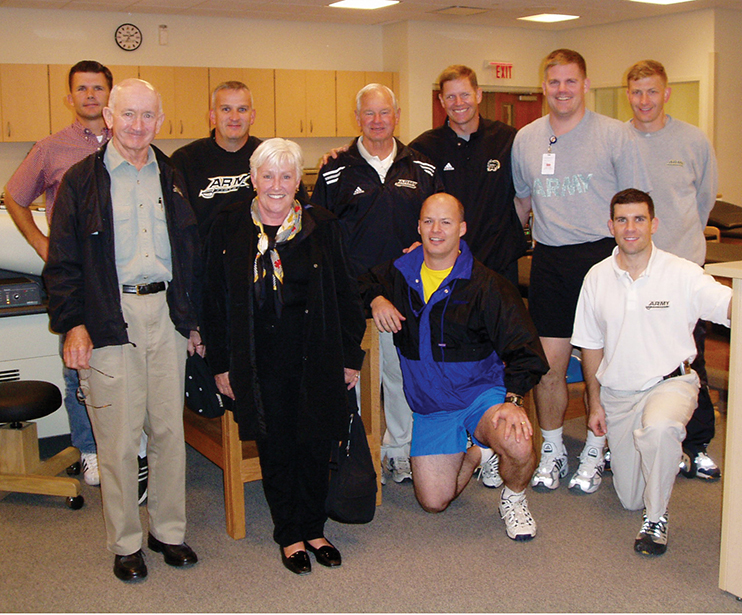
The West Point sports-medicine team with John Feagin Jr., MD (back row, third from left), in the training room
Courtesy of Dean C. Taylor, MD, FAAOS
Working with coaches such as Bill Parcells and Bob Knight, Dr. Feagin advanced the understanding of anterior cruciate ligament injuries, positioning West Point as a hub for sports-medicine innovation. Alongside colleagues such as Robert Protzman, MD, and Walton Curl, MD, FAAOS, he fostered clinical research at Keller and earned national recognition in the U.S. orthopaedic community by the mid-1970s.
Dr. Feagin’s contributions extended beyond West Point. He coauthored “The crucial ligaments: Diagnosis and treatment of ligamentous injuries about the knee” and helped establish the American Orthopaedic Society for Sports Medicine (AOSSM).
The program’s origins
The fellowship was formalized in the mid-1980s under Retired Army Col. John “Jack” Ryan, MD, then-chief of orthopaedics at Keller. In 1985, Col. Ryan designed the U.S. Army Joint and Soft Tissue Trauma Fellowship, a two-year program that included a basic-science year at the Letterman Army Institute of Research in San Francisco and a clinical year at Keller. The first fellow began training in 1988, arriving at West Point in 1989. In 1987, Col. Robert A. Arciero, MD, FAAOS, joined the faculty, enhancing the program with his expertise in shoulder and knee surgery and mentoring fellows in advanced arthroscopic techniques. In 1994, the research component relocated to the U.S. Army Institute of Surgical Research at Fort Sam Houston, in San Antonio, Texas, adapting to evolving military medical needs.
On Oct. 8, 2004, the program was renamed the John A. Feagin Jr. Sports Medicine Fellowship, honoring Dr. Feagin’s foundational role. By December 2006, with Army Graduate Medical Education approval, the fellowship expanded to train two fellows annually for a clinical rotation at Keller, complemented by a partnership with Hospital for Special Surgery (HSS) in New York City — a leading orthopaedic hospital. The HSS partnership, formalized as the fellowship’s Accreditation Council for Graduate Medical Education (ACGME) sponsoring institution, is a cornerstone of its prestige.
Fellows rotate for three months on HSS’ Sports Medicine Service, gaining exposure to elite practices and complex cases such as ligament and cartilage repairs critical for military and athletic populations. Under mentors such as Russell Warren, MD, FAAOS, and Thomas Wickiewicz, MD, FAAOS, fellows refine their skills in managing joint injuries, considered by many to be a highlight of the clinical year.
The fellowship has been led by Dr. Ryan; Dr. Arciero; retired Army Col. Dean Taylor, MD, FAAOS; retired Army Col. Thomas DeBerardino, MD; retired Army Col. Steve Svoboda, MD, FAAOS; retired Army Col. Matthew A. Posner, MD, FAAOS; and LTC Michael Donohue, MD.
Current program structure
The Feagin Fellowship trains two active-duty fellows annually. Because the fellowship is accredited by ACGME, graduates are eligible for Subspecialty Certification in Sports Medicine. The fellowship integrates with West Point’s Department of Physical Education and Arvin Cadet Physical Development Center, offering weekly clinics and research opportunities. Fellows serve as team physicians for Army West Point’s 28 NCAA Division I teams, honing acute-injury management skills under pressure. Research is central, with each fellow producing a manuscript for national presentation and publication.
The fellowship’s curriculum targets disease and non-battle injury, a leading cause of military disability. Fellows master surgical treatments for complex sports injuries, ensuring service members’ swift return to duty.
The program also addresses chronic conditions such as shoulder and knee arthritis, preparing fellows for Veterans Affairs care. Training includes advanced surgical techniques, postoperative strategies, and leadership development through the Feagin Physician Leadership Program at Duke University.
Since 1993, the fellowship has hosted the Sports Medicine Fellows’ Specialty Day, initiated by Dr. Taylor. Held at either West Point’s Kimsey Center or Thayer Hotel, this conference unites fellows from top programs such as HSS, Lenox Hill Hospital, University of Connecticut, and Columbia University to share research. Numerous fellowship alumni return annually to enrich this event with their research on preventing injury, influencing military protocols, and enhancing the fellowship’s academic reputation.
Research acumen and awards
The Feagin Fellowship has distinguished itself through its robust research output, contributing significantly to orthopaedic and military medicine. Leading to more 300 national and international presentations, 150 peer-reviewed publications, and 50 book chapters, the program has advanced knowledge in areas such as anterior cruciate ligament reconstruction, shoulder instability, and joint preservation.
Fellows have produced high-impact studies that have informed clinical guidelines worldwide. Research collaborations with institutions such as HSS and the U.S. Army Institute of Surgical Research have amplified the program’s influence.
The fellowship’s research excellence has earned numerous accolades, including multiple AOSSM awards for outstanding papers and presentations. Notable recognitions include the American Shoulder and Elbow Surgeons Morrey Award, the AOSSM O’Donoghue Sports Injury Research Award, and the AOSSM Traveling Fellowship, which have honored fellows and faculty for their contributions. These achievements underscore the program’s commitment to evidence-based practice and its role in shaping sports-medicine standards.
The John A. Feagin Jr. Sports Medicine Fellowship at West Point embodies innovation and service. From Dr. Feagin’s vision to address cadet injuries, driven by the “every cadet an athlete” philosophy, the program has transformed military and sports medicine.
Its blend of clinical excellence, military-relevant training, and award-winning research ensures unparalleled care for service members and athletes. As it trains future orthopaedic leaders, the fellowship upholds the West Point motto of “Duty, Honor, Country” in every surgical procedure, research endeavor, and patient interaction.
Retired Army Col. Matthew A. Posner, MD, FAAOS, is a West Point graduate, former Army officer, and currently an orthopaedic sports surgeon at WellSpan Health. He retired from the Army after 26 years of active-duty service. His awards include the Legion of Merit, the Bronze Star Medal, the Order of Military Medical Merit, and the “A” Proficiency Designator.
LTC Michael Donohue, MD, FAAOS, is an orthopaedic surgeon and director of the John A. Feagin Jr. Sports Medicine Fellowship at West Point. In addition, he currently serves as head team physician for Army West Point Athletics.
Retired Army Col. Dean C. Taylor, MD, FAAOS, is a professor of orthopaedic surgery at Duke University and team physician. He currently serves as chair of the Feagin Leadership Program at Duke University and is executive director of the Healthcare Leadership Foundation.
References
- Orthopaedic Sports Medicine. Health.mil. Accessed Oct. 27, 2025. https://www.health.mil/Military-Health-Topics/Education-and-Training/DHA-GME/Institutions/Keller/Programs/orthosm
- Feagin JA. The crucial ligaments: Diagnosis and treatment of ligamentous injuries about the knee. New York: Churchill Livingstone; 1988.